

Creating a monthly budget can feel overwhelming at first. Many beginners worry that budgeting means cutting out everything they enjoy or tracking every dollar perfectly. If you’ve ever looked at your paycheck and wondered where the money went by the end of the month, you’re not alone.
Budgeting isn’t about being strict or doing complex math. It’s simply a way to understand how your money is being used so you can make better choices. Most people in the U.S. don’t start with a clear budget, which is why money often feels stressful or unpredictable.
This guide breaks down how to create a monthly budget in a simple, realistic way. You’ll see a clear step-by-step approach along with a practical U.S. example using common expenses like rent, groceries, and utilities. The goal isn’t perfection — it’s clarity and control, one month at a time.
What Is a Monthly Budget?
For beginners, a monthly budget works best because most bills and paychecks follow a monthly cycle. A monthly budget is a simple plan for how you use your income over a single month. It helps you decide in advance how much money goes toward essentials, savings, and everyday spending instead of figuring it out as you go.
At the center of a monthly budget is monthly income planning. This means looking at how much money you actually take home after taxes and deductions. In the U.S., this is usually your paycheck amount, not your salary. Knowing this number gives you a realistic starting point.
Next come expense categories. Most monthly budgets include fixed expenses like rent, utilities, and insurance, along with variable costs such as groceries, gas, and personal spending. Separating expenses into categories makes it easier to see where your money is going.
A monthly view works best for beginners because most bills, rent, and paychecks follow a monthly cycle. It gives you a clear snapshot of your finances without making things complicated. If you’re new to managing money, understanding these personal finance basics is the first step toward building a budget that actually works for your lifestyle.
Why Creating a Monthly Budget Matters for Beginners
A monthly budget gives beginners clarity about their money. Without a basic plan, it’s easy to spend more than you realize and feel unsure about where your paycheck went by the end of the month.
📉 Build Awareness around Overspending
Many people overspend without noticing it. Small purchases, subscriptions, or eating out can slowly add up. A monthly budget helps you see these patterns clearly so you can make adjustments before they become a problem.
💸 Avoid paycheck-to-paycheck stress
Living paycheck to paycheck often happens when spending isn’t planned. A budget helps you align your income with your expenses, making it easier to cover essentials and reduce financial stress throughout the month.
🧭 Feel in Control without Restriction
Budgeting isn’t about saying no to everything. It’s about deciding where your money goes ahead of time. When you budget, you gain control without feeling restricted, allowing you to spend with intention instead of guilt.
For beginners, a monthly budget is one of the simplest tools for creating stability and confidence around money. If money feels stressful or unpredictable, a simple monthly budget can change that.
Simple Monthly Budget Example (US)
Seeing a real example can make budgeting feel more manageable. Below is a simple monthly budget using a $3,000 take-home income, which is common for many beginners in the U.S.
This example isn’t meant to be perfect. It’s just a starting point to show how money might be divided between essentials, savings, and everyday spending.
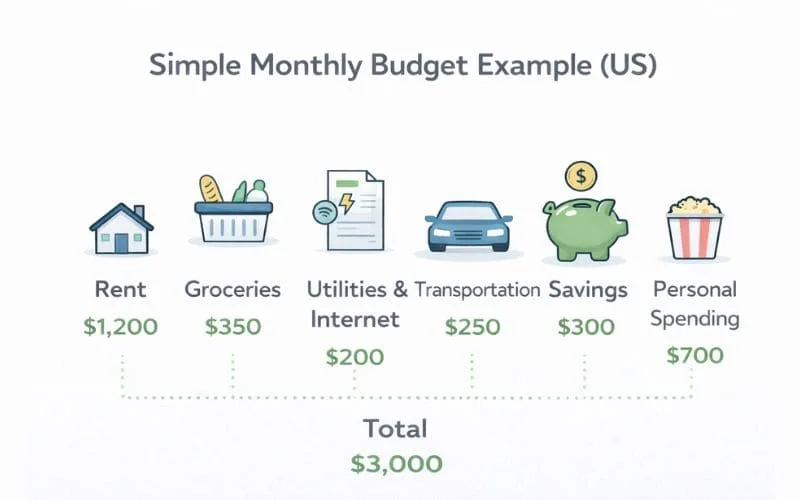
Example Monthly Budget Breakdown
| Category | Monthly Amount |
|---|---|
| Rent | $1,200 |
| Groceries | $350 |
| Utilities & Internet | $200 |
| Transportation | $250 |
| Savings | $300 |
| Personal Spending | $700 |
| Total | $3,000 |
In this example, rent and basic living costs are covered first. Savings are treated as a regular part of the budget, not something left over at the end. The remaining amount allows room for flexible spending without feeling restricted.
Over time, small adjustments—like reducing one category or increasing savings—can make a noticeable difference. Building awareness around spending patterns and developing consistent money habits for beginners helps make a monthly budget easier to follow and maintain.
Step-by-Step: How to Create a Monthly Budget
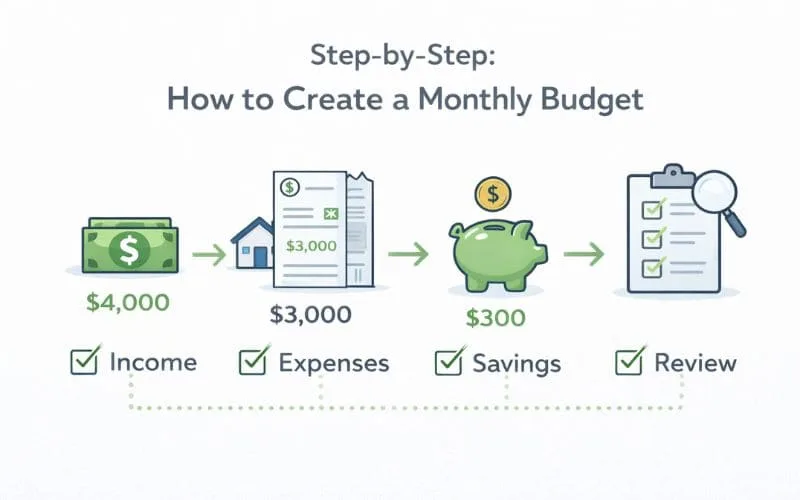
Creating a monthly budget works best when you break it into small, manageable steps. You don’t need special tools or perfect numbers—just a clear view of your money.
Step 1: Know Your Monthly Income
Start with your after-tax income, not your salary. In the U.S., this is the amount that actually lands in your bank account after taxes and deductions. If you’re paid bi-weekly, add up the paychecks you receive in a typical month to get a realistic number.
Knowing your true take-home pay gives your budget a solid foundation.
Step 2: List Your Fixed Expenses
Fixed expenses are bills that usually stay the same each month. Common examples include:
- Rent or Mortgage
- Utilities
- Insurance
- Phone and Internet
Write these down first because they are your top priorities. These costs usually can’t be skipped, so your budget should account for them upfront.
Step 3: Track Variable Spending
Variable spending changes from month to month. This includes:
- Groceries
- Gas or Transportation
- Eating out
- Personal Spending
Tracking these expenses for a month helps you see where your money actually goes. Many beginners are surprised by how much these flexible costs add up.
Step 4: Decide How Much to Save
Saving doesn’t have to be a large amount to be effective. Start with a realistic, small goal that fits your income. Even setting aside a small portion consistently can help you build momentum and confidence.
Budget planning works best when it is based on income that is actually available after taxes and required deductions. Understanding what is disposable income helps beginners see how much income can realistically support monthly expenses and financial priorities.
The key is consistency, not perfection. You can always adjust your savings amount as your budget becomes clearer.
Following these steps helps you create a monthly budget that feels practical and sustainable, rather than overwhelming.
Common Budgeting Mistakes Beginners Make
Budgeting is a learning process, and it’s normal to make mistakes early on. The key is recognizing these issues so they don’t discourage you from continuing.
🚫 Being Too Strict
One common mistake is creating a budget that leaves no room for flexibility. When a budget feels too tight, it’s harder to stick with. A realistic budget should allow some personal spending so it feels sustainable, not restrictive.
🧾 Forgetting Irregular Expenses
Expenses like car maintenance, annual subscriptions, or medical costs don’t happen every month—but they still matter. When these irregular expenses are ignored, they can throw off an otherwise solid budget. Planning ahead for them helps avoid surprises.
A budget becomes easier to manage when expenses are grouped by how they behave. Some costs stay stable while others change every month. Understanding this difference through fixed vs variable expenses helps beginners build more realistic budgets.
🔄 Not Reviewing your Budget Monthly
A budget isn’t something you set once and forget. Income, expenses, and priorities can change from month to month. Reviewing your budget regularly helps you adjust and stay on track instead of feeling frustrated when numbers don’t match.
Many beginners face these challenges at some point. Understanding common money mistakes makes it easier to improve your budget over time and build habits that actually work.
Before beginners try structured budgeting, it’s useful to understand the behavioral money mistakes that make budgeting harder in the first place. This overview of Common Money Mistakes beginners make explains why spending visibility matters and how habits shape financial confidence.
How to Stick to Your Monthly Budget
Creating a budget is one thing, but sticking to it is where many beginners struggle. The goal isn’t to follow your budget perfectly—it’s to use it as a helpful guide.
📅 Review your Budget Weekly
Checking in once a week helps you stay aware of your spending without feeling overwhelmed. A quick review shows what’s working and what may need attention before the month ends.
🔧 Adjust, Don’t Quit
If your budget doesn’t go as planned, that doesn’t mean it failed. Expenses change, and that’s normal. Adjust your categories as needed instead of giving up altogether. Flexibility is what makes a budget realistic.
🧠 Use Awareness, Not Guilt
Budgeting isn’t about feeling bad for spending money. It’s about understanding your choices. When you stay aware of where your money goes, you can make calmer, more confident decisions without guilt.
Sticking to a monthly budget becomes easier when you treat it as a supportive tool rather than a set of strict rules.
Monthly Budgeting Basics in the US
Budgeting in the United States has a few realities that beginners should keep in mind. Understanding these basics helps you create a budget that fits how money actually works in everyday U.S. life.
🗓️ Bi-weekly Paychecks
Many people in the U.S. are paid every two weeks rather than monthly. This means some months include three paychecks instead of two. Planning your budget around monthly expenses—while accounting for bi-weekly income—helps avoid confusion and uneven spending.
🏠 Rent-heavy Budgets
Housing often takes up a large portion of monthly income. Rent, utilities, and internet can easily be the biggest expenses in a beginner’s budget. A realistic budget acknowledges this instead of trying to force unrealistic spending limits.
🧯 Emergency Expenses are Common
Unexpected costs like medical bills, car repairs, or sudden travel needs happen more often than people expect. Including room in your budget for these situations—or gradually building savings—can prevent stress when surprises come up. Learning the emergency fund basics makes it easier to handle these moments without relying on debt.
Frequently Asked Questions
How much should beginners save each month?
There’s no single number that works for everyone. For beginners, the most important thing is to start with an amount that feels realistic. In the U.S., many people begin by saving a small portion of their take-home pay, such as a few hundred dollars a month or even less. The goal isn’t to save a large amount immediately—it’s to build consistency. As your budget becomes clearer and your income grows, you can gradually increase how much you save without feeling overwhelmed.
Is budgeting only for people with low income?
No, budgeting isn’t limited to any income level. In fact, people with higher incomes often benefit just as much from budgeting because expenses tend to grow along with earnings. Budgeting helps you understand where your money goes, no matter how much you make. It’s about awareness and planning, not income size.
What if my income changes from month to month?
If your income varies, budgeting is still possible—it just requires a flexible approach. Start by identifying your average monthly income or your lowest typical month. Base your essential expenses on that number, and treat higher-income months as an opportunity to save more or prepare for future fluctuations. This approach helps keep your budget stable even when income changes.
Do I need budgeting apps to create a monthly budget?
Budgeting apps can be helpful, but they’re not required. Many beginners start with a simple spreadsheet or even a written list of expenses. What matters most is understanding your income and spending, not the tool you use. Choose a method that feels easy to maintain rather than one that feels complicated.
How long does it take to feel comfortable with budgeting?
Getting comfortable with budgeting usually takes a few months. The first month is often about learning and adjusting, not getting everything right. As you review your budget regularly and make small changes, it becomes easier to understand your spending patterns. Over time, budgeting feels less like a task and more like a normal part of managing your money.
Final Thoughts on Creating a Monthly Budget
Creating a monthly budget is about progress, not perfection. It’s normal for your budget to change as you learn more about your spending and priorities. What matters is staying aware and making small adjustments along the way.
A budget isn’t a set of strict rules. It’s a flexible tool that helps you understand your money and feel more in control. By taking a step-by-step approach, budgeting becomes easier to manage and more useful over time.
With patience and consistency, a monthly budget can support better financial decisions without adding stress.
Budgeting isn’t about controlling every dollar. It’s about giving your money direction.


Pingback: What Is Personal Finance? A Simple Beginner’s Guide (US)