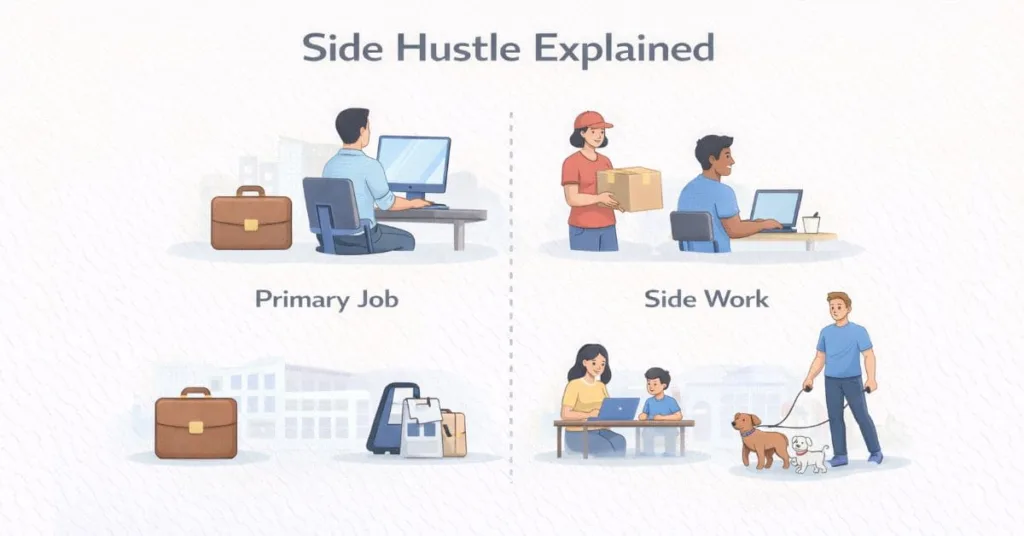
If you’ve ever searched online for ways to earn extra money, you’ve probably noticed how overwhelming it can feel. There are hundreds of ideas, platforms, and opinions — all claiming to be the “best.” For beginners in the United States, this flood of options often creates confusion instead of clarity.
That’s where understanding the types of side hustles becomes helpful. Instead of jumping from one idea to another, breaking side hustles into categories makes the landscape easier to understand. Different types fit different schedules, skills, energy levels, and local realities.
In the US gig and freelance economy, structure matters. Knowing the main types of side hustles helps beginners think more clearly before choosing something that fits their time, capacity, and goals.
Why Understanding Types of Side Hustles Matters
When beginners explore earning options, the biggest challenge is not a lack of ideas — it’s too many ideas. Without structure, everything starts to look equally attractive, and that often leads to confusion or quick switching between options.
Understanding the main types of side hustles creates clarity before commitment.
🧠 Clarity Reduces Overwhelm
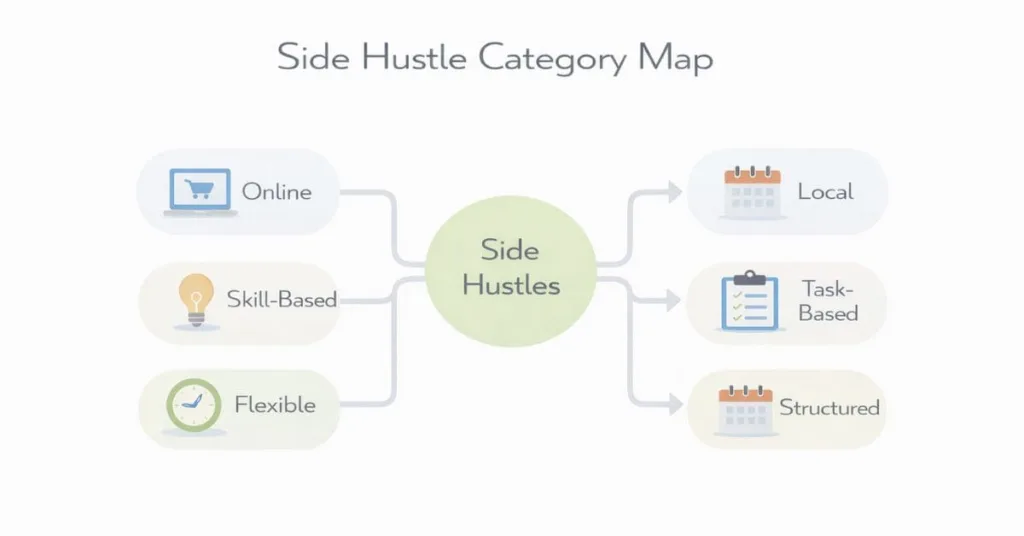
When side hustles are grouped into categories — like online, local, skill-based, or task-based — it becomes easier to compare options realistically.
Instead of asking, “Which one makes the most?” beginners can ask:
- Which type fits my schedule?
- Which type matches my strengths?
- Which type fits my local environment?
Structure turns noise into manageable choices.
⏳ Matching Personality and Time
Not every side hustle fits every lifestyle.
Some types require:
- Strong communication skills
- Consistent weekly time blocks
- In-person availability
- Independent work comfort
Understanding categories helps align side hustle types with personality and time capacity.
🔄 Avoiding Random Switching
Without understanding categories, beginners often jump from one idea to another after small frustrations.
This can lead to:
- Inconsistent effort
- Unfinished learning curves
- Unnecessary discouragement
Learning what a side hustle really means builds a stronger foundation before exploring specific types.
US Gig Economy Context
The US gig economy includes a wide mix of digital platforms, local services, freelance contracts, and independent work arrangements.
Because the market is broad and flexible, understanding the structure of side hustle types helps beginners navigate it more confidently — without chasing every trending idea.
Understanding the types of side hustles reduces overwhelm and improves clarity before choosing where to invest time.
Online Types of Side Hustles
Online side hustles are some of the most visible earning options today. Because they can be done from home, they often feel accessible to beginners. In the US digital economy, remote and internet-based work has expanded across many categories.
However, not all online work is the same. Different types require different skills, time commitments, and levels of independence.
💻 Remote Freelancing
Remote freelancing usually involves offering a specific skill to clients online.
Examples may include:
- Writing or Editing
- Graphic design
- Coding or Web support
- bookkeeping
- Virtual assistance
Freelancing is typically skill-based and project-driven. It often requires communication, deadlines, and client management.
🌐 Digital Services
Digital services are similar to freelancing but may be more structured or recurring.
This can include:
- Social media management
- Email support
- Content scheduling
- Online tutoring
These types often involve consistent tasks rather than one-time projects.
🎥 Content Creation
Content-based side hustles involve creating material for online audiences.
This may include:
- Video content
- Blogging
- Podcasting
- Educational materials
Content creation usually requires long-term consistency and audience building. It is often slower to develop but more flexible in schedule.
🛒 E-commerce
E-commerce side hustles involve selling products online.
This may include:
- Handmade goods
- Resale products
- Print-on-demand items
- Digital downloads
E-commerce requires understanding inventory, pricing, and fulfillment logistics.
📋 Microtasks
Microtasks involve completing small digital assignments.
Examples may include:
- Data tagging
- Short surveys
- Testing tasks
- Transcription work
These are usually task-based and flexible, but often structured around short-term assignments.
US Digital Economy Context
In the United States, online work has become more common due to remote technology, digital platforms, and flexible contracting systems. However, online side hustles still vary widely in skill requirements, consistency, and long-term sustainability.
Exploring Side hustles for beginners in the US provides additional context about entry-level opportunities and realistic expectations.
Online types of side hustles vary in skill level, structure, and flexibility — even though they all operate digitally.
Local & Offline Types of Side Hustles
While online work gets most of the attention, many side hustles still operate locally and offline. In the United States, service-based and task-based work remains a major part of the gig economy.
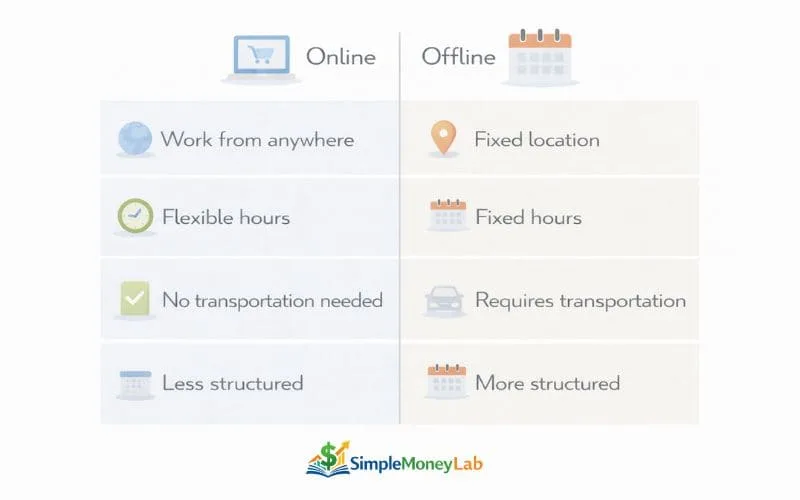
Local side hustles often involve in-person interaction, travel, and flexible scheduling — but they also require time coordination and transportation planning.
🛠 Service-Based Side Hustles
Service-based side hustles involve offering a recurring or skill-driven service within a local area.
Examples may include:
- Tutoring
- Lawn care
- Home cleaning
- Pet sitting
- Repair services
These often require reliability and relationship-building. Some services can become repeat-client based over time.
📦 Task-Based Side Hustles
Task-based side hustles usually focus on completing short, specific assignments.
This may include:
- Moving help
- Furniture assembly
- Delivery assistance
- Household errands
These are typically flexible but may depend on local demand and availability.
🏘 Community-Based Side Hustles
Community-based work centers around neighborhood networks or local connections.
Examples include:
- Babysitting
- Elderly assistance
- Local organizing
- Seasonal yard work
Trust and local reputation often matter more than digital presence in these types.
🎪 Event-Based Side Hustles
Event-based hustles are tied to specific dates or seasonal activity.
Examples may include:
- Event setup support
- Photography assistance
- Vendor booth support
- Holiday-related services
These are often temporary but can repeat during peak seasons.
🚗 Flexibility & Transportation Reality
Unlike online side hustles, local work often depends on:
- Access to reliable transportation
- Local geography
- Time coordination with clients
- Physical availability
Flexibility may exist in scheduling, but travel time and fuel costs can influence feasibility.
In many US cities and suburbs, transportation logistics play a major role in determining whether a local side hustle is practical.
Local side hustles offer flexibility, but they depend heavily on transportation access, time coordination, and community demand.
Skill-Based vs Task-Based Side Hustles
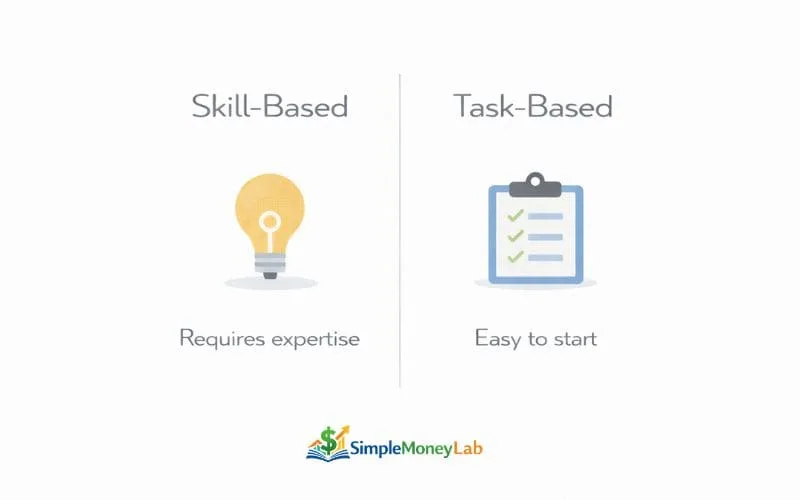
Not all side hustles require the same level of expertise. One of the most important distinctions beginners can understand is the difference between skill-based and task-based side hustles.
This comparison helps set realistic expectations around effort, learning time, and stability.
🧠 What Is a Skill-Based Side Hustle?
Skill-based side hustles rely on a developed ability or specialized knowledge.
Examples may include:
- Graphic design
- Writing or Editing
- Coding
- Bookkeeping
- Photography
These typically require:
- Practice or Prior training
- Client communication
- Portfolio or Proof of ability
Skill-based work often builds value through expertise rather than speed.
📋 What Is a Task-Based Side Hustle?
Task-based side hustles focus on completing specific assignments that usually do not require advanced technical skills.
Examples may include:
- Delivery tasks
- Moving assistance
- Yard work
- Event setup
- Small repairs
These typically require:
- Availability
- Physical effort
- Punctuality
Task-based work often emphasizes execution rather than specialization.
🔎 Side-by-Side Comparison
| Comparison Area | Skill-Based Side Hustles | Task-Based Side Hustles |
|---|---|---|
| Entry Barrier | Requires developed skill | Lower skill requirement |
| Learning Curve | Often longer | Usually shorter |
| Client Expectation | Quality & expertise | Completion & reliability |
| Income Structure | Project or contract-based | Per task or hourly |
| Growth Potential | Can expand with reputation | Often tied to availability |
| Flexibility | Depends on deadlines | Depends on scheduling |
💵 Earning Stability Difference
Skill-based side hustles may offer more stability over time if:
- Repeat clients develop
- Reputation strengthens
- Specialization increases
Task-based side hustles may provide quicker entry but can depend more heavily on ongoing availability and demand.
📈 Learning Curve Difference
Skill-based work often involves:
- Building expertise
- Improving quality
- Refining processes
Task-based work typically involves:
- Learning procedures
- Improving speed
- Increasing efficiency
Both types can be valuable — but they operate differently in structure and growth path.
Skill-based side hustles build value through expertise, while task-based hustles focus on availability and execution.
Flexible vs Structured Side Hustles
Another important way to understand the types of side hustles is by looking at time structure. Some side hustles offer high flexibility, while others operate more like part-time jobs with defined schedules.
Time structure affects stress level, planning ability, and long-term sustainability.
🕒 Fully Flexible Side Hustles
Fully flexible side hustles allow individuals to choose when they work.
These often involve:
- Setting your own hours
- Accepting tasks voluntarily
- Working around a primary job or school schedule
Flexibility can provide freedom, but income flow may vary depending on activity and demand.
📅 Schedule-Based Side Hustles
Some side hustles require recurring time blocks.
This may include:
- Tutoring at fixed times
- Recurring service appointments
- Weekly client meetings
Schedule-based work offers more predictability, but less day-to-day flexibility.
🌤 Seasonal Side Hustles
Seasonal side hustles depend on time of year or event cycles.
Examples may include:
- Tax-season assistance
- Holiday retail support
- Summer outdoor services
- Event-driven work
These can provide concentrated income periods but may not be consistent year-round.
📄 Contract-Based Side Hustles
Contract-based side hustles involve agreements for specific projects or durations.
This can include:
- Short-term consulting
- Fixed-term freelance projects
- Event contracts
Contracts provide structure and clarity but may require defined deliverables and deadlines.
⚖ Time Freedom vs Predictability
Fully flexible hustles offer:
- Schedule control
- Independence
- Variable workload
Structured hustles offer:
- Predictable commitments
- Recurring expectations
- Clearer planning windows
Choosing between flexibility and structure depends on:
- Current job schedule
- Energy levels
- Financial predictability preference
Flexible side hustles prioritize time freedom, while structured side hustles prioritize predictability.
Low Barrier vs Experience-Required Hustles
Another helpful way to understand the types of side hustles is by looking at entry requirements. Some side hustles are easier to start quickly, while others require skill development, experience, or credentials before beginning.
Understanding this difference helps beginners set realistic expectations.
🚪 Entry-Level Side Hustles
Entry-level side hustles typically require minimal prior experience.
They often involve:
- Basic instructions
- Task completion
- General reliability
- Availability
Examples may include certain delivery tasks, small local services, or simple digital assignments.
These types can be easier to start but may depend more heavily on consistent availability rather than specialized expertise.
🧠 Skill Investment Hustles
Some side hustles require learning or refining a specific skill before becoming consistent.
This may include:
- Writing
- Design
- Bookkeeping
- Tutoring
- Digital marketing
Skill-based hustles often involve:
- Practice
- Portfolio building
- Gradual improvement
These typically take more time to develop but may offer broader long-term flexibility.
📜 Credential-Required Hustles
Certain side hustles require formal credentials, licenses, or certifications.
This can include:
- Tax preparation
- Licensed trades
- Certain consulting roles
- Specialized instruction
These types require additional preparation and regulatory compliance within the US system.
🔎 Why This Distinction Matters
Low-barrier hustles allow quicker entry.
Experience-required hustles often involve:
- Longer preparation
- Structured learning
- Greater responsibility
Neither category is automatically better. The right fit depends on time, capacity, and willingness to invest in skill development.
Some side hustles prioritize accessibility, while others prioritize expertise and credentials.
How Beginners Can Choose Between Types
Choosing between different types of side hustles is less about finding the “best” option and more about understanding personal capacity. What works for one person may not fit another’s schedule, energy, or financial situation.
A behavior-first approach creates clarity before commitment.
🧠 Capacity Awareness
Every side hustle requires some combination of:
- Time
- Focus
- Physical or Mental effort
- Consistency
Before choosing a type, it helps to consider how much capacity realistically exists alongside work, school, or family responsibilities.
⏳ Time Realism
Some side hustles require flexible availability. Others require fixed time blocks or deadlines.
Asking practical questions can help:
- Can I commit weekly hours?
- Do I need flexible scheduling?
- Can I handle recurring obligations?
Time structure often determines sustainability more than the idea itself.
⚡ Energy Match
Not all side hustles require the same kind of energy.
Some demand:
- Client communication
- Physical activity
- Creative focus
- Technical concentration
Matching hustle type to energy patterns can prevent early burnout.
🛟 Stability Preference
Some beginners prefer predictable commitments. Others prefer flexibility and short-term tasks.
Understanding personal comfort with:
- Income variability
- Schedule structure
- Long-term development
can guide the decision process more effectively than chasing trends.
🚫 No Hype Approach
Side hustles are not shortcuts. They are structured forms of additional work. Thinking in terms of fit and sustainability creates healthier expectations.
Exploring whether side work aligns with personal goals is the next layer of evaluation. Future discussion around are side hustles worth it helps examine trade-offs more deeply.
Choosing the right type of side hustle depends more on realistic self-awareness than on popularity.
FAQs
What are the main types of side hustles?
The main types of side hustles generally include online hustles, local or offline hustles, skill-based work, task-based work, flexible gigs, and contract-based arrangements. Each category differs in structure, time commitment, and skill requirements.
Understanding these types helps beginners compare options based on schedule, capacity, and experience level.
What is the easiest type of side hustle?
The easiest type of side hustle usually has a low barrier to entry and minimal skill requirements. These often involve task-based or entry-level work that focuses on availability and reliability rather than specialization.
However, “easy” depends on personal schedule, transportation access, and energy level.
Are online side hustles better than offline?
Online side hustles offer location flexibility and remote work options, while offline hustles may provide more immediate local opportunities. Neither is automatically better — the right choice depends on time structure, personal strengths, and local conditions.
Both types operate differently within the US gig economy.
Do side hustles require special skills?
Some side hustles require specialized skills, certifications, or experience, while others focus on task completion and consistency. Skill-based hustles may take longer to develop, whereas entry-level hustles may be easier to start quickly.
The required skill level depends on the type of side hustle chosen.
Can side hustles be flexible?
Many side hustles offer flexible scheduling, especially task-based or fully independent work. Others operate on recurring schedules or contracts that require defined time commitments.
Flexibility varies by type, structure, and demand.
How do I choose the right type of side hustle?
Choosing the right type involves evaluating time availability, energy levels, transportation access, skill comfort, and stability preference. Matching the hustle type to personal capacity is often more sustainable than following trends.
Final Thoughts
Exploring different types of side hustles can feel overwhelming at first, especially in a market as large and varied as the United States. It’s completely normal to need time to understand what fits your schedule, skills, and energy.
Side hustles are not instant solutions. They are structured forms of additional work that require consistency, patience, and realistic expectations. Some types require skill development. Others require availability and reliability. Neither path guarantees quick results, but both can teach valuable financial and professional habits.
The key is alignment — choosing a type that matches personal capacity rather than chasing trends.
Before committing, it can also help to think through trade-offs and long-term sustainability. Exploring the pros and cons of side hustles adds another layer of clarity to the decision-making process.
A side hustle works best when it fits your life — not when it pressures it.