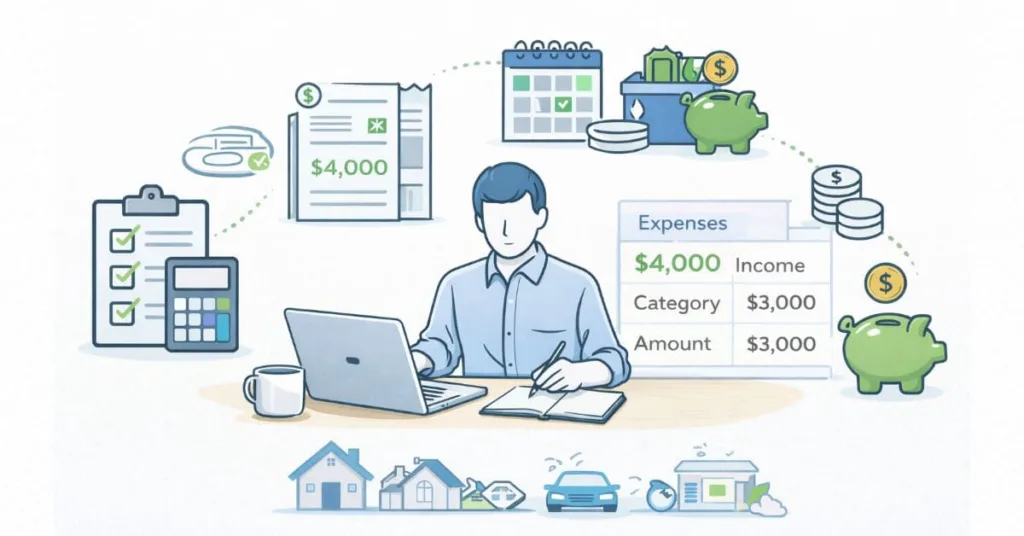
Budgeting often feels confusing, especially when you’re just getting started. Many beginners worry that creating a budget means cutting out everything they enjoy or following strict rules that are hard to maintain. If you’ve ever felt unsure about how much you should spend, save, or set aside each month, you’re not alone. 💭
This is where the 50/30/20 budget rule comes in. It’s a simple approach to budgeting that breaks your income into three clear categories, making money decisions easier to understand. Instead of tracking every dollar perfectly, this rule gives you a flexible structure that helps you stay organized without feeling restricted. 📊
In this guide, you’ll learn what the 50/30/20 rule is, how it works, and see a simple U.S. example you can relate to. The goal isn’t perfection — it’s clarity, balance, and a budgeting method that actually fits real life. ✅
If you’re completely new to managing money, it can help to first understand what personal finance actually means before exploring budgeting methods like the 50/30/20 rule.
What Is the 50/30/20 Budget Rule?
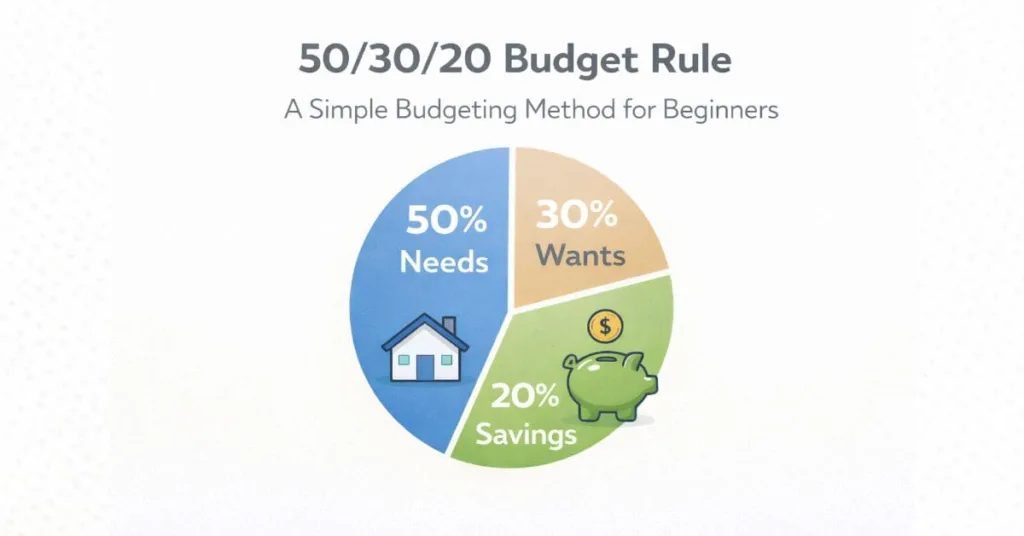
The 50/30/20 budget rule is a simple budgeting method that divides your after-tax income into three categories: 50% for needs, 30% for wants, and 20% for savings.
It helps beginners manage money by creating a clear structure for spending, saving, and everyday expenses without complicated tracking.
This budgeting rule focuses on balance rather than strict limits. By separating your income into three broad categories, it becomes easier to see where your money should go each month. You’re not expected to track every dollar perfectly — instead, the rule offers a flexible guideline that works well for real-life situations.
Because it’s simple and easy to understand, the 50/30/20 rule is often recommended for beginners who want a starting point for budgeting without feeling overwhelmed. It provides clarity while still allowing room for adjustments as your financial situation changes.
The 50/30/20 budget rule is often used as a starting point for beginners because it keeps budgeting simple and flexible. Many U.S. financial education resources recommend basic budgeting frameworks to help people understand how to divide income between needs, wants, and savings. For practical tips on creating and maintaining a budget that suits your household’s needs, check out the tips for budgeting to meet your financial goals from the U.S. government.
How Does the 50/30/20 Budget Rule Work?
The 50/30/20 budget rule works by dividing your monthly take-home income into three simple spending categories. Each percentage represents how much of your income should generally go toward different financial priorities, helping you stay balanced without tracking every dollar.
50% for Needs 🏠
The needs category covers expenses that are essential for daily living. These are costs you generally can’t avoid and should be paid first each month. Common needs include:
- Rent or Mortgage Payments
- Utilities like electricity, water, and gas
- Groceries and basic household items
- Insurance (health, auto, or renters insurance)
- Transportation costs such as gas or public transit
For most beginners, keeping needs close to 50% of income helps prevent overspending on fixed expenses and leaves room for savings and flexibility.
30% for Wants 🎯
The wants category includes non-essential spending that improves your lifestyle but isn’t required for basic living. These expenses are usually more flexible and easier to adjust if needed. Examples include:
- Eating out or ordering takeout
- Entertainment like streaming services or events
- Shopping beyond basic necessities
- Subscriptions for apps, music, or memberships
This portion of the budget allows you to enjoy your money without guilt, as long as it stays within reasonable limits.
20% for Savings 💰
The savings category focuses on your financial future. This portion of your income is meant to build stability and reduce stress over time. It typically includes:
- Emergency fund contributions
- Savings account deposits
- Debt payoff, such as credit cards or personal loans (mentioned lightly)
Building savings doesn’t need to be perfect right away. Even small, consistent contributions help you move forward. Over time, understanding emergency fund basics makes it easier to handle unexpected expenses without relying on debt.
50/30/20 Budget Rule Example (US)
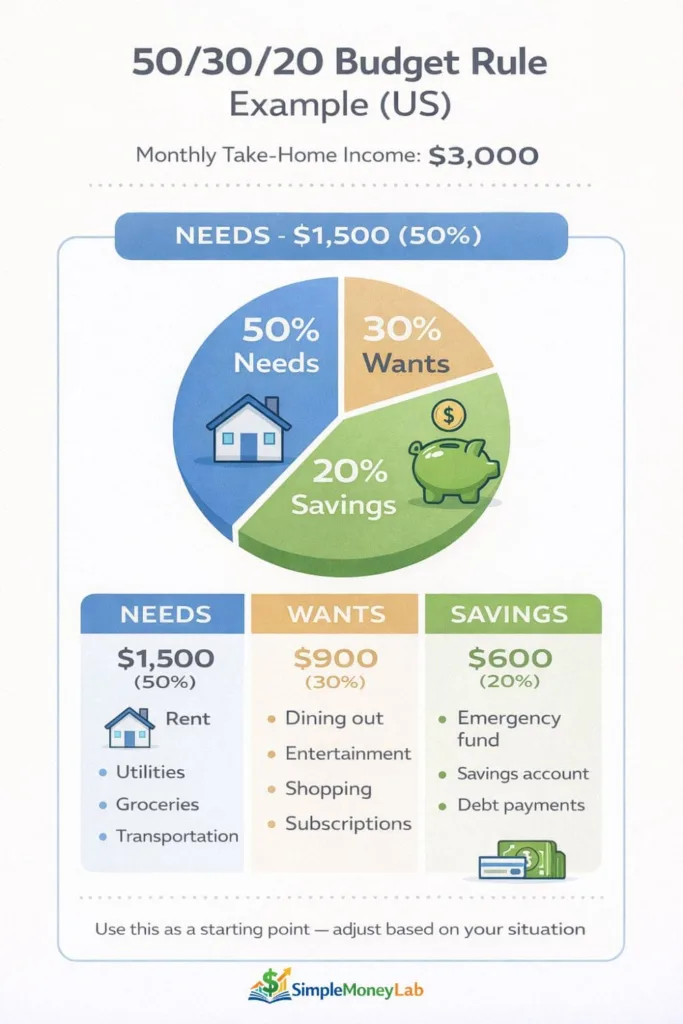
Seeing a real-life example makes the 50/30/20 budget rule much easier to understand. Below is a simple monthly budget example using a $3,000 take-home income, which is common for many beginners in the U.S.
This example shows how your income can be divided into needs, wants, and savings using the 50/30/20 method. The numbers don’t need to be perfect — they’re meant to give you a clear starting point you can adjust based on your situation.
This method works especially well if you already have a basic monthly budget in place. If you’re new to budgeting, here’s a simple guide on how to create a monthly budget for beginners.
🧾 Example Monthly Budget Breakdown
| Category | Percentage | Monthly Amount |
|---|---|---|
| Needs | 50% | $1,500 |
| Wants | 30% | $900 |
| Savings | 20% | $600 |
| Total | 100% | $3,000 |
In this example, essential expenses like rent, groceries, and utilities are covered first. Savings are treated as a regular part of the budget rather than something left over at the end of the month. The remaining amount allows for flexible spending without feeling restricted.
Over time, small adjustments — such as reducing wants or increasing savings — can make this budgeting method work better for your lifestyle and financial goals.
Is the 50/30/20 Budget Rule Good for Beginners?
Yes, the 50/30/20 budget rule can be a great starting point for beginners — especially for those who want a simple way to manage money without feeling overwhelmed. 💡 It gives clear guidance while still leaving room for flexibility.
👍 Why Beginners Like It
Many beginners appreciate this rule because it removes guesswork. Instead of deciding exact dollar amounts for every expense, you work with percentages, which makes budgeting feel less stressful and easier to understand.
✅ Why It’s Easy to Follow
The 50/30/20 rule doesn’t require detailed tracking or complicated math. You focus on three broad categories rather than dozens of spending lines, which helps beginners stay consistent without burning out. 📊
👥 Who Should Use It
This budgeting method works best for people with steady income who want a simple structure for spending and saving. It’s especially helpful for beginners who are just learning how to organize their finances and want a flexible system they can adjust over time.
Overall, the 50/30/20 rule is a practical option for beginners looking for clarity and control without strict restrictions.
When the 50/30/20 Rule May Not Work
While the 50/30/20 budget rule is helpful for many beginners, it isn’t a perfect fit for everyone. Real-life situations can make it harder to follow these percentages exactly, and that’s completely normal. Being aware of these limitations helps you use the rule more realistically. ⚖️
🏙️ High Rent Cities
In cities with high housing costs, rent alone can take up more than 50% of your income. When housing is expensive, sticking strictly to the 50% needs category may not be realistic, especially for beginners just starting out.
📉 Low Income Months
If your income is lower during certain months, essential expenses may leave little room for wants or savings. In these situations, covering basic needs takes priority, and saving smaller amounts is still progress.
🔄 Variable Income
For people with irregular or freelance income, monthly earnings can change significantly. Following fixed percentages every month may feel challenging, which is why flexibility is important when using this budgeting method.
Understanding when the 50/30/20 rule may not work helps you treat it as a guideline—not a strict rule—making budgeting more realistic and sustainable over time.
How to Adjust the 50/30/20 Rule to Fit Your Life
The 50/30/20 budget rule is meant to be a starting point, not a strict formula you must follow perfectly. Everyone’s financial situation is different, and adjusting the percentages can help the rule work better for your lifestyle and income. 🔧
🔁 60/30/10 Approach
In high-cost situations, some beginners shift more income toward needs. A 60/30/10 approach allows you to cover essential expenses more comfortably while still saving something each month. This can be helpful if housing or transportation costs are higher than average.
⚖️ 50/20/30 Approach
Others prefer to put more focus on flexibility and lifestyle spending. A 50/20/30 split keeps needs steady while adjusting savings and wants based on personal priorities. This approach works well for beginners who want balance without feeling restricted.
🧠 A Flexible Approach
The most important thing is flexibility. Your budget should adapt as your income, expenses, and goals change. Adjusting percentages over time helps you stay consistent instead of giving up when numbers don’t feel realistic.
Rather than chasing perfect percentages, focus on awareness and steady progress. A budget that fits your life is far more effective than one that looks perfect on paper.
50/30/20 Rule vs Other Budgeting Methods
The 50/30/20 rule is just one way to budget, and it works best for beginners who want a simple structure. Other budgeting methods may be a better fit depending on how detailed or flexible you want your budget to be.
📊 Simple Monthly Budget
A simple monthly budget focuses on listing your income and expenses for the month without fixed percentages. This approach offers more flexibility and works well for beginners who prefer adjusting numbers as they go. You can learn more in this monthly budget for beginners (#2 POST LINK) guide.
🧾 Zero-Based Budgeting
Zero-based budgeting assigns every dollar a specific job, meaning your income minus expenses equals zero. While it can be effective, it requires more tracking and effort, which may feel overwhelming for some beginners.
Each budgeting method has its own strengths. Choosing the right one depends on how much structure you want and how comfortable you are managing details.
Common Mistakes Beginners Make With the 50/30/20 Rule
The 50/30/20 rule is meant to simplify budgeting, but beginners sometimes run into issues when they treat it as a strict formula instead of a flexible guide. Being aware of these common mistakes can help you use the rule more effectively. ⚠️
🔁 Ignoring Irregular Expenses
Expenses like car repairs, annual subscriptions, or medical costs don’t happen every month, but they still affect your budget. When these costs aren’t planned for, the 50/30/20 split can feel unrealistic. Setting aside small amounts ahead of time can help prevent surprises.
🚫 Being Too Strict
Trying to follow the percentages perfectly can make budgeting feel stressful. Life doesn’t always fit neatly into fixed numbers, and being too strict often leads to frustration. Flexibility is what makes this budgeting method sustainable.
📅 Not Reviewing Your Budget Monthly
A budget should evolve as your income and expenses change. When beginners don’t review their budget regularly, small issues can turn into bigger problems. Taking time each month to review and adjust helps you stay on track and improve over time.
Understanding these challenges makes it easier to avoid common money mistakes and build a budgeting habit that actually works.
Frequently Asked Questions
Can I use the 50/30/20 rule with a low income?
Yes, you can use the 50/30/20 rule with a low income, but it often needs adjustment. For many beginners in the U.S., essential expenses like rent, utilities, and transportation may take up more than 50% of monthly income. In that case, the rule should be treated as a guideline rather than a strict formula.
The key is prioritizing needs first and saving whatever amount is realistically possible, even if it’s less than 20%. Over time, as income increases or expenses change, the percentages can be adjusted to better match your situation.
Does the 50/30/20 rule include debt payments?
Yes, debt payments are usually included, but where they fit depends on the type of debt. Minimum payments on essential debts, such as required loan payments, are generally counted under needs. Extra payments made to pay down debt faster can be included under savings, since they improve your financial future.
For beginners, the most important thing is staying consistent and avoiding missed payments. The rule works best when debt is handled realistically, without trying to force aggressive payoffs that strain your budget.
Is the 50/30/20 rule realistic in the US?
The 50/30/20 rule can be realistic in the U.S., but it depends heavily on location and cost of living. In lower-cost areas, many beginners can follow the rule closely. In high-cost cities, housing expenses often exceed the 50% needs category, making strict percentages harder to follow.
This doesn’t mean the rule fails—it simply means adjustments are needed. Using the structure as a reference point still helps improve awareness and decision-making, even if the exact percentages aren’t perfect.
Do I need budgeting apps to follow the 50/30/20 rule?
No, budgeting apps are not required to use the 50/30/20 rule. Many beginners successfully follow this method using a simple spreadsheet, notes app, or even pen and paper. What matters most is understanding your monthly income and roughly tracking how much goes into each category.
Apps can be helpful if you like automation, but the rule itself is designed to be simple enough to manage without extra tools.
How long does it take to see results with the 50/30/20 rule?
Most beginners start noticing positive changes within a few months of using the 50/30/20 rule. The first month is usually about learning and adjusting, not getting everything right. By the second or third month, spending patterns become clearer, and saving feels more consistent.
The biggest benefit comes from regular review and small adjustments over time. Budgeting is a skill, and the results improve as you gain experience and confidence managing your money.
Final Thoughts on the 50/30/20 Budget Rule
The 50/30/20 budget rule is meant to simplify budgeting, not make it feel restrictive. It offers a clear starting point that helps beginners understand how to divide their income without getting lost in details. 💡
Remember, the goal isn’t to follow the percentages perfectly every month. Life changes, expenses shift, and your budget should be able to adjust along with them. Flexibility is what makes this budgeting method realistic and sustainable over time. 🔄
Most importantly, focus on progress rather than perfection. Small improvements, consistent awareness, and regular review matter far more than hitting exact numbers. When used as a helpful guide instead of a strict rule, the 50/30/20 budget rule can support better money habits and greater confidence with your finances.

I’m Daniel Moore, the founder of SimpleMoneyLab, where I help beginners learn Personal Finance in a simple and realistic way. I focus on breaking down Budgeting, Credit Basics, and Side Hustles into plain English so everyday Americans can feel more confident with Money.