Many US beginners feel stressed or worried after missing or almost missing a payment, especially when they are still learning how credit systems work. Credit can sometimes feel like a strict system where one mistake causes permanent damage, but in reality, credit behavior is usually evaluated over time, not based on one moment.
Understanding why payment history matters helps explain how lenders and credit scoring models evaluate reliability and consistency. Payment history shows whether accounts are paid on time, which helps credit systems measure long-term payment behavior patterns rather than single payment events.
Because the US financial system relies heavily on credit scores for approvals, pricing, and financial access, payment behavior becomes one of the strongest signals used to evaluate financial reliability over time.
Why Payment History Matters in Real Life
In real life, credit is often used as a trust signal, not just a borrowing tool. Many financial decisions in the United States rely on credit reports and credit scores to estimate reliability. Because of this, payment behavior becomes one of the most visible indicators of financial consistency over time.
For many beginners, payment history matters because it directly connects everyday bill behavior to long-term financial access and flexibility.
✅ Approval Impact
Payment history can influence approval decisions for many financial products.
In real life, payment behavior can connect to:
- Loan approvals
- Credit card approvals
- Credit line increases
- Financing eligibility
Consistent payment patterns help create predictable credit behavior signals over time.
🤝 Trust Signal Behavior
Payment history often acts as a reliability indicator inside credit systems.
Credit reporting systems track:
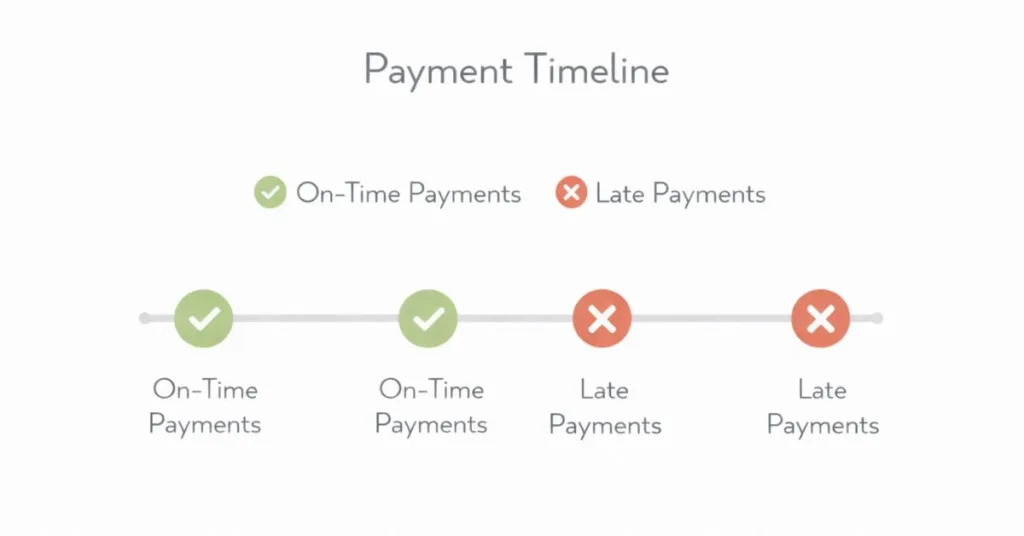
- On-time payment consistency
- Late payment patterns
- Repeated missed payment behavior
Over time, payment history helps show how reliably financial obligations are managed.
💰 Access and Cost Connection
Payment behavior can influence both access and pricing for financial products.
In many cases, credit behavior patterns may connect to:
- Interest rate ranges
- Deposit requirements
- Credit limit offers
- Financing terms
Credit systems evaluate reliability patterns when pricing financial risk.
US Credit Reliance
The US financial system relies heavily on credit scoring for many everyday approvals.
Payment history can influence access to areas like:
- Housing applications
- Financing approvals
- Insurance pricing models
- Service account deposits
Because credit is widely used for risk evaluation, payment behavior becomes one of the strongest long-term credit signals.
Payment history matters in real life because it helps show long-term financial reliability, not just short-term payment activity.
Why Payment History Matters
For many beginners, payment history simply sounds like a record of whether bills were paid or not. In credit systems, payment history is broader — it tracks how consistently financial obligations are paid over time.
Understanding why payment history matters means understanding how credit systems measure reliability. Payment history shows whether accounts are paid on time, how often payments are late, and how consistently payments are made across different accounts.
Payment history is designed to show long-term payment behavior patterns, not just single payment events.
🧾 Real-Life Meaning
In real life, payment history reflects how reliably financial commitments are handled month after month.
Payment history can reflect patterns such as:
- Consistent on-time payments
- Occasional late payments
- Repeated missed payment cycles
- Account payment stability over time
Payment behavior becomes part of how financial reliability is evaluated in everyday financial systems. Understanding how credit behavior affects financial access helps explain why payment patterns matter in daily life. Learning how credit scores affect financial life helps connect payment behavior to real-world financial outcomes.
🚫 Payment History ≠ Only Late Payments
One of the biggest beginner misunderstandings is thinking payment history only matters when payments are missed.
In reality, payment history includes:
- On-time payment consistency
- Payment timing patterns
- Long-term payment behavior trends
Credit systems evaluate reliability patterns over time, not just negative events.
Payment history is one of the strongest indicators of credit reliability because credit reports track how accounts are paid over time. US banking education resources explain through payment history credit report data that credit reports include both on-time and late payment records, and lenders use this information to help decide approvals and loan terms. Research on credit scoring models also shows that payment history is typically the largest credit score factor because it helps predict repayment reliability.
Payment history matters because it shows long-term payment reliability — not just whether a payment was missed.
How Payment History Works in the US Credit System
In the United States, payment history is tracked through credit reporting systems that record how accounts are paid over time. Credit reporting is designed to capture patterns of payment behavior, not just single payment events. Because credit reports are updated regularly, payment behavior becomes part of a long-term financial reliability record.
For many beginners, payment history can feel confusing because credit reporting is based on timelines, reporting cycles, and account status changes rather than only whether a payment was made once.
📅 Reporting Behavior
Credit accounts typically report payment activity to credit bureaus on recurring reporting schedules.
This means:
- Payment status is updated regularly
- Payment patterns are recorded over time
- Reporting timing can influence how payment behavior appears
Payment history becomes part of a rolling record rather than a one-time event.
⚠️ Late Payment Records
Late payments are usually recorded when payments are missed beyond reporting thresholds.
Credit reports may reflect:
- Late payment occurrences
- Frequency of late payments
- Severity based on timeline delays
Late payment records become part of long-term credit history patterns.
✅ On-Time Payment Patterns
On-time payments also become part of credit history and help build positive payment patterns.
Over time, on-time payment behavior can show:
- Payment consistency
- Reliability signals
- Stable account management behavior
Payment history reflects patterns rather than isolated months.
⏳ Credit Timeline Building
Payment history builds over time as accounts remain active and payment patterns accumulate.
Credit systems evaluate:
- Long-term payment consistency
- Changes in payment behavior
- Payment stability across accounts
Payment history becomes stronger as consistent behavior continues over time.
Payment history works by building a timeline of payment behavior that shows long-term reliability patterns in the US credit reporting system.
Common Payment History Mistakes Beginners Make
Many payment history mistakes happen because credit and billing systems are more complex than they appear at first. For many US beginners, missed or late payments often happen due to timing confusion, account tracking issues, or misunderstanding how minimum payments work.
Most payment mistakes are caused by system visibility gaps rather than intentional financial mismanagement.
⚠️ Missing Small Payments
Small balances are sometimes easier to forget, especially when multiple accounts are active.
This can happen with:
- Small Credit card balances
- Store card balances
- Subscription-linked accounts
- Low statement amounts
Even small missed payments can still be recorded in payment history timelines.
📅 Ignoring Due Date Timing
Payment timing confusion is a common beginner challenge.
This can include:
- Assuming all accounts share the same due date
- Confusing Statement date vs Due date
- Missing payments during busy financial periods
Credit reporting is based on payment status relative to due dates.
💳 Minimum Payment Confusion
Some beginners misunderstand how minimum payments work within payment history tracking.
Common misunderstandings include:
- Assuming minimum payment delays full payment requirement
- Confusing minimum payment with balance payment
- Assuming minimum payments remove all credit impact
Payment history tracks whether required payments were made on time.
🧾 Account Neglect Patterns
Inactive or rarely used accounts can sometimes be overlooked.
This can happen when:
- Older accounts remain open but unused
- Autopay is not monitored
- Account notifications are missed
Understanding broader money behavior patterns helps explain why payment habits develop over time. Learning about Common Beginner Money Mistakes helps show how payment behavior fits into overall financial behavior patterns.
Most payment history mistakes happen because of tracking and timing confusion — not intentional missed payments.
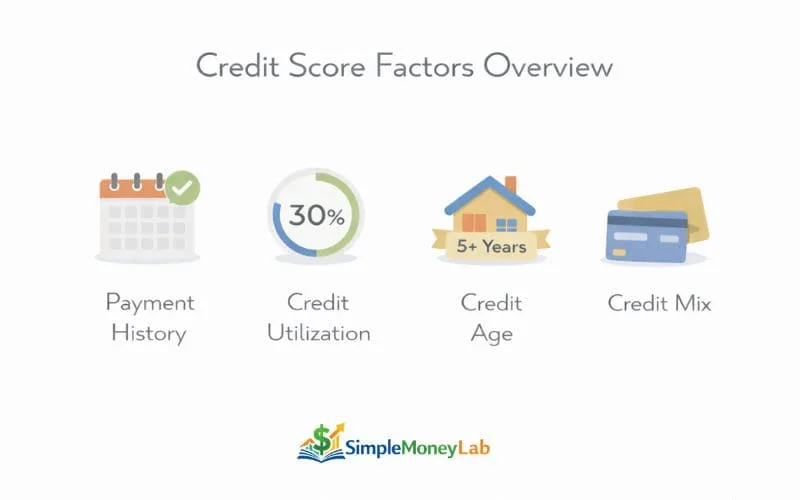
Payment History vs Credit Utilization vs Credit Age
Many beginners hear these credit factors mentioned together and assume they carry equal weight or serve the same purpose. In real life, payment history, credit utilization, and credit age each measure different parts of credit behavior. Credit scoring models evaluate how these factors work together to understand long-term credit reliability.
Each factor answers a different question about credit behavior patterns.
📜 Payment History vs Credit Utilization
Payment history measures whether accounts are paid on time and how consistently payments are made over time. Credit utilization measures how much available credit is being used at a given time.
In simple terms:
- Payment history = Reliability of paying obligations
- Credit utilization = Level of credit usage relative to limits
Understanding What is Credit Utilization helps explain how credit usage patterns add context to payment behavior patterns.
⏳ Payment History vs Credit Age
Credit age measures how long credit accounts have been active.
In practical terms:
- Payment history shows reliability patterns
- Credit age shows experience and account stability
Longer credit history can help provide more data about payment behavior patterns over time.
🧠 Behavior Layering Explanation
Credit scoring models usually evaluate these factors together, not separately.
For example:
- Strong payment history + Stable utilization = Consistent behavior signal
- Strong payment history + Long credit age = Long-term reliability signal
Credit scoring is designed to evaluate multiple behavior layers at once.
Payment history shows reliability, utilization shows usage behavior, and credit age shows experience over time.
US-Specific Credit Reporting Realities
In the United States, payment history is tracked using structured reporting timelines that help credit systems evaluate how payment behavior changes over time. Credit reporting is designed to show patterns, not just isolated payment events. Because of this, payment history becomes part of a longer credit behavior timeline that lenders and scoring models review.
For many beginners, payment reporting can feel complex because different credit events are recorded using standardized reporting stages and retention timelines.
📅 Reporting Timelines
Credit accounts typically report payment activity to credit bureaus on recurring reporting schedules.
This means:
- Payment status is updated periodically
- Payment patterns are recorded across months and years
- Credit history builds through continuous reporting cycles
Payment history becomes part of an evolving credit record.
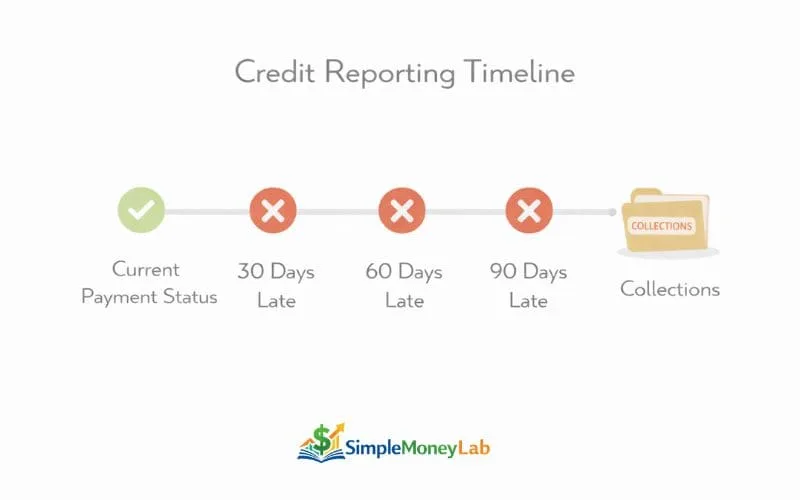
⚠️ 30 / 60 / 90 Day Systems
Credit reporting often tracks late payments based on timeline categories.
These categories help show how long payments were delayed and can help create structured payment history records over time.
Payment behavior is evaluated using timeline stages rather than single missed payment moments.
🧾 Collections Reporting Behavior
Accounts that remain unpaid for extended periods may move into collections reporting status.
Collections reporting helps credit systems track long-term unpaid account behavior patterns and becomes part of overall credit history records.
⏳ Credit Report Retention Timelines
Credit reports typically maintain payment history records for extended periods to help show long-term payment behavior patterns.
Retention timelines help lenders and credit systems evaluate historical reliability trends rather than only recent activity.
US credit reporting focuses on long-term payment behavior timelines, not just single payment events.
How Beginners Can Think About Payment History
For many beginners, payment history can feel stressful because it sounds like a permanent record where every mistake has long-term consequences. In reality, credit systems are designed to evaluate patterns of behavior over time. Payment history becomes stronger as consistent payment behavior builds across months and years.
Understanding payment history as a long-term behavior signal can help make credit feel more predictable and less intimidating.
🔁 Consistency > Perfection
Credit systems usually evaluate overall payment consistency rather than expecting perfect payment timing forever.
- Consistent payment behavior builds stronger long-term patterns
- Small timing variations are usually evaluated within broader trends
- Long-term consistency often matters more than isolated events
Payment systems track patterns, not perfection.
📊 Pattern > Single Mistake
Credit reporting systems usually evaluate payment behavior trends rather than focusing on one isolated late or missed payment.
- Long-term patterns provide more behavior data
- Payment trends show reliability direction
- Single events are usually evaluated within timeline context
Credit behavior is built across repeated patterns.
⏳ Timeline > Single Event
Payment history grows over time as more payment data is recorded.
- Longer timelines provide stronger reliability signals
- Payment stability becomes clearer over time
- Credit systems evaluate payment history across reporting cycles
Payment history is designed to measure reliability across time.
🧠 Reliability > Optimization
For beginners, understanding how payment reliability works usually matters more than trying to optimize credit metrics quickly.
- System understanding supports long-term credit confidence
- Awareness reduces credit-related stress
- Learning improves realistic credit expectations
Learning how credit behavior develops over time helps beginners understand realistic credit building timelines. Exploring how long it takes to build credit from zero helps connect payment history behavior to long-term credit development patterns.
Payment history is best understood as a long-term reliability pattern, not a short-term metric to manage perfectly.
FAQs About Why Payment History Matters
Why does payment history matter for credit score?
Payment history matters because it helps show how reliably credit accounts and bills are paid over time. Credit scoring models use payment history to evaluate consistency and reliability patterns across months and years.
Payment history helps provide context about how financial obligations are managed, which is why it is considered one of the strongest credit behavior indicators.
Does one missed payment ruin credit?
One missed payment usually does not define an entire credit history. Credit systems typically evaluate payment patterns over time rather than single events.
However, missed payments can still become part of payment history records, which is why long-term payment behavior trends matter more than isolated moments.
How long do missed payments stay on credit reports?
Missed payments can remain on credit reports for extended reporting periods depending on credit reporting rules and account status changes over time.
Credit reports are designed to show long-term behavior patterns rather than only recent payment activity.
Do on-time payments build credit?
Consistent on-time payments help create positive payment history patterns over time. Payment consistency helps credit systems evaluate reliability across longer timelines.
Payment history usually becomes stronger as more on-time payment data is recorded across active accounts.
Does minimum payment count for payment history?
Making at least the required minimum payment usually helps show that payment obligations were met for that billing cycle.
Payment history typically tracks whether required payments were made by the due date rather than whether full balances were paid.
How fast does payment history affect credit scores?
Payment history impact usually develops over time as payment patterns are reported across multiple reporting cycles.
Credit scoring systems typically evaluate payment behavior trends rather than reacting to single payment events alone.
Final Thoughts
Learning how credit works is usually a gradual process, especially for beginners who are still becoming familiar with credit reports, payment timelines, and scoring systems. Most people are not taught how credit reporting works in real life, which is why confusion around payment history is very common in the early stages of credit learning.
Credit systems are built to measure reliability over time. Payment history is not just about individual payments — it is about showing consistent behavior across months and years. As payment patterns build, credit systems gain more data to evaluate long-term financial reliability.
Credit health usually grows through behavior awareness and timeline consistency rather than short-term perfection. As beginners continue learning how credit reporting works, understanding how Credit score updates over time is often the next step in learning how payment behavior appears in credit reports and scoring models.
Credit is not about never making mistakes — it is about building reliability patterns over time.

I’m Daniel Moore, the founder of SimpleMoneyLab, where I help beginners learn Personal Finance in a simple and realistic way. I focus on breaking down Budgeting, Credit Basics, and Side Hustles into plain English so everyday Americans can feel more confident with Money.