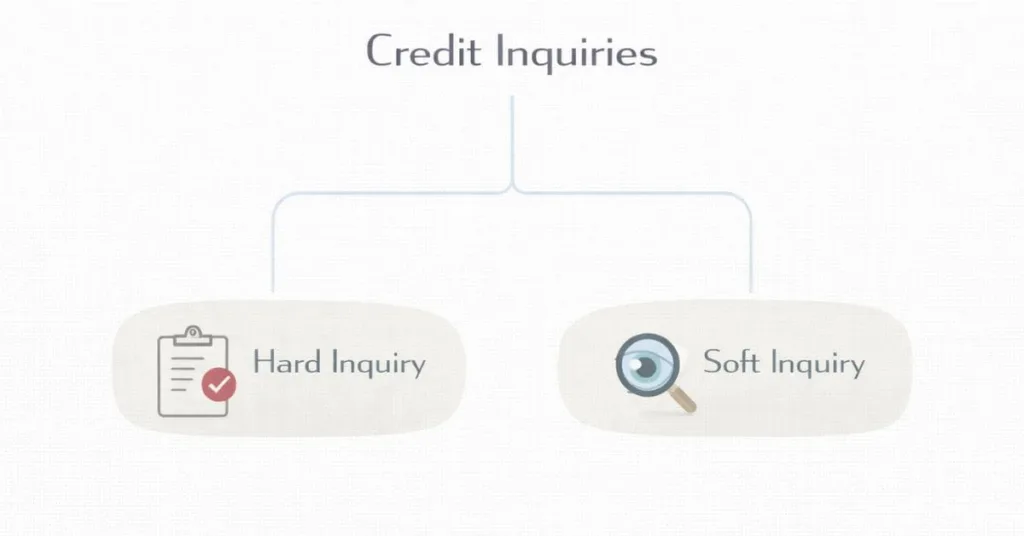
Many beginners feel confused the first time they see the term hard vs soft inquiry on a credit report. Credit checks are a normal part of the US credit system, but the difference between these two types of inquiries is not always clearly explained.
In simple terms, a credit inquiry happens when a lender, company, or authorized service reviews your credit report. These checks help institutions evaluate financial reliability before approving certain services, applications, or offers.
Understanding the difference between hard and soft inquiries helps remove unnecessary fear around credit checks. Once beginners understand when each type occurs and how they appear on a credit report, the credit system becomes much easier to navigate.
What Is a Credit Inquiry?
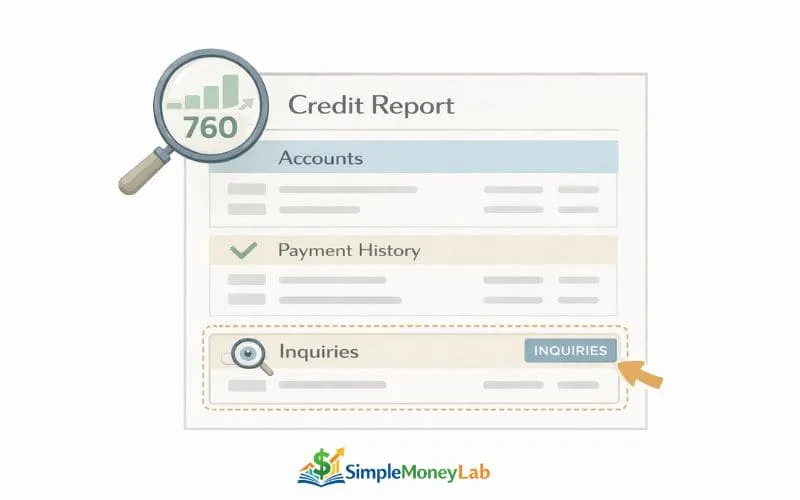
A credit inquiry is a record that appears on your credit report when someone checks your credit information. These checks are a normal part of the US credit system and help lenders or companies evaluate financial reliability before making certain decisions.
Credit inquiries do not always mean you applied for something. They simply show that a credit report review took place.
🔍 Lenders Checking Credit
When you apply for certain financial products or services, lenders may review your credit report to understand your credit history.
This helps them evaluate factors such as:
- Payment Reliability
- Existing Credit Accounts
- Overall Credit Behavior
These checks help lenders assess risk before approving applications.
📄 Part of Your Credit Report
Every inquiry is recorded on your credit report.
Your credit report acts as a historical record of:
- Credit Accounts
- Payment Activity
- Credit Checks
This record helps maintain transparency within the credit system.
⚙ Part of the Credit Evaluation Process
Credit inquiries are one step within the broader credit evaluation process.
Companies may review credit reports when evaluating:
- Loan Applications
- Credit Card Requests
- Financing Agreements
Understanding How Credit Scores Work provides deeper context about how these reviews connect to overall credit scoring systems.
👁 Visible Record of Credit Checks
Credit reports keep track of when inquiries occur and who initiated them. Depending on the type of inquiry, some checks may also be visible to lenders reviewing your report later.
This is why understanding the difference between inquiry types becomes important.
A credit inquiry is simply a record showing that your credit report was reviewed as part of a financial evaluation process.
What Is a Hard Inquiry?
A Hard inquiry occurs when a lender or financial institution checks your credit report as part of a formal application process. This usually happens when you apply for credit that requires approval based on your financial history.
Hard inquiries are a normal part of borrowing and financing decisions in the US credit system.
📄 When Hard Inquiries Happen
Hard inquiries usually occur when you submit an application for a financial product that requires a credit evaluation.
Common situations include:
- Applying for a Credit card
- Requesting a Personal loan
- Applying for a Mortgage
- Financing a Car purchase
In these situations, lenders review your credit report to understand your borrowing history before making an approval decision.
💳 Examples of Hard Credit Checks
Hard credit checks are typically tied to credit-based agreements where repayment is expected over time.
Examples may include:
- Credit card applications
- Installment loan requests
- Auto financing applications
- Mortgage approvals
Because these applications involve lending money, lenders usually need a full review of your credit report.
🏦 How Lenders Use Hard Inquiries
Lenders use hard inquiries to evaluate credit risk during the application process.
They may review information such as:
- Repayment reliability
- Credit account history
- Recent borrowing activity
While hard inquiries are only one part of credit evaluation, they appear on credit reports and can be visible to other lenders reviewing your credit history.
Understanding why payment history matters also helps explain how lenders interpret credit behavior when reviewing applications.
A hard inquiry happens when a lender checks your credit report during a formal credit application.
What Is a Soft Inquiry?
A Soft inquiry occurs when a credit report is checked for informational or background purposes rather than a formal credit application. These checks are common and are generally used for monitoring, identity verification, or pre-screening processes.
Unlike hard inquiries, soft inquiries do not affect your credit score.
🔍 Common Situations
Soft inquiries can happen in several everyday situations where a credit report is reviewed but no lending decision is being finalized.
Examples may include:
- Background financial checks
- Account monitoring services
- Employer credit checks in regulated roles
- Promotional credit offer screenings
These checks are typically informational rather than approval-based.
👤 Self Credit Checks
When individuals check their own credit report or credit score, it is recorded as a soft inquiry.
Self-checks are commonly done to:
- Monitor credit activity
- Review credit report accuracy
- Understand credit score changes
Because these checks are informational, they do not impact credit scores.
💳 Pre-Approval Checks
Credit card companies and lenders sometimes perform soft inquiries when determining whether someone may qualify for a pre-approved offer.
These checks allow institutions to evaluate potential eligibility without initiating a formal application process.
Since no official credit request is made at this stage, the inquiry remains informational.
Understanding how often credit scores update can also help beginners see how different types of credit activity appear on reports over time.
Soft inquiries are informational credit checks and do not affect credit scores.
Hard vs Soft Inquiry
Understanding the difference between hard vs soft inquiry helps beginners navigate the credit system with more confidence. While both types involve reviewing a credit report, they serve different purposes and are treated differently within the credit reporting system.
The main differences relate to visibility, score impact, and when each type occurs.
👁 Visibility on Credit Report
Both hard and soft inquiries appear on your credit report, but they are displayed differently.
Hard inquiries are visible to lenders reviewing your credit during future applications. Soft inquiries are usually only visible to you when reviewing your own credit report.
This difference helps lenders understand recent borrowing activity.
📊 Score Impact
One of the most important differences is how each inquiry type affects credit scores.
Hard inquiries may have a small and temporary effect on credit scores because they indicate that new credit is being requested. Soft inquiries do not affect credit scores at all because they are informational checks.
👥 Who Can See It
Hard inquiries can be seen by lenders when they review your credit report during application processes.
Soft inquiries are generally visible only to you and do not appear as part of the credit history that lenders evaluate.
⏱ When They Occur
Hard inquiries occur during formal credit applications, while soft inquiries occur during informational credit checks or pre-screening processes.
Understanding when each occurs helps reduce confusion when reviewing a credit report.
📊 Hard vs Soft Inquiry Comparison
| Feature | Hard Inquiry | Soft Inquiry |
|---|---|---|
| Credit Score Impact | May cause a small temporary impact | No impact on credit score |
| Visibility to Lenders | Visible to lenders reviewing your credit | Usually only visible to you |
| Typical Situations | Credit card, loan, mortgage applications | Self credit checks, pre-approvals |
| Purpose | Evaluate credit for lending decisions | Informational credit review |
The difference between hard vs soft inquiry mainly relates to score impact, visibility, and the type of credit check being performed.
How Hard Inquiries Can Affect Credit Scores
Hard inquiries are sometimes misunderstood because they are often associated with credit score changes. In reality, their impact is usually small and temporary. Understanding how they work helps beginners avoid unnecessary concern when reviewing their credit reports.
📊 Small Temporary Impact
A hard inquiry may cause a minor and short-term change in a credit score. This happens because applying for new credit signals potential borrowing activity to lenders.
However, the effect is usually limited because credit scoring models evaluate many factors together, including payment history, credit age, and overall credit usage.
🔁 Multiple Inquiries Pattern
While a single hard inquiry is typically not significant, several inquiries within a short time period may signal increased borrowing activity.
For example, if someone applies for multiple credit cards or loans in a short timeframe, lenders reviewing the credit report may interpret this as higher financial risk.
Credit scoring systems look at patterns rather than isolated events.
⏱ Timeline of Effect
Hard inquiries remain visible on credit reports for a longer period, but their impact on credit scores tends to decrease over time.
Generally:
- The impact is strongest shortly after the inquiry occurs
- The effect gradually fades as time passes
- Older inquiries carry less influence in scoring models
Understanding how different credit factors interact, including credit utilization, helps provide a broader view of how credit scores are calculated.
Hard inquiries can affect credit scores slightly, but the impact is usually temporary and becomes less significant over time.
Why Soft Inquiries Don’t Affect Credit Scores
Soft inquiries are treated differently from hard inquiries because they are informational checks rather than borrowing requests. Since no credit application is being evaluated, credit scoring systems do not interpret these checks as new financial risk.
This is why soft inquiries do not influence credit score calculations.
🔍 Informational Checks
Many soft inquiries occur when credit information is reviewed for informational purposes rather than lending decisions.
Examples may include:
- Reviewing your own credit report
- Checking credit through monitoring services
- Reviewing account activity
Because these checks are informational, they are not considered part of borrowing behavior.
🛡 Monitoring Systems
Credit monitoring tools and financial institutions may regularly check credit reports to detect unusual activity or help individuals track changes.
These automated checks allow people to:
- Monitor their credit health
- Detect potential fraud
- Review credit report updates
Since these checks are designed for monitoring rather than lending, they do not affect credit scores.
🪪 Identity Verification
Some companies perform soft inquiries to verify identity or confirm basic financial information during account setup or background checks.
These checks help confirm personal information without evaluating someone for a loan or credit approval.
Because no credit is being requested, credit scoring models ignore these inquiries entirely.
Soft inquiries are informational credit checks, so they do not affect credit scores.
Common Beginner Misunderstandings About Credit Inquiries
Credit inquiries are one of the most misunderstood parts of the credit reporting system. Many beginners assume that every credit check automatically harms their credit score, which can create unnecessary fear around monitoring credit reports.
Understanding the facts helps remove confusion and build confidence when reviewing credit activity.
❌ “Checking My Own Credit Hurts My Score”
A very common myth is that reviewing your own credit report will reduce your credit score.
In reality, when you check your own credit, it is recorded as a soft inquiry. Soft inquiries are informational checks and do not affect credit scores.
Regularly reviewing your credit report can actually help you stay aware of changes and detect potential errors.
❌ “All Inquiries Affect Credit”
Not every credit inquiry influences credit scores.
Hard inquiries may have a small temporary impact because they occur during credit applications. Soft inquiries, on the other hand, are informational and do not affect scoring models.
Understanding the difference helps reduce unnecessary concern when reviewing credit reports.
❌ “Hard Inquiries Stay Forever”
Hard inquiries remain visible on credit reports for a limited period, but they do not stay indefinitely.
Over time:
- Their influence on credit scores decreases
- Older inquiries become less relevant in scoring models
Learning from common beginner money mistakes can also help clarify how misunderstandings about credit reports sometimes create avoidable financial stress.
Many concerns about credit inquiries come from myths rather than how credit scoring systems actually work.
How Beginners Should Think About Credit Inquiries
For many beginners, seeing credit inquiries on a report can feel alarming at first. In reality, inquiries are simply part of how the credit system tracks credit activity. Understanding the broader context helps replace fear with awareness.
A balanced perspective makes credit reports much easier to interpret.
👁 Awareness > Fear
Credit inquiries are normal and expected when interacting with the financial system. Applications for loans, credit cards, or financing often require lenders to review credit reports.
Instead of worrying about every inquiry, it helps to view them as routine records of credit activity.
📊 Pattern > Single Inquiry
Credit scoring systems generally focus on patterns rather than isolated events.
A single inquiry rarely plays a major role in credit evaluation. What matters more is the overall pattern of credit behavior across time.
🔎 Credit Activity Context
Credit inquiries make more sense when viewed alongside other credit factors.
Lenders typically consider multiple elements together, including:
- Payment Reliability
- Credit Utilization
- Account History
- Recent Credit Activity
Looking at the full picture provides more accurate context.
⏳ Long-Term Behavior Focus
Credit systems are designed to evaluate long-term reliability rather than short-term fluctuations. Understanding how long it takes to build credit from zero helps beginners see how credit activity develops gradually over time.
A long-term mindset reduces unnecessary concern about individual report details.
Credit inquiries are just one small part of a much larger credit behavior pattern.
FAQs
What is the difference between hard and soft inquiry?
The main difference between hard and soft inquiry is how they affect credit scores and why they occur. A hard inquiry happens when a lender checks your credit during a formal credit application, while a soft inquiry occurs during informational checks such as credit monitoring or pre-approval screenings.
Hard inquiries may have a small temporary impact on credit scores, while soft inquiries do not affect credit scores at all.
Does a hard inquiry affect credit score?
A hard inquiry can cause a small and usually temporary change in a credit score. This happens because applying for new credit signals potential borrowing activity.
However, credit scoring models consider many factors together, so a single hard inquiry typically has only a minor effect.
Do soft inquiries show on credit reports?
Yes, soft inquiries appear on credit reports, but they are generally visible only to the person reviewing their own report. Lenders evaluating a credit application usually do not see these inquiries.
Because soft inquiries are informational checks, they do not affect credit scores.
How long do hard inquiries stay on a credit report?
Hard inquiries remain listed on credit reports for a limited period of time. While they may stay visible for longer, their influence on credit scoring models typically decreases as they age.
Older inquiries usually carry less weight than recent ones.
Can I check my own credit without hurting my score?
Yes. When individuals check their own credit report or credit score, it is recorded as a soft inquiry. Since soft inquiries are informational checks, they do not affect credit scores.
Monitoring your credit can help you stay aware of changes or potential errors.
Do multiple hard inquiries matter?
Multiple hard inquiries within a short period may signal increased borrowing activity to lenders. Credit scoring systems may look at patterns of credit applications when evaluating risk.
However, the impact still depends on the broader context of overall credit behavior.
Final Thoughts
Learning how the credit system works can feel confusing at first, especially when new terms like credit inquiries appear on a credit report. For many beginners, the biggest challenge is simply understanding how these reporting systems track credit activity over time.
Credit inquiries are just one part of a much larger reporting process. They help lenders see when credit checks occur, but they are only a small piece of the overall credit evaluation system.
Once beginners understand the difference between hard and soft inquiries, much of the fear around credit checks disappears. Instead of worrying about every credit report entry, it becomes easier to focus on long-term credit behavior.
Exploring the difference between thin file vs no file can also help explain how credit history develops and why some people have limited credit records when they first begin building credit.
The more you understand the credit reporting system, the easier it becomes to manage credit decisions with confidence.

I’m Daniel Moore, the founder of SimpleMoneyLab, where I help beginners learn Personal Finance in a simple and realistic way. I focus on breaking down Budgeting, Credit Basics, and Side Hustles into plain English so everyday Americans can feel more confident with Money.