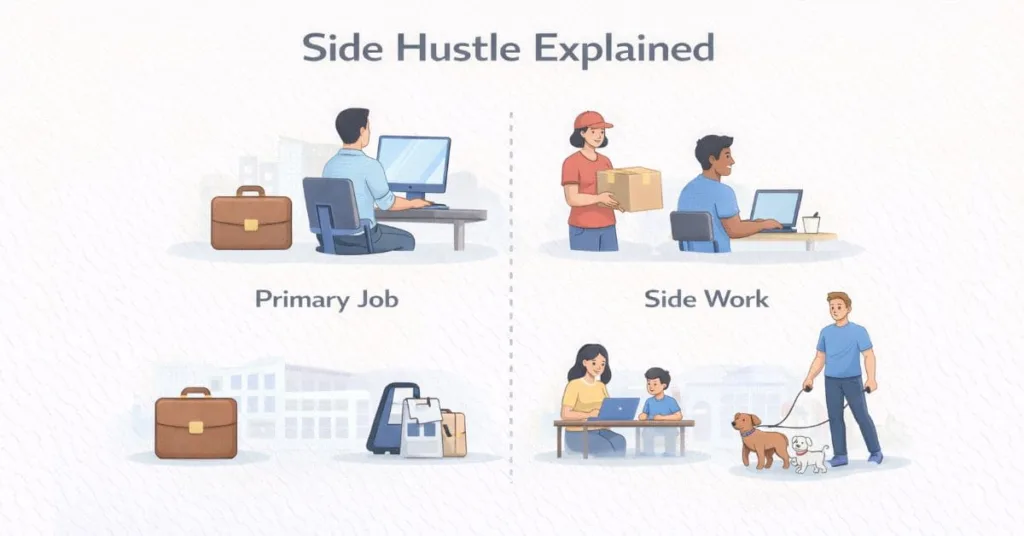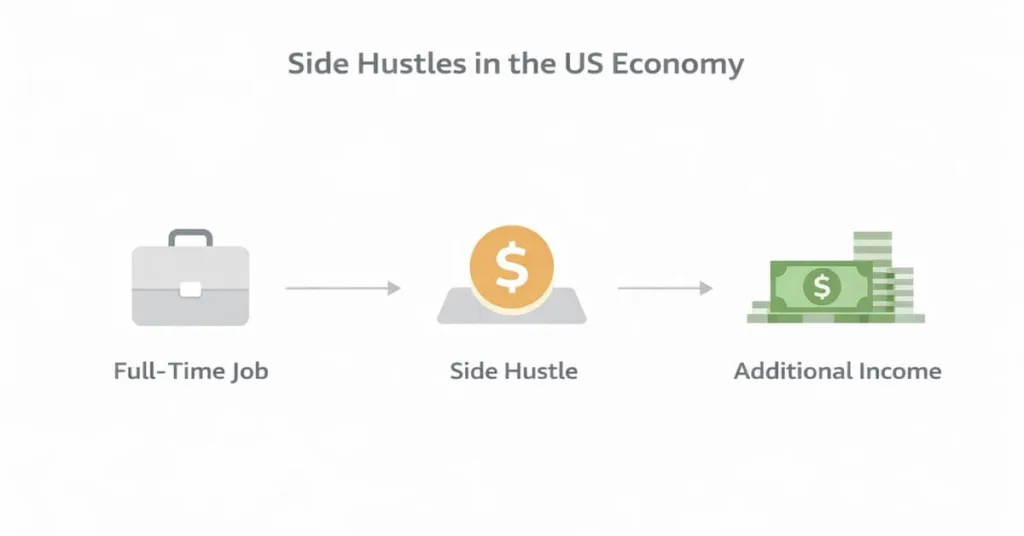
Side hustles have become increasingly common across the United States as people explore flexible ways to earn additional income or develop new skills. In many discussions about work trends and financial behavior, side hustles in the US economy are often mentioned as part of the growing gig and freelance landscape.
Technology, digital platforms, and remote work opportunities have made it easier for individuals to experiment with different types of flexible work. As a result, side hustles are now visible across many industries and income levels.
Understanding how side hustles fit into the broader money system can help beginners see the bigger picture. Rather than viewing them only as personal income activities, side hustles can also be understood as part of wider economic and work trends in the United States.
Why Side Hustles Are So Common in the US
Side hustles have become more visible in the United States as people explore different ways to manage income, work flexibility, and career development. Changes in work culture, technology, and economic conditions have made flexible income opportunities easier to access.
These factors help explain why side hustles appear frequently in conversations about modern work and personal finance.
💰 Rising Living Costs
One reason side hustles are becoming more common is the increasing cost of everyday expenses. Housing, transportation, healthcare, and other living costs can influence how people think about their financial options.
For some individuals, side hustles represent a way to explore additional income streams alongside traditional employment.
🧑💻 Flexible Work Culture
Work culture in the United States has gradually shifted toward greater flexibility. Remote work, project-based work, and freelance opportunities have become more widely discussed.
This flexibility has made it easier for some people to experiment with different forms of part-time or supplemental work.
🌐 Technology Platforms
Digital platforms have played a major role in the growth of side hustles. Online marketplaces, freelance platforms, and app-based services allow individuals to connect with customers, clients, or short-term opportunities.
These technologies have lowered some of the barriers that previously limited access to flexible work.
📊 Income Diversification
Another reason side hustles appear frequently is the idea of income diversification. Some people explore additional income activities as a way to expand their financial options or experiment with different skills.
Understanding Whether side hustles are worth it can help beginners evaluate how flexible income opportunities fit into their overall financial decisions.
Side hustles have become common in the US because of changes in technology, work culture, and the growing interest in income flexibility.
The Growth of the Gig Economy
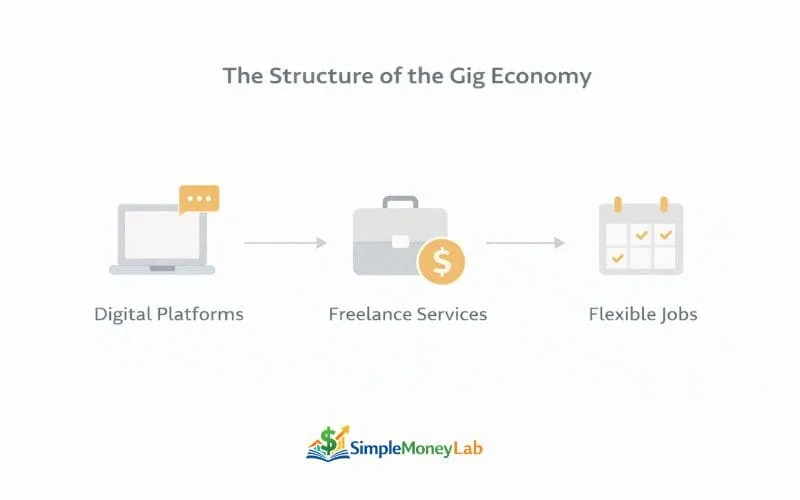
The expansion of the gig economy has played an important role in making side hustles more visible across the United States. Digital tools and online platforms have made it easier for people to participate in short-term work, freelance services, and flexible income opportunities.
As these systems have developed, many individuals have begun exploring different forms of part-time or project-based work alongside traditional employment.
🌐 Digital Platforms
Digital platforms allow individuals to connect with customers, clients, or short-term work opportunities through online systems. These platforms often manage communication, payments, and project coordination.
Because of this infrastructure, people can sometimes access flexible work opportunities without needing traditional hiring processes.
💻 Freelance Marketplaces
Freelance marketplaces have expanded opportunities for independent professionals and beginners exploring side work.
These platforms allow individuals to offer services such as:
- Creative work
- Technical support
- Consulting
- Digital services
By connecting service providers with clients, freelance marketplaces help support flexible work arrangements.
⏱ Flexible Work Models
The gig economy also supports work models that are different from traditional full-time employment. Many people participate in project-based work, short-term assignments, or service-based opportunities that can fit around existing schedules.
Research on labor market trends and gig economy work in the United States from the U.S. Bureau of Labor Statistics provides additional insight into how flexible work models have evolved in recent years.
Digital platforms and freelance marketplaces have expanded access to flexible work opportunities within the US gig economy.
Why Many Americans Explore Side Hustles
Across the United States, many people explore side hustles for different personal and financial reasons. While motivations vary, flexible income opportunities often appeal to individuals who want to experiment with additional work outside their primary job.
Side hustles are sometimes viewed as a way to explore skills, increase financial flexibility, or test new opportunities without fully changing careers.
💰 Supplemental Income
One common reason people explore side hustles is the possibility of earning supplemental income. Additional income activities can help people experiment with different ways to support financial goals or manage everyday expenses.
Because side hustles can sometimes be done outside regular working hours, they may provide an additional financial option for some individuals.
🧠 Skill Development
Side hustles can also provide opportunities for skill development. Some individuals explore side projects to practice new abilities, gain experience in different fields, or experiment with creative ideas.
Over time, these experiences may help people develop skills that can be useful in other areas of their professional or personal lives.
🔄 Financial Flexibility
Another reason people explore side hustles is the flexibility they may offer. Flexible work arrangements can sometimes allow individuals to choose when and how they complete certain tasks.
Learning what a side hustle actually means can help beginners understand how these flexible income activities are defined within the broader financial landscape.
Many Americans explore side hustles to experiment with income opportunities, develop skills, and gain greater financial flexibility.
Side Hustles and Income Diversification
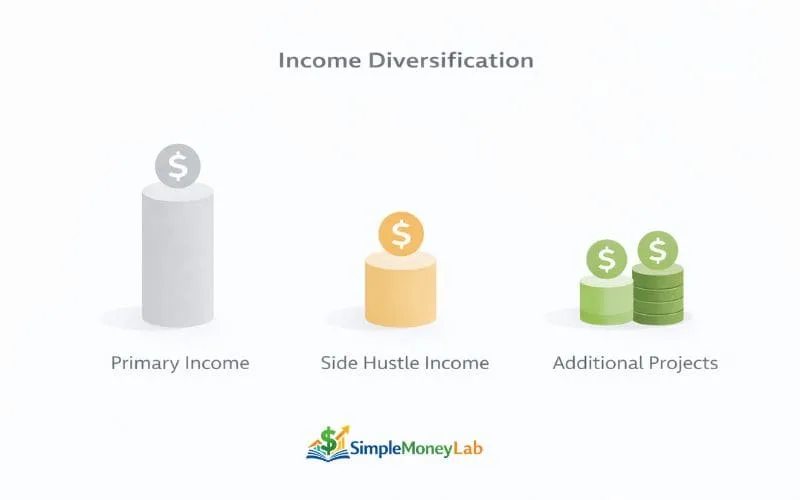
One concept often discussed alongside side hustles is income diversification. Instead of relying entirely on a single income source, some individuals explore additional ways to earn money through part-time projects or flexible work opportunities.
Side hustles sometimes become part of this broader approach to managing income and financial stability.
💼 Primary vs Secondary Income
Most people rely on a primary income source, such as a full-time job or main profession. Side hustles are often considered secondary income activities that exist alongside that primary source.
This distinction helps explain why many people treat side hustles as supplemental opportunities rather than replacements for traditional employment.
🛡 Financial Resilience
Diversifying income sources can sometimes help individuals feel more financially resilient. When income comes from more than one source, it may create additional flexibility in managing financial changes or unexpected expenses.
Concepts such as why emergency funds matter also highlight how financial planning tools can help support stability alongside income diversification.
🧪 Income Experimentation
Side hustles can also function as a way for people to experiment with different types of work. Trying new projects or services allows individuals to explore opportunities without immediately committing to major career changes.
This experimentation can help people learn about different industries, develop skills, and better understand how flexible work fits into their financial goals.
Side hustles sometimes contribute to income diversification by allowing individuals to explore secondary income activities alongside their primary work.
How Technology Enabled Side Hustle Growth
Technology has played a major role in expanding access to side hustles across the United States. Digital tools, online marketplaces, and remote communication systems have made it easier for individuals to connect with opportunities outside traditional employment structures.
These technological changes have helped many people experiment with flexible work in ways that were more difficult in the past.
🌐 Online Platforms
Online platforms allow individuals to offer services, complete tasks, or sell products through digital marketplaces. These platforms connect service providers with customers in ways that reduce geographic limitations.
Because of this accessibility, many beginners explore different opportunities through platforms that support freelance or project-based work.
💳 Digital Payments
The growth of digital payment systems has also supported side hustle expansion. Online payment tools allow people to send and receive payments quickly for services, products, or completed tasks.
This infrastructure makes it easier for flexible work arrangements to function efficiently.
💻 Remote Work Tools
Remote communication tools, cloud platforms, and collaboration software have made it easier to complete many types of work from different locations.
As these tools become more common, individuals can explore various types of side hustles that rely on digital workflows rather than traditional workplaces.
Technology has made side hustles more accessible by enabling digital platforms, remote work, and online payment systems.
Economic Benefits and Limitations
Side hustles can offer different economic opportunities, but they also come with certain limitations. Understanding both sides helps beginners view flexible income activities in a balanced way rather than focusing only on potential advantages.
Looking at both benefits and challenges can provide a clearer picture of how side hustles function within the broader economy.
🔄 Opportunity Flexibility
One potential benefit of side hustles is the flexibility they may provide. Many opportunities allow individuals to explore work outside traditional schedules or experiment with different types of projects.
This flexibility can make it easier for some people to test new ideas, build skills, or explore alternative income activities alongside their primary work.
📉 Income Variability
Side hustle income can vary depending on demand, availability, and the type of work involved. Unlike traditional salaries, flexible work opportunities may experience periods of higher or lower activity.
Because of this variability, results from side hustles may change over time rather than remaining constant.
📊 Market Competition
Many side hustles operate in competitive environments where multiple individuals offer similar services or complete similar tasks.
Competition can influence how quickly opportunities appear and how individuals position their work within different marketplaces. Understanding common side hustle myths can help beginners separate realistic expectations from popular misconceptions about flexible income opportunities.
Side hustles can provide flexible opportunities, but they also involve income variability and competitive markets.
How Side Hustles Fit Into Personal Finance Planning
Side hustles are often discussed not only as work opportunities but also as part of broader personal finance planning. For some individuals, flexible income activities can complement existing financial strategies or provide opportunities to experiment with different financial goals.
Understanding this connection helps beginners see how side hustles can interact with other aspects of financial decision-making.
💰 Income Flexibility
One way side hustles may influence personal finance is by adding flexibility to income sources. Additional income activities can sometimes provide room to explore different financial priorities or experiment with how money is allocated.
For some individuals, this flexibility can help them better understand how different income streams interact with everyday expenses.
🧪 Financial Experimentation
Side hustles can also function as a way to experiment with financial strategies. Trying different projects or opportunities may allow individuals to explore how flexible income fits within their broader financial picture.
This experimentation can help people learn how additional income sources affect spending patterns, budgeting habits, or savings goals.
🧠 Skill Growth
Beyond income, side hustles often involve learning new skills that may be useful in other areas of financial or professional development.
As people gain experience through side projects, they may better understand how their work connects to broader financial concepts such as disposable income and how income flows through everyday financial decisions.
Side hustles can interact with personal finance planning by adding income flexibility, learning opportunities, and financial experimentation.
FAQs
Why are side hustles common in the US?
Side hustles are common in the United States because many people explore additional ways to earn income, develop skills, or gain more flexibility in their work lives. Economic factors such as rising living costs, changing work patterns, and access to digital platforms have also made flexible income opportunities more visible.
Technology has made it easier for individuals to connect with freelance projects, gig-based work, and short-term opportunities. As a result, side hustles have gradually become part of modern work culture, especially for people who want to experiment with income options alongside their primary job.
What is the gig economy?
The gig economy refers to a labor market where individuals complete short-term work, freelance projects, or contract-based tasks instead of relying only on traditional full-time employment. In this system, workers may provide services on demand through digital platforms or independent arrangements.
Gig economy work can include activities such as freelance services, project-based contracts, or app-based tasks. These flexible work models allow people to choose when and how they work, which is one reason the gig economy has become closely connected with the growth of side hustles.
Are side hustles part of the US economy?
Yes, side hustles are considered part of the broader US economy because they contribute to economic activity through services, freelance work, and small-scale entrepreneurship. Even though many side hustles operate on a part-time basis, they still involve the exchange of services, products, and payments.
As more people participate in flexible work arrangements, side hustles have become increasingly visible within discussions about modern labor markets and alternative income opportunities.
Do many Americans have side hustles?
A growing number of Americans explore side hustles in addition to their primary work. Some individuals use side hustles to supplement their income, while others use them to experiment with new skills or professional interests.
The accessibility of digital platforms and remote work tools has made it easier for people across different industries to participate in flexible income activities. Because of this, side hustles have become a recognizable part of contemporary work trends in the United States.
Why do people start side hustles?
People start side hustles for many different reasons. Some individuals explore them to earn additional income, while others use them to develop skills, pursue hobbies, or experiment with entrepreneurial ideas.
Side hustles may also provide opportunities for professional growth or creative exploration. For beginners, they can serve as a way to test new ideas without immediately changing careers or leaving their primary job.
How do side hustles affect income stability?
Side hustles can influence income stability in different ways depending on the type of work involved. For some individuals, additional income streams may create greater financial flexibility or provide opportunities to diversify income sources.
However, income from side hustles can also vary depending on demand, market conditions, and available time. Because of this variability, many people view side hustles as supplemental income activities rather than consistent replacements for traditional employment.
Final Thoughts
Flexible income opportunities have become a visible part of modern work culture in the United States. As digital platforms, remote work tools, and freelance marketplaces continue to expand, side hustles are increasingly discussed as one way people explore additional income activities.
Rather than viewing side hustles only as quick income ideas, it can be helpful to understand them within the broader economic context. For many individuals, side hustles function as small experiments that allow people to test skills, explore interests, or add flexibility to their financial routines.
Over time, these experiments may help people learn how different income activities fit alongside traditional employment and personal finance planning. Understanding this broader perspective makes it easier to see side hustles as part of evolving work patterns rather than short-term trends.
Exploring the differences between side hustles vs part-time jobs can provide additional insight into how these two types of flexible work operate within the modern labor landscape.
Side hustles are often best understood as part of a gradual shift toward more flexible income opportunities within the US economy.

I’m Daniel Moore, the founder of SimpleMoneyLab, where I help beginners learn Personal Finance in a simple and realistic way. I focus on breaking down Budgeting, Credit Basics, and Side Hustles into plain English so everyday Americans can feel more confident with Money.