
For many beginners, the term “Side Hustle” can feel vague or unclear. It shows up in conversations, social media, and online job forums across the United States, yet people often mean different things when they use it.
Some think of freelancing, others picture gig apps, and some see it as a small business — which makes the term confusing for beginners who are trying to understand What a Side hustle actually means.
In the U.S., side hustles have become a normal part of work culture over the past decade. Students, Workers, and Newcomers explore side hustles to create a little extra financial flexibility without leaving their main job. It’s less about chasing big money and more about supporting everyday goals, gaining skills, or testing new interests.
This article breaks down beginner-friendly side hustle options in a clear and realistic way, without hype or unrealistic claims. The goal is simply to help you understand what kinds of side hustles exist and how they fit into modern U.S. life.
What Makes a Side Hustle Beginner-Friendly?
Not all side hustles are equally accessible. Some require specialized skills, certifications, or upfront investment, which can make them harder for beginners to start. A beginner-friendly side hustle, on the other hand, is one that most people can explore with limited barriers and flexible expectations.
A few characteristics tend to make a side hustle more approachable:
🟩 Low Barrier to Entry
Beginners don’t need years of experience, advanced training, or complex tools to get started.
🕒 Flexible Scheduling
Side hustles fit around existing work, school, or family schedules instead of replacing them.
📦 Minimal Upfront Requirements
Many beginner-friendly options rely on skills or resources people already have, rather than requiring major purchases.
🎯 Accessible Skills
Tasks often draw from everyday abilities such as communication, organization, or basic digital skills.
⏱ No Full-Time Commitment
Side hustles add to financial or personal goals without needing to become a second job.
Understanding these criteria helps set realistic expectations and gives beginners a clearer picture of where to start without pressure or hype.
Best Side Hustles for Beginners (US)
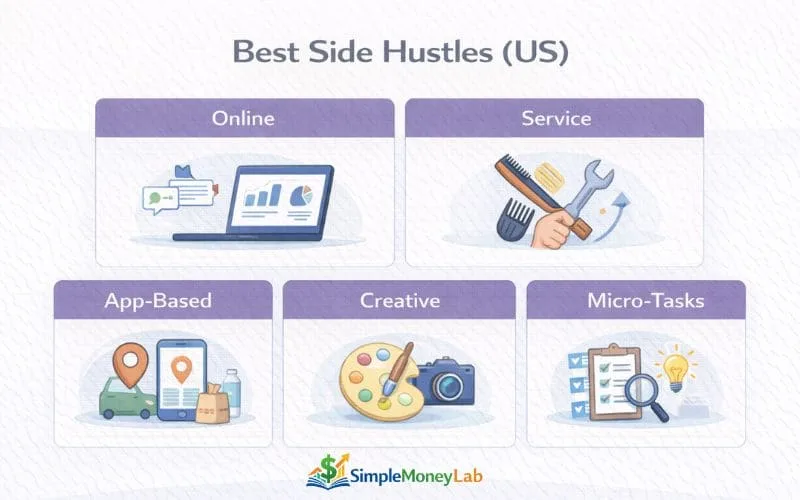
The side hustles below are organized into categories to help beginners understand how different types of work fit into everyday life in the United States. These options focus on flexibility, accessibility, and realistic expectations rather than guaranteed outcomes or financial promises.
🟩 Online Side Hustles
Online Side Hustles allow beginners to work from home or any internet-connected space. They are popular among students, full-time workers, and parents because they don’t require travel and can be scheduled around other responsibilities.
Common Examples include:
✳ Freelance Writing or Editing
People with strong language skills can help individuals or companies edit documents, write blog posts, or improve emails and resumes. Work is often project-based and can be done at flexible hours.
✳ Virtual Assistance
Virtual assistants help with tasks such as Scheduling, Email Organization, Data Entry, or Basic Research. Many beginners start with general tasks and expand skills over time.
✳ Tutoring
Tutoring may involve helping students with School Subjects, Standardized Test Preparation, or Language Learning. This option works well for those who enjoy teaching or explaining concepts.
✳ Transcription
Transcription involves converting audio into written text. It requires Listening, Attention to Detail, and Accuracy rather than specialized credentials.
✳ Selling Digital Products
Digital items such as Templates, Planners, Worksheets, or Simple Graphics can be created once and used repeatedly. This appeals to beginners who enjoy creative or administrative work.
✳ Simple Design Tasks
Beginners use basic design tools to make Banners, Covers, Invitations, Classroom Resources, or Visual Layouts without needing advanced design training.
✳ User Testing
User testing involves giving feedback about Websites, Apps, or Digital Experiences. It focuses on clarity and usability rather than performance.
Online Side hustles work well for beginners who prefer quiet, independent tasks and flexible scheduling.
🟦 Service-Based Side Hustles
Service-based side hustles take place in local communities and often rely on everyday human skills. These roles are familiar in the U.S. and are seen as practical and approachable for beginners.
Common Examples include:
✳ Pet Sitting or Dog Walking
Pet owners frequently need short-term Care or Daily walks for their animals. This works well for beginners who enjoy spending time outdoors or with animals.
✳ Babysitting
Babysitting remains a common side hustle for Students, Neighbors, and Young adults. Families often need occasional support during evenings, weekends, or special events.
✳ Home Organizing
Beginners help individuals organize Closets, Bedrooms, Home Offices, or Storage areas. Organizational skills and patience are more important than professional certification.
✳ House Cleaning
Light cleaning and tidying services are common in many US cities. The work is familiar, task-based, and easy to understand without specialized training.
✳ Casual Photography
Beginners take simple photos for Birthdays, Small Gatherings, or Personal Projects. Professional equipment is not always required for introductory work.
✳ Music Lessons
Students or Adults offer lessons for instruments they already play. Lessons often take place in Homes, Community Centers, or Online.
✳ Basic Repairs or Tasks (Non-licensed)
Beginners help with simple home tasks like Assembling Furniture, Installing Shelves, or Moving Boxes. These activities do not involve Electrical, Plumbing, or licensed trades.
Service side hustles suit people who like direct interaction, hands-on tasks, and local community involvement.
🟧 App & Platform-Based Side Hustles
Platform-based side hustles have grown rapidly in the United States due to flexible scheduling and on-demand work. Instead of finding customers directly, platforms connect beginners to individuals or businesses.
Common Categories include:
✳ Food Delivery
Delivery platforms allow people to deliver meals from Restaurants to Customers. Scheduling is flexible and can be turned on or off as needed.
✳ Package Delivery
Some platforms allow beginners to Deliver Packages or Small Items in local neighborhoods. Routes vary by demand and location.
✳ Rideshare Driving
Rideshare platforms connect drivers with Passengers for Transportation. Hours are self-selected, making it popular among workers with unpredictable schedules.
✳ Task-based Platforms
Task platforms match beginners with people needing help with Home Assembly, Lifting, or Event setup. This appeals to individuals who prefer physical work.
✳ Micro Errands
Micro errands include Picking up items, Dropping off documents, or Helping with small household needs. Tasks are short and vary widely.
These platform categories are familiar to US audiences and offer flexible participation without long-term commitments.
🟨 Creative & Selling Side Hustles
Creative side hustles allow beginners to use artistic interests, digital creativity, or casual crafting to make products for others.
Examples include:
✳ Print-on-Demand Merchandise
Beginners upload simple designs that can be printed on Shirts, Mugs, or Stationery. Production and shipping are handled externally.
✳ Selling crafts
Handmade goods such as Candles, Jewelry, Accessories, or Small decor are sold through local markets or online marketplaces.
✳ Digital Templates
Templates for Resumes, Planners, Invitations, Classroom materials, or Business tasks serve niche audiences without requiring physical inventory.
✳ Digital Artwork or Graphics
Beginners with Illustration or Design interests can create digital art for personal, educational, or commercial use.
✳ Re-selling Items
Beginners purchase items from thrift stores or clearance sections and resell them through online marketplaces. The focus is on understanding demand and condition.
Creative side hustles work well for individuals who enjoy making things or experimenting with digital tools.
🟫 Short Micro-Task Side Hustles
Micro-tasks are appealing because they require very little time and can be completed in small breaks throughout the day. They do not function as full-time work and are better understood as occasional opportunities.
Common Examples include:
✳ Online Surveys
Beginners answer survey questions related to Demographics, Opinions, or Product experiences. Surveys vary in length and availability.
✳ Website or App Testing
Testers provide feedback on how easy or confusing a digital product is to use. Feedback focuses on clarity and usability.
✳ Small Research Tasks
These tasks involve looking up Information, Organizing Details, or Verifying data for projects.
✳ Short Feedback Tasks
Beginners evaluate Short Content, Categories, or User Experiences to support digital development.
Micro-tasks are best for beginners who prefer extremely flexible, low-commitment activities rather than structured projects.
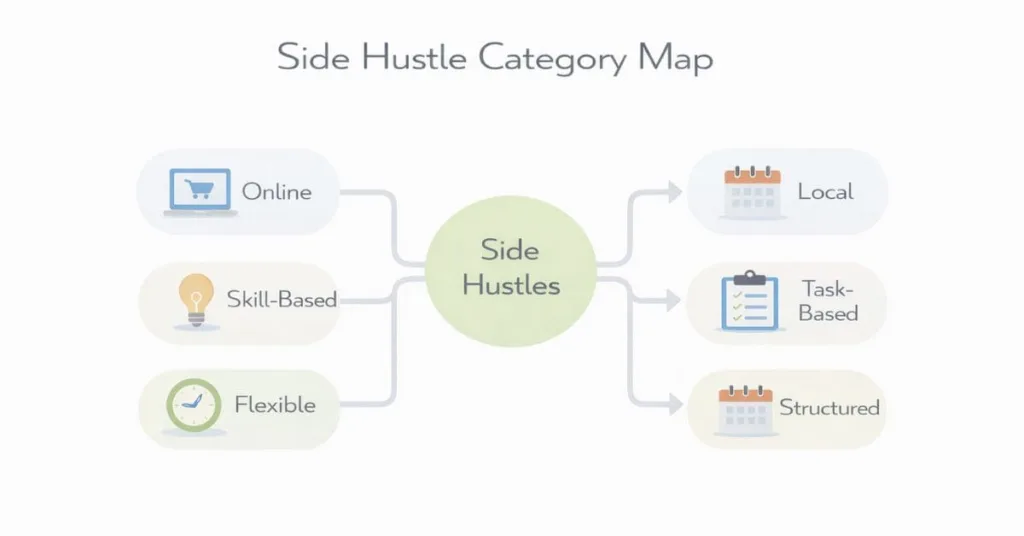
While beginner ideas are helpful, it’s also important to understand the broader Types of Side hustles available in the US so you can match them to your schedule and skills.
Who Are Beginner Side Hustles Best For?
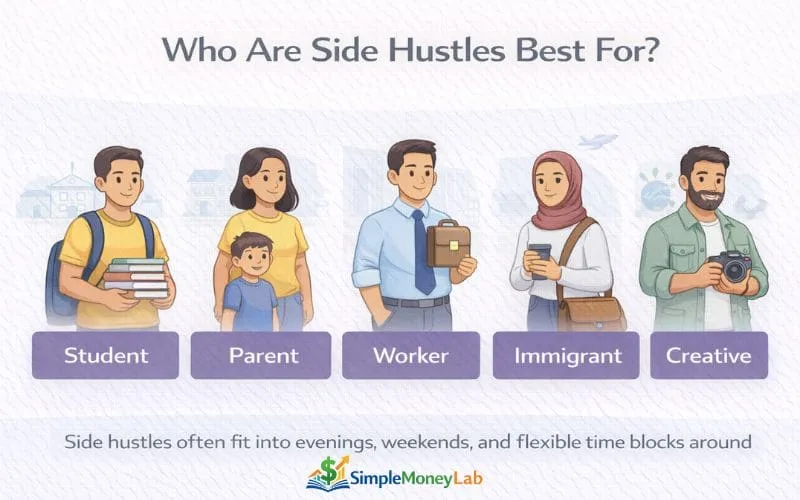
Beginner-friendly side hustles are appealing to a wide range of people in the United States. Although reasons vary, many participants fall into familiar groups with different goals and motivations.
👩🎓 Students
College and university students often explore side hustles to support everyday expenses, develop work experience, or build new skills around their class schedule. Flexibility is important because academic workloads shift throughout the semester, making traditional part-time roles less convenient.
👨💼 Full-Time Workers
People with full-time jobs use side hustles to create extra financial flexibility without changing careers. Evening or weekend scheduling makes these options attractive for workers in fields where overtime or second shifts are not always available.
👩👦 Parents and Caregivers
Parents may look for side hustles that allow them to balance school drop-offs, childcare, or household responsibilities. Remote or app-based options can be helpful because they can be paused or resumed as routines change.
🌍 Immigrants and Newcomers
New residents in the U.S. often explore side hustles while adjusting to the local job market, building work history, or improving language fluency. Side hustles can introduce them to community networks and flexible entry points.
🎨 Creative Individuals
People with creative interests—such as design, art, photography, or writing—use side hustles to test their skills in a low-pressure environment. This allows beginners to explore their interests without committing to launching a full business.
🧰 Skilled Labor & Practical Workers
Individuals who enjoy hands-on work, organization, or problem-solving may pursue service or task-based side hustles. These options allow them to apply everyday skills such as assembly, repair, or transportation without needing specialized certification.
Many beginners explore side hustles as part of improving their Personal finance basics and gaining more flexibility around everyday expenses.
These personas showcase how side hustles fit into modern U.S. life across different backgrounds, life stages, and responsibilities.
Realistic Expectations & Limitations
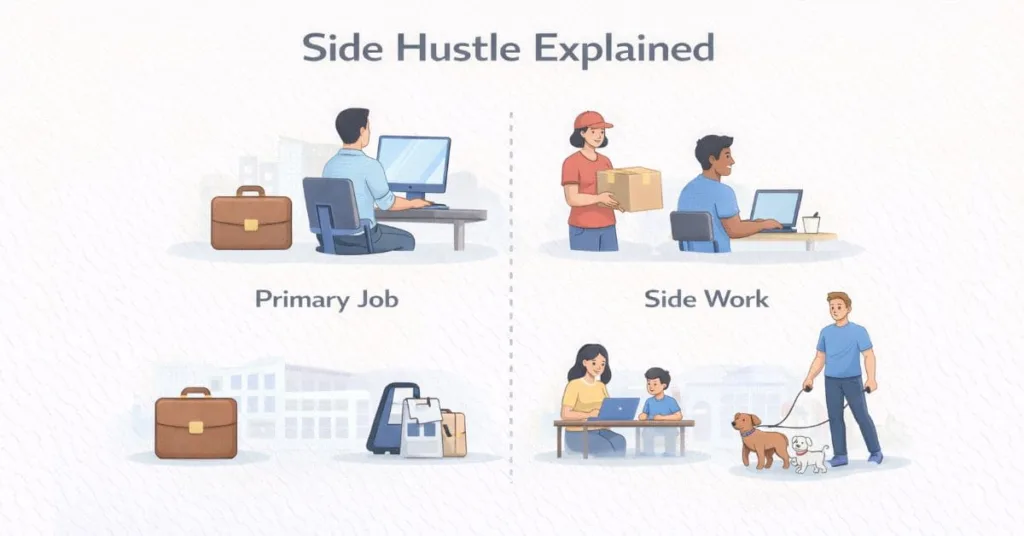
Side hustles can create flexibility for beginners, but they also come with limitations that are important to understand. Unlike a full-time job with predictable hours and compensation, side hustles function more as supplemental work that depends on time, demand, and personal consistency.
💰 Variable Income
Side hustles do not guarantee steady earnings from week to week. Some periods may offer more opportunities while others are slower due to Seasonality, Market demand, or Scheduling changes.
⏳ Time Constraints
Most side hustles take place outside of Regular jobs, School hours, or Family routines. This means progress depends heavily on how much time a person can realistically invest alongside other responsibilities.
❗ No Guarantees
Participation alone doesn’t guarantee results. Many side hustles require Trial, Adjustment, or Experimentation before they become comfortable or sustainable for beginners.
💼 Not a Replacement for a Full-Time Job
In the US, full-time employment typically includes Structured pay, Predictable hours, and Job benefits. Side hustles do not replace these features and usually operate as supplemental work rather than primary employment.
📦 No Employment Benefits
Side hustles generally do not include Health Insurance, Paid leave, Retirement plans, or other benefits that full-time roles offer. This distinction is a key part of US work culture.
🔁 Effort-Based Outcomes
Side hustles often show results based on Participation, Communication, Consistency, and Reliability. Beginners who approach them casually may experience slower progress than those who approach them steadily.
Acknowledging these limitations helps set healthy expectations for beginners and encourages a balanced view of how side hustles function in everyday US life.
For most beginners, Side hustles function as supplemental work that supports Monthly budgeting rather than replacing full-time employment.
Frequently Asked Questions (FAQ)
What is a good beginner Side Hustle?
A good beginner side hustle is one that has a low barrier to entry and does not require specialized credentials, significant upfront costs, or long-term commitments. Many beginners start with tasks that use everyday skills such as communication, organization, creativity, or simple digital tools. The best fit varies by schedule, interests, and comfort level rather than speed or financial yield.
Can you have a Side hustle with a full-time job?
Yes. Many people in the United States manage side hustles alongside full-time work because the scheduling is flexible and can be adjusted around regular employment responsibilities. Side hustles operate as supplemental activities rather than replacements for primary jobs, which makes them easier to fit into evenings, weekends, or off-hours.
Is a Side hustle the same as freelancing?
Not always. Freelancing is one type of side hustle, but not all side hustles involve freelance work. Freelancing typically means providing specific services to clients, while side hustles can also include delivery work, tutoring, selling items, or offering community-based services. The term “side hustle” describes the role it plays—secondary and flexible—rather than the type of work itself.
Do Side hustles require specific skills?
Some side hustles require specialized or creative skills, while others rely on everyday abilities like communication, organization, reliability, or basic digital literacy. Beginners often choose tasks that match what they already know, and then expand skills over time. There is no single skill requirement across all side hustles.
How flexible are Side hustles in the United States?
Flexibility varies by category. Online and app-based side hustles tend to offer more control over scheduling, while service-based roles may depend on customer availability. In general, side hustles in the US are structured to fit around primary jobs, school schedules, or family responsibilities rather than replace them.
Final Thoughts
Side hustles have become a familiar part of modern work life in the United States, especially for beginners looking to create more financial flexibility without changing careers or jobs. The value of a side hustle often comes from clarity and choice rather than hype or fast results.
Some side hustles offer creative outlets, others provide community interaction, and some fit quietly into digital routines. None of them operate as guarantees, and they aren’t designed to replace full-time employment or job benefits. Instead, they function as supplemental opportunities that fit around different life stages, goals, and schedules.
For beginners, the most helpful mindset is flexibility over certainty and progress over perfection. Understanding how side hustles work — and what they are realistically capable of — makes it easier to explore them without pressure or unrealistic expectations.

Pingback: What Is Personal Finance? A Simple Beginner’s Guide (US)
Pingback: What Is a Side Hustle? Simple Beginner-Friendly Explanation (US)