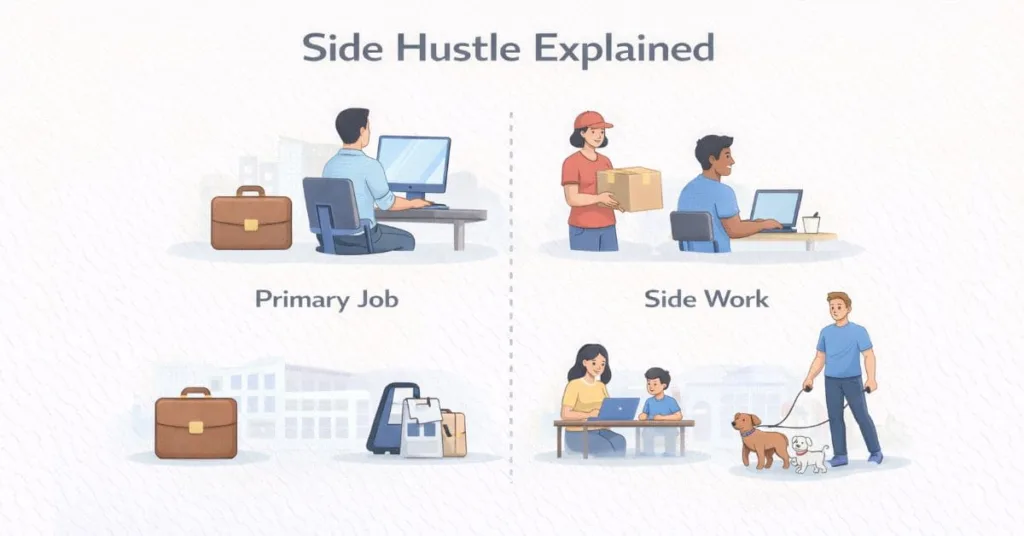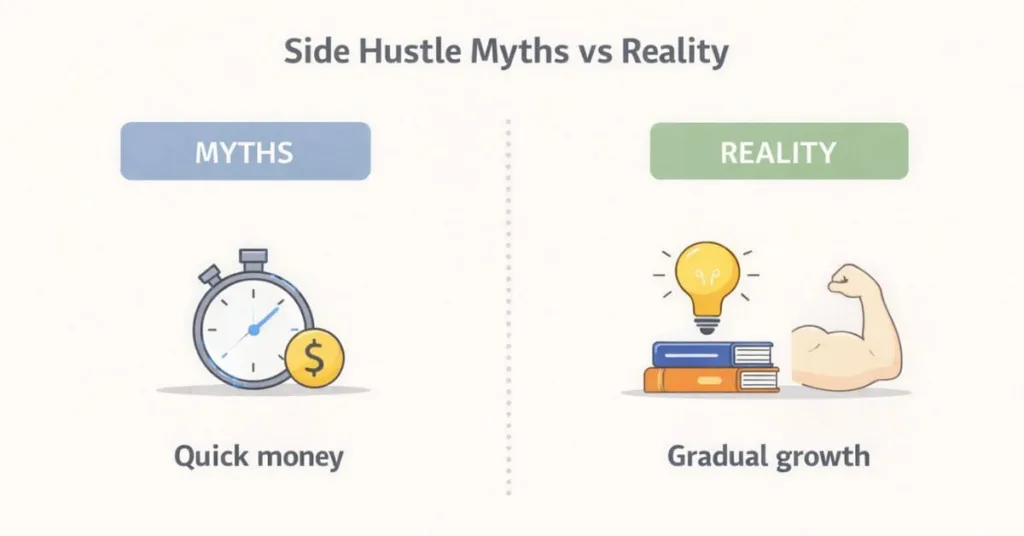
The idea of starting a side hustle has become very popular in recent years, especially as flexible work and gig opportunities have expanded across the United States. However, along with this growing interest, many side hustle myths have also spread online.
Social media posts, short videos, and success stories often present side hustles as simple ways to earn money quickly. While these stories can be inspiring, they sometimes leave out the learning process, time investment, and real challenges involved.
Understanding the difference between common myths and real expectations can help beginners approach side hustles more realistically. By separating hype from reality, it becomes easier to see how side hustles actually fit into everyday financial life.
Why Side Hustle Myths Are So Common
Side hustle myths often develop because online information tends to focus on success stories rather than the full process behind them. As side hustles become more visible across social media and digital platforms, simplified narratives can spread quickly.
Understanding why these myths exist helps beginners approach side hustles with more realistic expectations.
📱 Online Hype Culture
Online platforms often highlight stories about quick wins or rapid success. Short videos, posts, and headlines may focus on impressive outcomes while leaving out the time, experimentation, and effort involved behind the scenes.
Because these stories are easier to share and consume, they can unintentionally create unrealistic expectations about how side hustles work.
💬 Social Media Income Narratives
Many side hustle discussions online revolve around income milestones or growth stories. While these stories can be motivating, they usually represent only one part of a larger journey.
Without the broader context of learning curves and gradual progress, these narratives may contribute to misunderstandings about how side hustles actually develop.
Gig Economy Visibility
The growth of gig platforms and flexible work opportunities in the United States has made side hustles more visible than ever before.
As more people explore different types of side hustles, conversations around flexible income have expanded across online communities and media coverage.
The growing visibility of side hustles is also connected to broader labor trends. Flexible work, freelance projects, and gig-based opportunities have become more common across different industries.
According to research on gig economy and work trends in the United States, flexible work arrangements and alternative income activities have expanded as workers explore different ways to supplement income or gain experience. As these opportunities become more visible, conversations about side hustles also increase across online platforms and media coverage
📊 Survivorship Bias
Another reason myths appear is survivorship bias. This occurs when people mostly hear about successful outcomes while less visible experiences remain unshared.
Because of this imbalance, it may seem as though side hustles succeed quickly or easily, even though many journeys involve gradual learning and experimentation.
Side hustle myths often spread because online content highlights success stories while leaving out the full learning process.
Myth #1: Side Hustles Make Money Quickly
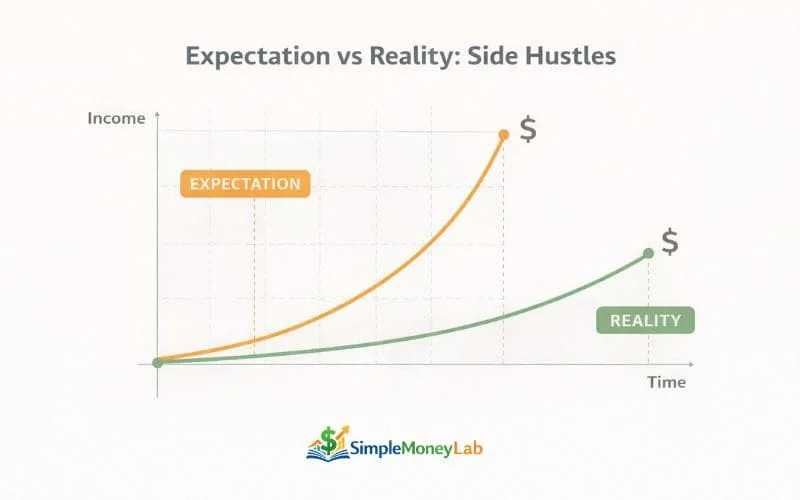
One of the most common side hustle myths is the belief that starting a side hustle leads to immediate income. Online content often highlights fast success stories, which can create the impression that results appear almost instantly.
In reality, most side hustles involve a gradual process that includes learning, experimentation, and adapting to demand.
⏳ Time Investment
Many side hustles require time before they begin producing consistent results. Beginners often spend time exploring ideas, understanding workflows, and learning how different tasks or platforms operate.
Because of this learning phase, early stages of a side hustle may focus more on gaining experience than generating immediate income.
🧠 Skill Development
Some side hustles require skills that improve with practice. As people gain experience, they may gradually become more efficient and confident in the work they do.
This development process can take time, which means early expectations about quick results may not always match reality.
📉 Demand Uncertainty
Another factor is market demand. Not every idea immediately attracts customers or opportunities. Some side hustles depend on external factors such as timing, competition, and market visibility.
Understanding whether side hustles are worth it can help beginners evaluate the broader balance between time, effort, and potential outcomes.
Most side hustles involve gradual progress rather than immediate financial results.
Myth #2: Anyone Can Start Any Side Hustle
Another common belief is that anyone can easily start any side hustle without preparation or experience. While many side hustles are accessible, the reality is that different opportunities often require different levels of knowledge, time, or preparation.
Understanding this helps beginners approach side hustles with more realistic expectations.
🧠 Skill Requirements
Some side hustles rely on specific skills or abilities. For example, certain opportunities may involve creative work, technical knowledge, or specialized services.
Beginners can still learn these skills over time, but it is helpful to recognize that not every side hustle starts with the same level of accessibility.
📚 Learning Curve
Even simple side hustles often involve a learning phase. This may include understanding how the work operates, how to communicate with clients, or how to manage tasks efficiently.
During the early stages, much of the effort may focus on learning rather than immediate results.
📊 Market Competition
Side hustles also exist within competitive environments. Many people may explore similar opportunities, especially in online or gig-based work.
Because of this, beginners may need time to understand how different markets function and how their efforts fit within existing demand.
While many side hustles are accessible, different opportunities often involve learning, skills, and adapting to market conditions.
Myth #3: Side Hustles Are Always Flexible
Side hustles are often promoted as fully flexible ways to earn extra income. While flexibility can be one advantage of certain side hustles, the reality is that many opportunities still involve schedules, expectations, or time commitments.
Understanding how flexibility actually works helps beginners set more realistic expectations.
⏰ Client Deadlines
Some side hustles involve working with clients who expect tasks to be completed within a specific timeframe.
For example, projects may have:
- Delivery dates
- Communication expectations
- Service timelines
These requirements can reduce the level of flexibility people initially expect.
🗂 Time Management
Balancing a side hustle alongside a full-time job, studies, or family responsibilities often requires careful time management.
Even flexible work may require planning when tasks will be completed, especially when multiple commitments are involved.
📅 Schedule Pressure
Certain side hustles operate during specific hours or depend on customer demand. This means availability may sometimes be influenced by market timing rather than personal preference.
Learning about different types of side hustles can help beginners understand how flexibility varies between different opportunities.
While some side hustles offer flexibility, many still involve deadlines, scheduling, and time management responsibilities.
Myth #4: Side Hustles Replace Full-Time Jobs Easily
Another common misconception is that a side hustle can quickly replace a full-time job. Online success stories sometimes give the impression that side hustles easily grow into stable primary income sources.
In reality, many side hustles begin as small, flexible activities that develop gradually. Replacing a full-time income often involves much more time, stability, and consistent demand.
📉 Income Variability
Side hustle income can vary depending on demand, timing, and the type of work involved.
Unlike traditional jobs with fixed salaries, side hustles may experience periods of higher or lower activity. This variability can make income less predictable in the early stages.
📊 Market Fluctuations
Demand for certain services or tasks can change over time. Some side hustles depend on seasonal demand, platform activity, or customer interest.
Because of these changes, opportunities that are active during one period may slow down during another.
🔁 Consistency Challenges
Building consistent work through a side hustle often takes time. Maintaining steady opportunities may depend on developing experience, building relationships, or gradually expanding visibility.
For many people, side hustles remain supplemental activities rather than immediate replacements for full-time employment.
Side hustles can grow over time, but replacing full-time income usually requires long-term development rather than immediate results.
Myth #5: Online Side Hustles Are Effortless
Online side hustles are often presented as simple ways to earn extra income from home. Because digital platforms make it easy to access opportunities, many beginners assume that online work requires very little effort.
In reality, most online side hustles still involve learning, adapting, and investing time to develop skills and understand how different platforms operate.
🌐 Platform Competition
Many online side hustles operate on platforms where large numbers of people offer similar services or complete similar tasks.
Because of this, beginners may encounter competition when trying to find opportunities or attract attention in crowded marketplaces.
Understanding how different platforms function can take time.
🧠 Skill Building
Even online side hustles that appear simple often require skill development over time.
Examples may include:
- Improving communication with clients
- Understanding digital tools or platforms
- Learning how tasks are structured
As these skills improve, people often become more efficient and confident in their work.
⏳ Time Investment
Online work still requires time to learn workflows, complete tasks, and maintain consistency.
Many beginners spend time experimenting with different approaches before finding routines that work well for them.
Online side hustles may offer accessibility, but they usually require learning, effort, and time to develop.
Why Realistic Expectations Matter
Understanding the difference between side hustle myths and real experiences can help beginners approach flexible work opportunities with a healthier mindset. When expectations are realistic, it becomes easier to focus on learning and long-term progress rather than immediate outcomes.
This perspective often leads to more sustainable and balanced decisions.
🔄 Sustainable Motivation
When people start a side hustle expecting instant success, early challenges can sometimes feel discouraging.
Realistic expectations allow beginners to view the process as a gradual learning experience. This mindset often supports longer-term motivation and helps people remain patient while gaining experience.
💰 Financial Planning
Side hustles are often explored as ways to supplement income, but their results can vary over time.
Having realistic expectations helps people consider how side hustles fit within their overall financial picture. Understanding concepts such as why emergency funds matter can also help create financial stability while exploring additional income opportunities.
📚 Long-Term Learning
Many successful side hustles develop through experimentation and continuous learning.
Over time, people often refine their skills, adjust strategies, and discover which opportunities fit their schedule and interests best. This learning process can take time, but it often leads to more sustainable outcomes.
Realistic expectations help beginners approach side hustles as a gradual learning process rather than expecting immediate results.
How Beginners Should Approach Side Hustles
For beginners, approaching a side hustle with the right mindset can make the experience much more sustainable. Instead of focusing only on quick results, it often helps to view side hustles as opportunities for gradual learning and exploration.
A balanced perspective allows beginners to understand how side hustles fit into everyday responsibilities and long-term financial goals.
📚 Learning > Income
During the early stages, many side hustles involve learning how tasks, platforms, or services work. Gaining experience can sometimes be more valuable than focusing immediately on income outcomes.
Over time, this learning process can help individuals understand which opportunities align best with their skills and interests.
⏳ Sustainability > Speed
Side hustles that fit comfortably alongside existing responsibilities tend to be easier to maintain.
When expectations focus on long-term sustainability rather than quick results, people often find it easier to balance side hustles with work, study, or family commitments.
🎯 Realistic Expectations
Understanding that side hustles may develop gradually can reduce frustration during the early stages.
Realistic expectations help beginners stay motivated while navigating the learning curve that often accompanies new opportunities.
🧠 Skill Development
Many side hustles involve improving practical skills over time. As people gain experience, they often become more efficient and confident in how they approach different tasks.
Learning what a side hustle actually means can help beginners understand how flexible work opportunities fit into the broader financial landscape.
Beginners often benefit from focusing on learning, sustainability, and skill development rather than immediate results.
FAQs
What are common side hustle myths?
Common side hustle myths include the belief that side hustles generate quick income, require little effort, or can easily replace full-time jobs. Many people also assume that online side hustles are completely flexible or effortless.
In reality, most side hustles involve learning new skills, understanding market demand, and investing time before results become consistent.
Are side hustles easy to start?
Some side hustles can be relatively easy to start because they require minimal setup or equipment. However, starting a side hustle still involves understanding how the work operates, managing time effectively, and adapting to market demand.
Beginners often spend time exploring different opportunities before finding options that fit their schedule and skills.
Do side hustles make money quickly?
While some side hustles may generate income early, many require time before consistent results appear. Early stages often involve learning processes, experimenting with different approaches, and understanding customer demand.
Because of this, side hustles typically develop gradually rather than producing immediate financial results.
Are online side hustles easier?
Online side hustles can offer convenience because they can often be done from home. However, they are not always easier.
Many online opportunities involve competition, skill development, and time investment. Understanding how platforms operate and improving efficiency often takes practice.
Can side hustles replace full-time income?
Some side hustles may grow over time, but replacing a full-time income usually requires long-term development and stable demand.
Income from side hustles can vary depending on market conditions, time availability, and the type of work involved. For many people, side hustles remain supplemental rather than primary income sources.
Why do people believe side hustle myths?
Side hustle myths often spread because online content tends to highlight success stories more than the full process behind them. Social media, short-form content, and motivational narratives sometimes focus on impressive outcomes without showing the learning curve involved.
As a result, beginners may develop expectations that do not always reflect the gradual nature of most side hustles.
Final Thoughts
Exploring a side hustle is often part of a broader process of experimentation and learning. Many people try different opportunities before discovering what works best for their schedule, interests, and skills.
Understanding the myths surrounding side hustles can help beginners approach these opportunities with clearer expectations. Instead of expecting immediate results, it becomes easier to see side hustles as activities that develop gradually through experience and consistent effort.
Removing the hype from online narratives allows people to focus on the practical side of flexible work. Over time, this realistic perspective can make side hustles feel more manageable and sustainable.
Learning how side hustles fit into the US money system can also provide helpful context for understanding how flexible income opportunities connect to broader economic trends.
Side hustles often work best when viewed as gradual learning experiences rather than instant solutions.