
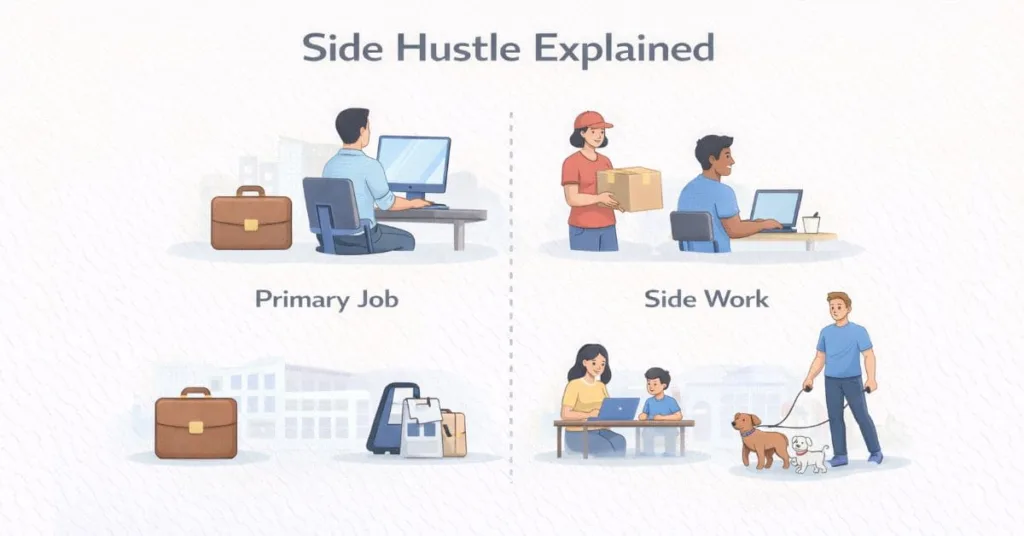
For many beginners, the term “side hustle” can sound confusing or vague. The phrase shows up in conversations, social media, and job forums across the U.S., yet its meaning isn’t always clear. Some people associate it with freelancing, while others think it means starting a business, selling something online, or picking up gig work — and it can overlap with all of these in different ways.
In the United States, side hustles have become more common over the past decade as people look for ways to earn extra income without leaving their primary job. Students, young professionals, parents, and even full-time employees explore side hustles to create more financial flexibility.
This guide breaks down what a side hustle actually is and how it works, using simple explanations and real examples for beginners.
What Is a Side Hustle?
A side hustle is work done outside of a primary job to earn extra income. In the United States, people use side hustles to increase financial flexibility without changing their full-time jobs.
A side hustle isn’t a full-time job or the main source of salary. It usually offers more flexibility, meaning people can choose when and how they work. Side hustles can be skill-based, service-based, or task-based — ranging from online freelancing and tutoring to gig platforms such as delivery, rideshare, or simple part-time projects. Some people also use side hustles to test business ideas without committing to them full-time.
Why Side Hustles Exist (US)
Side hustles have become more common in the United States because many people want additional financial flexibility beyond what their full-time job provides. Living costs in major U.S. cities have increased faster than wages over the past decade, making it more expensive to afford housing, transportation, food, and everyday expenses.
For younger adults, student loans add another layer of financial pressure. At the same time, gig platforms and online tools have made it easier to work on flexible schedules without committing to a second traditional job.
Many beginners explore side hustles to build a small financial cushion, prepare for unexpected expenses, or work toward personal goals. In a changing economic environment shaped by inflation and lifestyle costs, side hustles offer an approachable way to supplement income without leaving a primary job.
How Side Hustles Work
Side hustles operate alongside a person’s main job and are designed to fit into the extra time available before work, after work, or on weekends. Instead of functioning like a traditional second job, side hustles tend to be more flexible and can be paused, adjusted, or replaced depending on the person’s schedule and priorities.
There are several ways side hustles typically work in the U.S.:
- Time-based Work: Some people simply use extra hours outside their primary job, such as evenings or weekends, to complete tasks or projects.
- Project-based Assignments: Others take on short-term projects that have a defined start and finish, such as tutoring sessions, graphic design requests, household tasks, or photography gigs.
- Skill-based Services: Many side hustles rely on specific skills a person already has, whether it’s writing, teaching, coding, repairing, organizing, or creating digital products.
- Platform-based Work: Popular U.S. apps and platforms allow people to complete tasks without finding clients themselves. Examples include food delivery, rideshare driving, micro-tasks, or selling handmade items.
- Variable Income: Side hustle income is not fixed. It depends on time availability, demand, and type of work, and can fluctuate from month to month.
Unlike full-time employment, side hustles do not guarantee income, benefits, or long-term stability. Instead, they offer a flexible way to earn extra money alongside a primary job.
Common Side Hustle Examples (US)
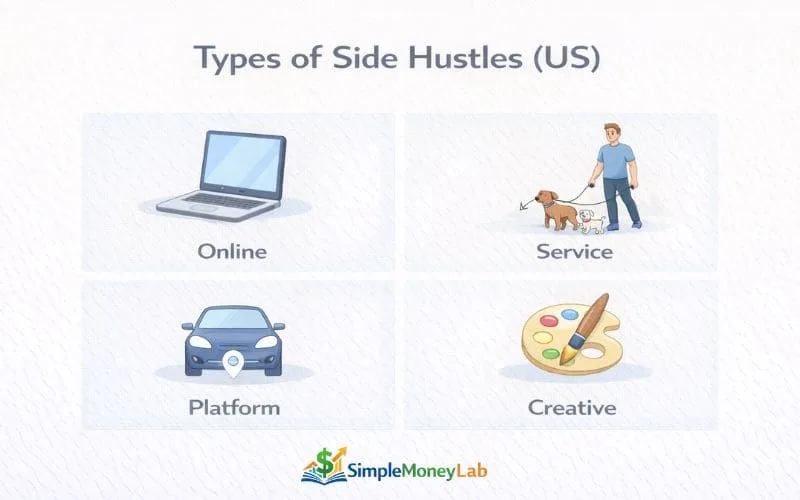
Side hustles can take many forms depending on how much time a person has, what skills they bring, and whether they prefer working online or in person. In the United States, most side hustles fall into a few familiar categories:
Online Side Hustles
These involve work that can be done from a laptop or phone, often with flexible scheduling. Examples include:
- Freelance Writing and Editing
- Tutoring or Language Instruction
- Selling Digital Products (Templates, Printables, Graphics)
- Virtual Assistance or Admin Tasks
Service-Based Side Hustles
These involve offering a skill or service directly to individuals or families, such as:
- Pet Sitting or Dog Walking
- Home Organizing or Cleaning
- Music Lessons or Coaching
- Photography for Events or Portraits
Platform & App-Based Side Hustles
Gig platforms make it easier to match tasks with workers without needing to find clients independently. Common examples include:
- Food Delivery
- Package Delivery
- Rideshare Driving
- Task-based apps for Small Jobs
Creative & Reselling Side Hustles
Some people earn income by creating, reselling, or repurposing items, including:
- Selling Handmade Items or Crafts
- Reselling Clothing, Collectibles, or Electronics
- Designing Print-on-Demand Products
These examples show how diverse side hustles can be. Some require specialized skills, while others rely on available time and willingness to take on short-term tasks.
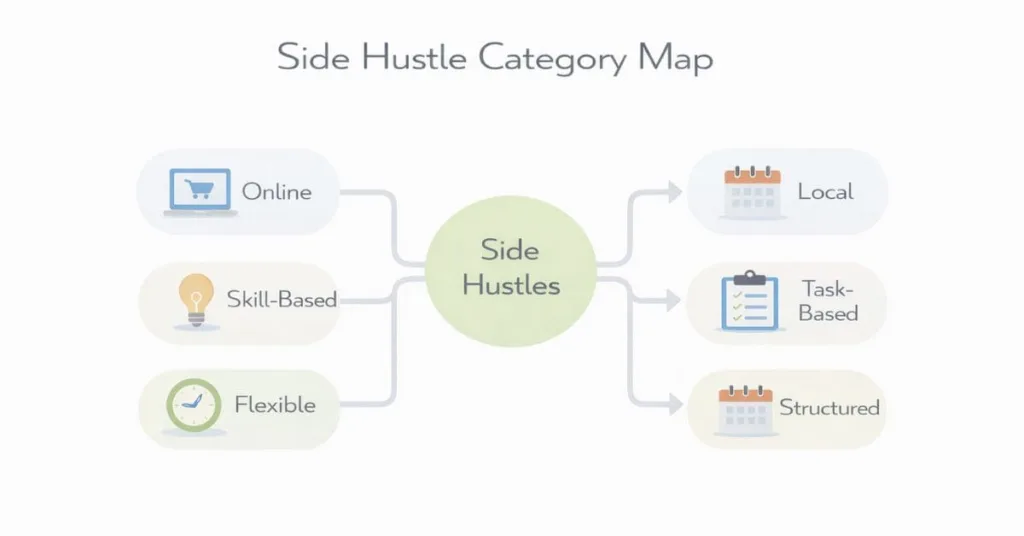
Side hustles can take many forms depending on time, skill level, and flexibility. To better understand the different types of side hustles, it helps to see how they are grouped into online, local, skill-based, and task-based categories.
If you’re curious which options are most realistic for beginners in the United States, we’ve created a simple guide that compares common side hustles based on accessibility and flexibility.
Side Hustle vs Job vs Business
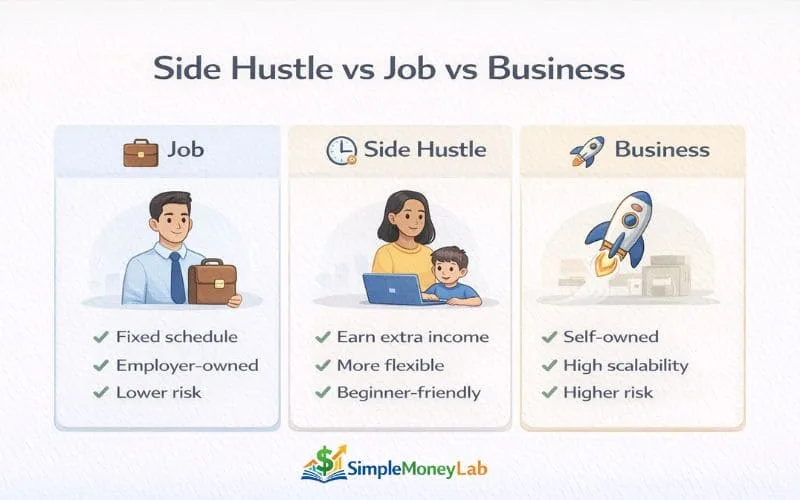
Many beginners confuse side hustles with full-time jobs or small businesses, but these three operate differently in the United States.
A Job is someone’s primary source of income with a set schedule, an employer, and defined responsibilities. Jobs typically include paychecks, taxes withheld at the source, and sometimes benefits such as health insurance or paid time off.
A Side Hustle sits outside the primary job and provides secondary income. It is usually flexible, informal, and adjustable based on available time. Side hustles rarely come with guaranteed hours or benefits, and income can vary from month to month.
A Business is more structured and designed for long-term growth. It often involves planning, operations, marketing, and the potential to scale beyond one person’s time or labor.
Understanding these distinctions helps beginners identify what they are really pursuing instead of assuming all extra income activities are the same.
Who Starts Side Hustles in the US?
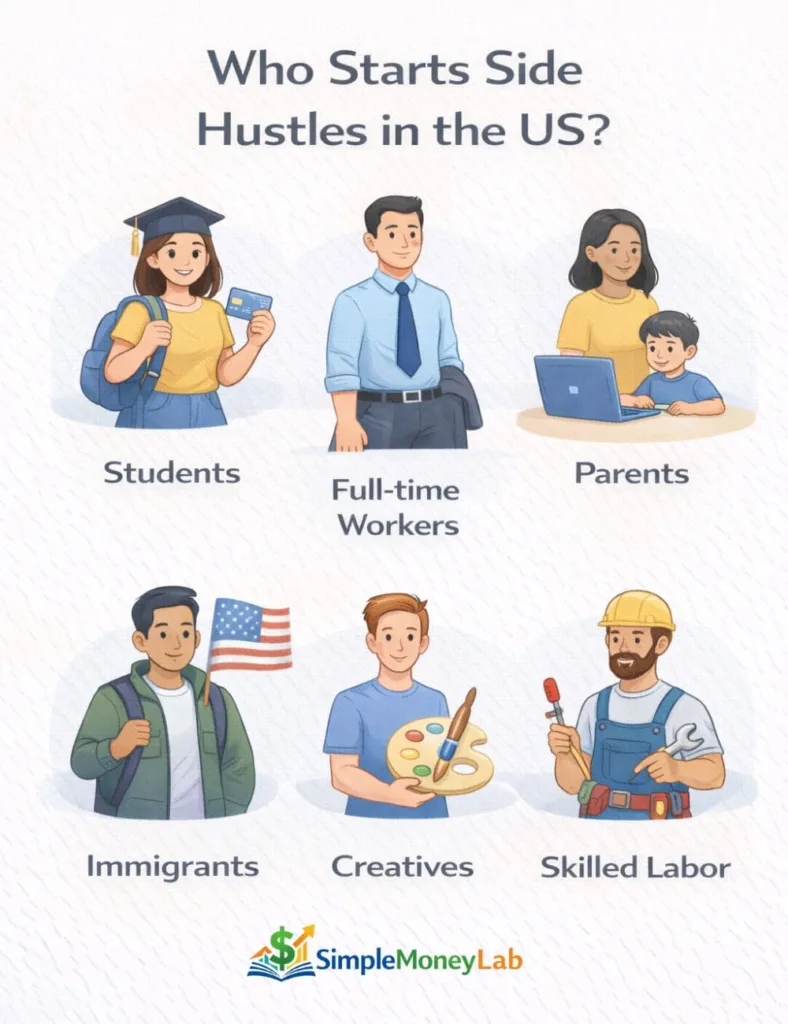
Side hustles are not limited to one age group, income level, or background. In the United States, people start side hustles for different reasons and at different stages of life. Some do it to explore creative interests, while others do it for financial flexibility or to build new skills. Common groups include:
🧑🎓 Students
Many students use side hustles to cover personal expenses or reduce reliance on loans while maintaining flexible schedules around classes.
👨💼 Full-Time Workers
Employees with stable jobs often take on side hustles to supplement their salary, prepare for financial goals, or test ideas without changing careers.
👩👦 Parents
Parents may choose flexible side hustles that allow them to balance childcare responsibilities while contributing to household expenses.
🌍 Immigrants
Newcomers sometimes start side hustles to navigate the U.S. job market, build experience, or create supplemental income while settling in.
🎨 Creatives
Artists, designers, writers, and musicians frequently use side hustles to monetize skills that don’t always fit into traditional full-time roles.
🧰 Skilled Labor & Trades
Individuals with hands-on skills—such as repairs, installations, or custom work—often take on projects outside their main job.
The diversity of participants is one reason side hustles have become a normalized part of modern U.S. work culture.
Benefits of Having a Side Hustle
For many beginners in the United States, the appeal of a side hustle isn’t rooted in becoming wealthy or replacing a primary job. Instead, side hustles offer practical and realistic advantages that fit into everyday life.
One of the most common benefits is Extra Income Flexibility. Instead of relying solely on a single paycheck, a side hustle can provide a small financial buffer that makes unplanned expenses or personal goals easier to manage.
Side hustles can also help people Learn New Skills that may not be part of their regular job. Skills such as client communication, scheduling, digital tools, or creative work can continue to be useful in future opportunities.
For some, side hustles act as a low-risk way to Test New Career Ideas without fully committing to them. Others simply enjoy Exploring Interests or hobbies that have the potential to generate income.
These benefits are not guaranteed and vary from person to person, but they help explain why side hustles have become more common in the U.S. over the past decade.
Limitations & Realities of Side Hustles
Side hustles also come with limitations that beginners should understand. Unlike traditional jobs with fixed hours and predictable paychecks, side hustles often depend on available time, demand, and personal consistency.
⏳ Time Constraints
Most people work on side hustles outside their regular job or responsibilities. Balancing evenings, weekends, or limited free time can make side hustles harder to maintain over the long term.
💵 Variable Income
Side hustle income is not guaranteed or uniform. Some weeks may bring opportunities, while others may be slower depending on seasonality, demand, or platform activity.
🔁 Requires Consistency
Side hustles rarely produce noticeable results immediately. Even simple service or platform-based work requires consistency, communication, and reliability to function well.
❗ Not a Replacement for a Primary Job
For most beginners, side hustles serve as supplemental income rather than a full-time replacement. Benefits such as health insurance, paid leave, or retirement programs typically remain tied to primary employment in the U.S.
Understanding these realities helps set accurate expectations and reduces the belief that side hustles always produce quick or steady results.
Frequently Asked Questions
Do most people in the US have Side Hustles?
Side Hustles have become more common in the United States, especially among young adults and workers facing rising living costs and student loans. Not everyone has one, but surveys from major research organizations show that a growing portion of U.S. workers earn money outside their primary job for flexibility, extra financial support, or personal interest.
Can you have a Side Hustle while working full-time?
Yes. Many people with full-time jobs take on side hustles because they offer flexible scheduling, project-based work, or platform-based tasks that can be completed before or after regular work hours. Side hustles are not meant to replace the primary job, and most people manage both by adjusting their time and choosing flexible opportunities.
Are Side Hustles the same as Freelancing?
Not necessarily. Freelancing is one type of side hustle, but not all side hustles involve freelancing. Freelancing usually means providing clients with services such as writing, tutoring, design, or consulting. Side hustles can also include Delivery Gigs, Selling Products, Pet Sitting, or Task-based Work. The main difference is that “side hustle” refers to the role it plays (secondary income), not the type of work.
How much do Side Hustles typically pay?
Side hustle income varies widely and depends on the type of work, demand, time availability, and skill level. Some side hustles generate small supplemental income, while others provide more consistent revenue, but no fixed or guaranteed amount applies to everyone. Most beginners use side hustles for flexibility rather than predictable paychecks.
Are Side Hustles considered a business?
Side Hustles can become a business over time, but they don’t start as one for most beginners. A business typically involves structured operations, long-term planning, and scalable income systems. A side hustle remains secondary, flexible, and limited in scope unless someone chooses to turn it into a larger venture later on.
Final Thoughts on Side Hustles
Side hustles have become a familiar part of modern work life in the United States, especially for beginners exploring flexible ways to earn supplemental income alongside their primary job. Understanding what a side hustle is — and what it is not — helps remove confusion and sets more realistic expectations.
A side hustle doesn’t guarantee steady income or replace the stability of full-time employment, but it can provide a sense of financial flexibility, a place to explore interests, or a chance to test new skills without making major career changes.
For many beginners, the value of a side hustle comes from clarity and choice rather than pressure or performance. When viewed this way, side hustles can fit naturally into different life stages, goals, and circumstances without promising fast results or dramatic transformations.

Pingback: Best Side Hustles for Beginners in the US (Realistic Guide)