

Money can feel confusing, especially when you’re just getting started. You earn a paycheck, pay rent, buy groceries, and cover bills — yet it still feels like money disappears faster than expected. Many beginners feel this way, and it’s not because they’re bad with money. It’s usually because no one clearly explains how personal finance actually works.
Personal finance is simply about understanding how to manage the money you already have. There’s no complicated math, no hype, and no “get rich” promises involved. It’s about making everyday decisions feel less stressful and more intentional.
For example, if you bring home $3,000 a month, personal finance helps you decide how much goes toward rent, daily expenses, savings, and future goals. It gives you clarity and control, instead of guessing month after month.
This guide explains personal finance in simple, practical terms — using real-life U.S. examples — so you can build better money habits step by step, without feeling overwhelmed.
What Is Personal Finance?
Personal finance is about how you manage your money in everyday life. It’s not about complex formulas or financial jargon. It’s about making clear, practical decisions so your money works for you instead of causing constant stress.
Here’s what personal finance usually includes:
💼 Earning
This is the money you bring in, most often through a paycheck or regular income source. Understanding your income helps you know what you can realistically spend and save each month.
🧾 Spending
Spending covers everyday costs like rent, groceries, utilities, transportation, and insurance. Personal finance helps you stay aware of where your money goes so expenses don’t quietly get out of control.
🏦 Saving
Saving means setting aside money for emergencies, short-term needs, and future plans. Even small, consistent savings can make a big difference over time.
📅 Planning
Planning is about thinking ahead. It helps you prepare for unexpected expenses, avoid financial stress, and make smarter choices with your money.
For example, if you earn $3,000 a month, personal finance helps you decide how much goes toward essentials, how much you can save, and how to plan that money so you’re not guessing every month.
Why Is Personal Finance Important?
Personal finance matters because it affects how stable and confident you feel about money in your everyday life. Without a clear approach to managing money, it’s easy to feel overwhelmed, even when you’re earning a steady income.
🚫 Avoid Debt Stress
When spending isn’t planned, debt can quietly build up. Personal finance helps you understand what you can afford and avoid relying on credit for everyday expenses, which reduces long-term stress.
🏠 Build Financial Stability
Managing your money thoughtfully creates a sense of stability. Knowing that your rent, bills, and basic needs are covered each month makes life feel more predictable and less stressful.
🧯 Handle Emergencies
Unexpected expenses happen — medical bills, car repairs, or job changes. Personal finance helps you prepare for these moments so they don’t turn into financial emergencies.
🧠 Feel in Control
When you understand your finances, you stop guessing. Instead of worrying about money, you feel more in control and confident about your decisions.
Personal finance isn’t about being perfect with money. It’s about reducing stress, planning ahead, and making everyday financial life feel manageable.
Many of the challenges beginners face come from everyday behavior and habits, not from a lack of interest. If you want to see the most common early mistakes beginners make, here’s a helpful breakdown of Common Money Mistakes beginners make that shows why people struggle and how they improve over time.
Main Areas of Personal Finance
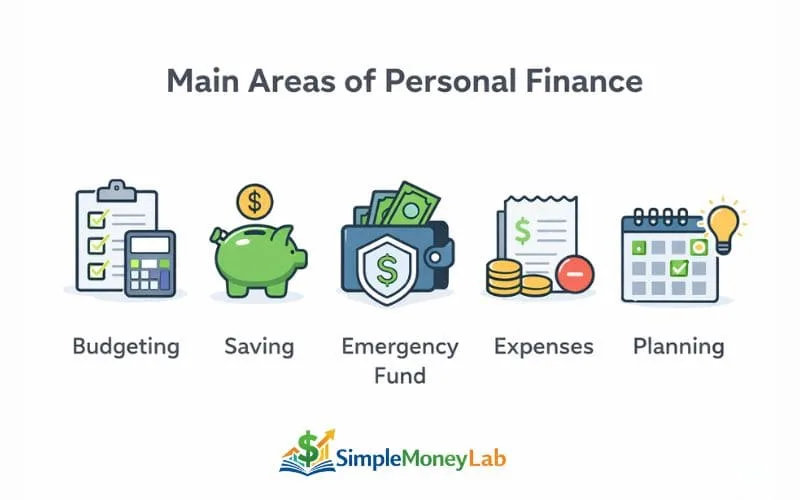
Personal finance is not one single action. It’s a combination of everyday habits and decisions that work together to help you manage money more effectively. Below are the main areas that form the foundation of personal finance.
🧮 Budgeting
Budgeting is about giving your money a plan. It helps you understand how much you earn each month and how that money is divided between essentials, savings, and personal spending. A simple budget makes it easier to stay within limits and avoid surprises.
For beginners, the easiest way to get started is by learning how to create a monthly budget, since it gives you a clear plan for your income and expenses.
💰 Saving Money
Saving money means setting aside a portion of your income for future needs. This could be for short-term goals or long-term plans. You don’t need to save large amounts right away — consistency matters more than size.
🧯 Emergency Funds
An emergency fund is money saved specifically for unexpected situations, such as medical expenses, car repairs, or sudden income changes. Having an emergency fund adds a layer of financial security and reduces reliance on debt during stressful times.
🧾 Managing Expenses
Managing expenses involves tracking where your money goes and adjusting spending when needed. It helps you spot unnecessary costs and make better day-to-day choices without feeling restricted.
Some beginners in the United States also explore side hustles as a way to create extra income flexibility alongside their primary budgeting and financial planning.
📈 Long-Term Planning
Long-term planning is about thinking ahead. It includes preparing for future goals and building habits that support financial stability over time. Planning ahead helps you stay focused and avoid short-term decisions that can cause problems later.
Personal Finance Examples for Beginners
Sometimes personal finance makes more sense when you see how it works in real life. Here’s a simple example using common U.S. expenses to show how beginners might think about their monthly money.
Imagine you bring home $3,000 a month after taxes. Personal finance helps you decide how to divide that money so your essentials are covered and you’re not stressed about unexpected costs.
Your main expenses might look something like this:
- Rent: $1,200
- Groceries: $350
- Utilities & Internet: $200
- Transportation: $250
- Savings: $300
- Personal spending: $700
Instead of guessing where your money goes, personal finance encourages you to plan ahead and adjust when needed.
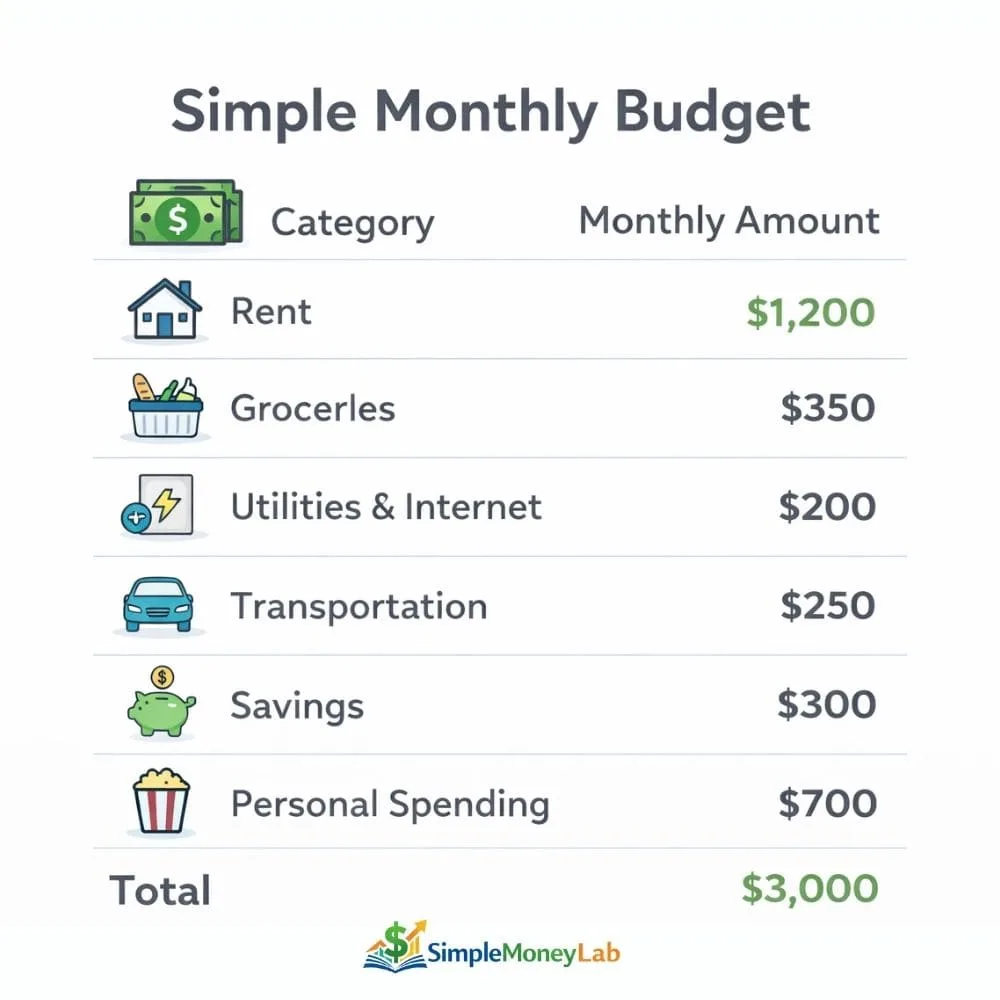
This kind of breakdown doesn’t have to be perfect. It’s simply a starting point. As a beginner, the goal is to understand your income, cover your basic needs, save what you reasonably can, and stay aware of how you’re spending the rest.
Personal finance is about making small adjustments over time, not getting everything right from day one.
Common Personal Finance Mistakes Beginners Make
When you’re new to managing money, mistakes are common — and that’s normal. The key is recognizing them early so they don’t turn into long-term problems.
🚫 Not having a Budget
Without a basic budget, it’s easy to overspend without realizing it. Even a simple plan for where your paycheck should go can make a big difference in staying on track.
📉 Not Tracking Expenses
Many beginners underestimate small daily expenses. Coffee, takeout, or subscriptions can quietly add up. Tracking expenses helps you see where your money actually goes, not where you think it goes.
🧯 Not having an Emergency Fund
Unexpected costs happen to everyone. Without an emergency fund, even a small surprise expense can lead to stress or debt. Setting aside money for emergencies helps protect your finances.
🔁 Ignoring Money Habits
Money habits play a big role in financial health. Spending without thinking, delaying bills, or avoiding money decisions can create ongoing problems. Building small, consistent habits helps you stay in control over time.
Making mistakes doesn’t mean you’re bad with money. It simply means you’re learning. Personal finance is about adjusting and improving as you go.
How to Start Managing Your Personal Finances
Getting started with personal finance doesn’t require perfection. It starts with a few simple steps that help you understand your money and make better decisions over time.
💵 Know your Income
Begin by understanding how much money you actually bring home each month. This is your take-home pay after taxes and deductions. Knowing this number gives you a clear starting point for every financial decision.
📊 Track your Expenses
Spend a month paying attention to where your money goes. This includes rent, groceries, utilities, transportation, and everyday spending. Tracking expenses helps you spot patterns and identify areas where small changes can help.
🧮 Create a Simple Budget
A budget doesn’t have to be complicated. It’s just a plan for how your income is divided between essentials, savings, and personal spending. A simple budget helps you stay organized without feeling restricted.
💰 Start Saving Small
You don’t need to save a large amount right away. Even setting aside a small portion of your income consistently can help build momentum. Over time, small savings add up and make financial life feel more manageable.
In the United States, some beginners also explore side hustles to create extra income flexibility alongside their personal finance journey, especially when budgeting feels tight or expenses are higher than expected.
Managing your personal finances is about progress, not perfection. Taking these steps one at a time helps you build confidence and stay in control of your money.
Personal Finance Basics in the US
Personal finance in the United States has a few important basics that every beginner should understand. Knowing how money typically works in the U.S. helps you make better decisions and avoid common surprises.
💼 The Paycheck System
Most people in the U.S. are paid weekly, bi-weekly, or monthly. Your paycheck usually comes after taxes and deductions, which means the amount you take home is different from your salary. Understanding your take-home pay is essential because it’s the money you actually have available to spend and save.
💳 Credit Scores Matter
In the United States, credit plays a major role in everyday financial life. Credit scores are commonly used to evaluate how responsibly someone manages borrowed money, and they typically range from 300 to 850. These scores can influence approvals, interest rates, and other financial opportunities, which is why understanding credit basics is an important part of personal finance. According to U.S. credit reporting standards, a higher score generally reflects stronger credit behavior over time.
🧯 Emergency Expenses are Common
Unexpected expenses are a reality for most people. Medical bills, car repairs, or temporary income changes can happen at any time. Personal finance helps you prepare for these situations so they don’t turn into long-term financial stress.
Understanding these basics helps you navigate everyday money decisions with more confidence and less uncertainty.
Frequently Asked Questions
Is personal finance only about saving money?
No, personal finance is not just about saving money. Saving is important, but personal finance also includes earning, spending, planning, and building healthy money habits. It’s about understanding how all parts of your financial life work together so you can make better day-to-day decisions, not just put money aside.
Do beginners really need a budget?
Yes, a budget is especially helpful for beginners. A simple budget gives your money direction and helps you avoid overspending without realizing it. It doesn’t need to be strict or complicated — even a basic plan can help you feel more organized and in control of your finances.
How long does it take to improve your finances?
Improving your finances doesn’t happen overnight. Small changes, like tracking expenses or saving a little each month, can show results within a few weeks. Bigger improvements, such as building savings or reducing debt, usually take months of consistent effort. Progress matters more than speed.
Can personal finance help reduce money stress?
Yes, understanding personal finance often reduces money-related stress. When you know how much you earn, where your money goes, and how to plan ahead, financial uncertainty becomes easier to manage. Clarity helps replace worry with confidence.
What is the best way for beginners to start learning personal finance?
The best way to start is by learning the basics step by step. Begin with understanding your income, tracking expenses, and creating a simple budget. Focus on building awareness and good habits before trying to make major changes. Personal finance is a long-term skill, not a one-time task.
Conclusion
Learning personal finance is a gradual process, not something you need to master all at once. Small steps, taken consistently, can make a meaningful difference over time. Understanding how you earn, spend, save, and plan helps you feel more confident about everyday money decisions.
As a beginner, focus on building awareness and forming healthy habits rather than aiming for perfection. With patience and steady effort, managing your finances becomes easier and less stressful, one step at a time.

Pingback: Monthly Budget for Beginners: A Simple US Guide
Pingback: 50/30/20 Budget Rule Explained: Simple Beginner Guide