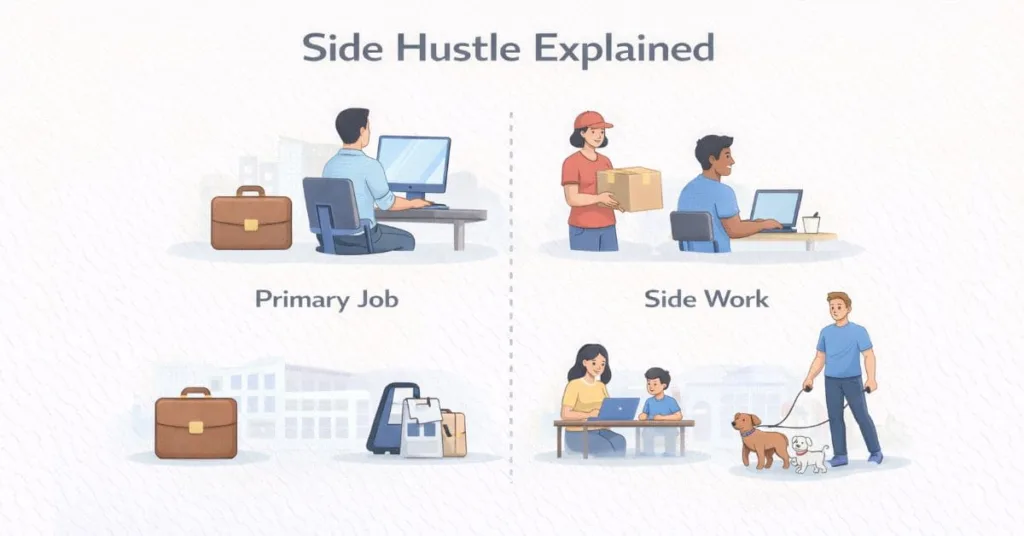
As flexible work opportunities become more common in the United States, many people begin comparing side hustles vs part-time jobs to understand how these work models differ. Both options can provide additional income or work experience, but they often operate in very different ways.
Part-time jobs typically involve working scheduled hours for an employer, while side hustles are often independent activities that allow people to explore flexible projects or services. Because both options exist outside traditional full-time work, beginners sometimes find it difficult to understand how they compare.
Looking at the differences between these two work models can help clarify how each fits into the modern US labor landscape and how people use them to support different financial or professional goals.
Why People Compare Side Hustles and Part-Time Jobs
As work patterns continue evolving in the United States, many people explore different ways to earn income outside traditional full-time employment. Because both side hustles and part-time jobs offer flexible work options, it is common for beginners to compare the two.
Understanding the reasons behind this comparison can help explain how these work models fit into the broader labor landscape.
🔄 Modern Work Flexibility
Work culture in the US has gradually shifted toward more flexible arrangements. Remote work, project-based tasks, and freelance opportunities have become more visible across many industries.
Because of these changes, individuals often explore multiple work formats that allow them to manage their schedules more independently.
💰 Income Diversification Trends
Another reason people compare side hustles and part-time jobs is the idea of diversifying income sources. Some individuals look for ways to supplement their primary income through additional work opportunities.
Both side hustles and part-time jobs can provide supplemental income, which leads many people to evaluate how each option fits into their financial plans.
🌐 Gig Economy Growth
The expansion of the gig economy has also increased awareness of flexible work models. Digital platforms, freelance marketplaces, and app-based services have made side hustles more visible than ever before.
Understanding how side hustles fit into the US money system helps explain why flexible income opportunities have become a noticeable part of modern economic discussions.
People often compare side hustles and part-time jobs because both offer flexible income opportunities within today’s evolving work environment.
What Is a Side Hustle?
A side hustle is any form of work you do outside your main job to earn extra income. It’s usually flexible, self-directed, and can be scaled based on your time and goals. Unlike traditional jobs, side hustles allow you to experiment with different income streams without long-term commitment.
🔹 Flexible Work
One of the biggest advantages of a side hustle is flexibility. You can work on your own schedule—whether that’s evenings, weekends, or a few hours during the day. This makes it easier to balance with a full-time job or other responsibilities.
🔹 Independent Work Style
Most side hustles give you control over how you work. You decide the type of work, the clients you take, and the pace at which you grow. This independence is a key reason why many people prefer side hustles over traditional part-time jobs.
🔹 Project-Based Opportunities
Many side hustles are project-based, meaning you work on specific tasks or assignments rather than ongoing employment. This allows you to take breaks, switch niches, or scale your efforts depending on your availability.
If you want a deeper understanding, check out What Is a Side Hustle, where we break down types, examples, and how to get started.
What Is a Part-Time Job?
A part-time job is a form of employment where an individual works fewer hours than a standard full-time position. These roles are usually structured within an employer–employee relationship and follow established schedules or work arrangements.
Part-time jobs are common across many industries in the United States, including retail, hospitality, education, and service sectors.
🏢 Employer-Based Work
Part-time jobs typically involve working for an employer who provides tasks, responsibilities, and supervision. Employees usually follow company guidelines and complete assigned duties as part of a structured workplace environment.
This employer-based structure distinguishes part-time jobs from many side hustles, which often involve independent or self-directed work.
⏰ Scheduled Hours
Another defining feature of part-time jobs is a set work schedule. Employees are often assigned specific shifts or working hours during the week.
These schedules may vary depending on the employer, but they usually follow predictable time blocks such as evening shifts, weekend hours, or limited weekday schedules.
💵 Regular Pay Structure
Part-time jobs generally provide a regular pay structure based on hourly wages or fixed compensation for the hours worked.
Because payment is tied directly to scheduled hours, income from part-time work may be more predictable compared with many independent or project-based work opportunities.
Part-time jobs typically involve structured employer relationships, scheduled hours, and predictable payment systems.
Side Hustles vs Part-Time Jobs
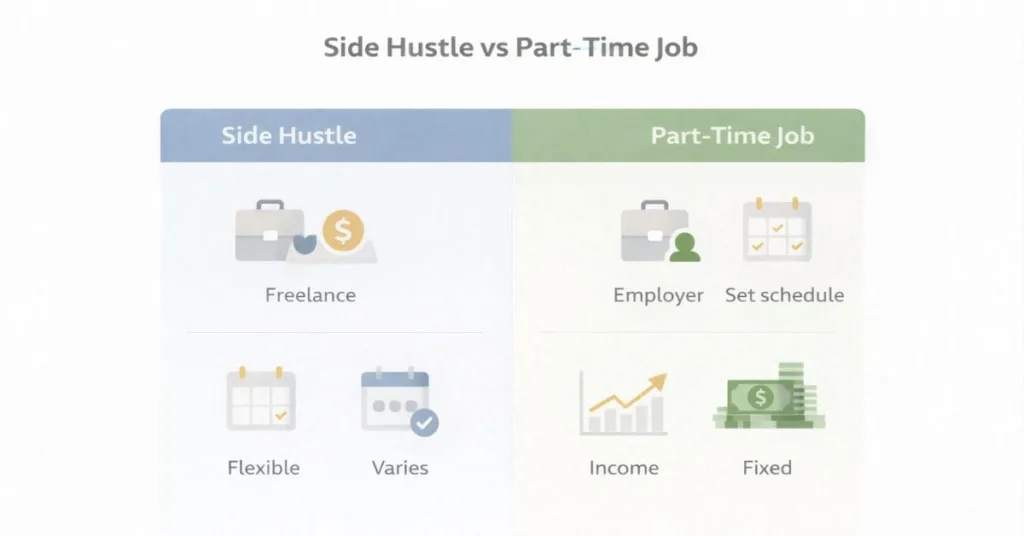
Side hustles and part-time jobs both provide ways to earn income outside traditional full-time employment. However, the structure, flexibility, and income patterns of these two work models are often quite different.
Understanding these differences can help beginners decide which option better fits their schedule, goals, and preferred work style.
📊 Side Hustles vs Part-Time Jobs Comparison
| Factor | Side Hustle | Part-Time Job |
|---|---|---|
| Work Structure | Independent work or self-directed projects | Employer–employee relationship |
| Schedule | Often flexible and self-managed | Usually fixed or scheduled hours |
| Income Pattern | Can vary depending on demand or activity | Typically predictable based on hours worked |
| Skill Development | Often involves experimentation with different skills or services | Usually focused on specific job roles and responsibilities |
🔍 Understanding the Differences
Side hustles are typically more flexible and independent. Individuals often manage their own schedules and decide how much time to invest in different projects or activities.
Part-time jobs, on the other hand, are usually structured around employer-defined roles and schedules. While they may offer fewer hours than full-time jobs, they often provide more predictable routines and income patterns.
Side hustles emphasize flexibility and independence, while part-time jobs usually provide structured schedules and consistent pay.
Flexibility Differences
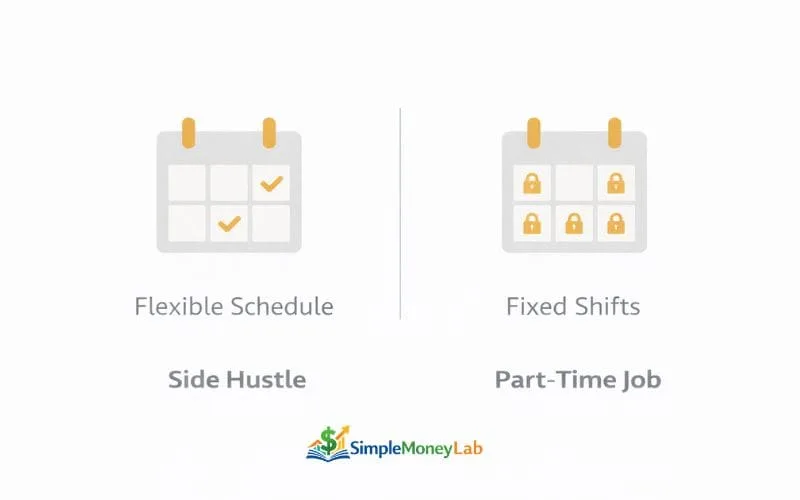
One of the main reasons people compare side hustles and part-time jobs is the level of flexibility each option offers. While both can exist outside traditional full-time work, the way flexibility works in these two models can be quite different.
Understanding these differences can help beginners decide which type of work better fits their schedules and preferences.
⏰ Work Hours
Side hustles often allow individuals to choose when they complete tasks or projects. Many people schedule side hustle activities around their primary job, studies, or other commitments.
Part-time jobs, however, usually involve predefined work hours. Employers often assign shifts or schedules that employees are expected to follow consistently.
🧭 Autonomy
Another difference involves the level of control individuals have over their work. Side hustles often provide greater autonomy because people typically manage their own workflow, decide which opportunities to pursue, and determine how they complete tasks.
In contrast, part-time jobs typically involve working under an employer’s supervision and following established procedures or guidelines.
📍 Location Flexibility
Some side hustles can be completed remotely or from different locations, especially when they involve digital platforms or online services.
Part-time jobs are often tied to a physical workplace such as a store, office, or service location. Exploring different types of side hustles can help beginners understand how location flexibility varies across different opportunities.
Side hustles often provide greater control over time and location, while part-time jobs usually follow structured schedules and workplace settings.
Income Differences
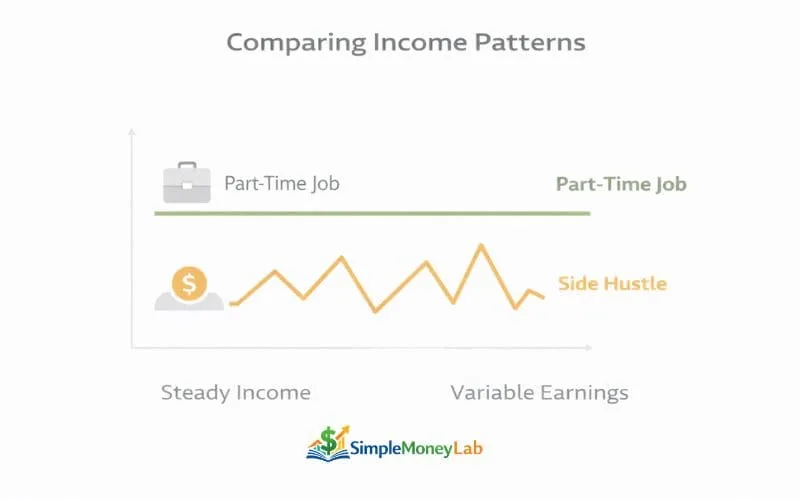
Another important difference between side hustles and part-time jobs is how income is structured. While both can generate additional earnings, the way payments are received and how consistent they are can vary significantly.
Understanding these income patterns helps beginners set realistic expectations about each work model.
💵 Predictability
Part-time jobs often provide more predictable income because employees are paid based on scheduled hours worked. When work hours remain consistent, earnings tend to follow a stable pattern.
Side hustle income, however, may fluctuate depending on factors such as project availability, customer demand, or the amount of time invested.
📊 Payment Structure
In part-time jobs, payment is usually tied to an hourly wage or a fixed rate set by the employer. This structure makes it easier to estimate earnings over a given period.
Side hustles often use different payment models, such as per project, per task, or per service completed. These structures can vary depending on the type of work being performed.
📉 Demand Variability
Side hustles can be influenced by changes in demand. Some opportunities may experience busy periods followed by slower activity, especially in competitive or seasonal markets.
Understanding common side hustle myths can help beginners recognize why income expectations sometimes differ from popular online narratives.
Part-time jobs usually offer predictable pay structures, while side hustles often involve variable income depending on demand and activity.
When Side Hustles Make Sense
Side hustles can be useful in situations where individuals want flexibility, experimentation, or opportunities to develop new skills. Because side hustles often allow people to work independently, they can sometimes fit well alongside other responsibilities such as full-time jobs, studies, or family commitments.
Understanding when side hustles make sense helps beginners see how these opportunities may fit into different work and financial situations.
🧠 Skill Exploration
Side hustles can provide space for people to explore new skills or interests. Some individuals use side projects to practice creative abilities, test professional ideas, or experiment with different types of work.
This exploration may help people gain experience in areas that are different from their primary job.
💰 Income Experimentation
Another situation where side hustles may make sense is when people want to experiment with additional income opportunities. Instead of relying entirely on a single source of earnings, some individuals explore flexible projects to see how different income activities work.
This experimentation can help people understand how various opportunities fit within their broader financial plans.
⏳ Flexible Schedules
Side hustles can also appeal to individuals who prefer flexible schedules. Because many side hustles allow people to choose when they work, these opportunities may fit more easily around existing responsibilities.
This flexibility can be helpful for those who want to balance multiple commitments while exploring new income options.
Side hustles may make sense when individuals want flexibility, skill exploration, or opportunities to experiment with additional income.
When Part-Time Jobs Make Sense
Part-time jobs can be a suitable option for individuals who prefer a structured work environment and predictable routines. Because these roles are typically connected to an employer, they often follow clear schedules and defined responsibilities.
For many people, this structure provides a sense of stability that can be helpful when balancing other commitments.
⏰ Stable Hours
Part-time jobs often provide scheduled working hours that remain relatively consistent from week to week. Employees usually know in advance when they are expected to work.
This predictability can make it easier to plan other responsibilities such as school, family commitments, or personal activities.
💵 Consistent Pay
Another advantage of part-time jobs is the predictable pay structure. Employees are typically paid hourly wages or fixed compensation for the hours they work.
Because payment is directly connected to scheduled hours, income from part-time jobs may be easier to estimate compared with many independent work opportunities.
🏢 Structured Work Environment
Part-time jobs usually operate within organized workplaces where employees follow established processes, guidelines, and supervision.
This structured environment can be helpful for individuals who prefer clearly defined tasks and a consistent workflow.
Part-time jobs often make sense for people who value predictable hours, steady pay, and structured work environments.
FAQs
What is the difference between side hustles and part-time jobs?
The main difference between side hustles and part-time jobs lies in how the work is structured. A part-time job usually involves working for an employer with scheduled hours and defined responsibilities. Employees follow company guidelines and are typically paid based on hourly wages or fixed compensation.
Side hustles, on the other hand, are often independent activities. Individuals may offer services, complete projects, or sell products while managing their own schedules. Because side hustles are usually self-directed, they often provide more flexibility but may also involve less predictable income.
Are side hustles better than part-time jobs?
Whether side hustles are better than part-time jobs depends on personal preferences and circumstances. Side hustles may appeal to people who prefer flexibility, independence, and the ability to experiment with different types of work.
Part-time jobs may be more suitable for individuals who value predictable schedules, structured work environments, and steady pay. Both options can serve different purposes depending on a person’s financial goals, time availability, and preferred work style.
Do side hustles pay more than part-time jobs?
Side hustles do not always pay more than part-time jobs. Income from side hustles can vary depending on demand, the type of work involved, and the amount of time invested.
Part-time jobs often provide more predictable earnings because employees are paid based on set hours. In contrast, side hustle income may fluctuate depending on projects, customers, or market conditions. For this reason, side hustles are often viewed as supplemental income activities rather than guaranteed income sources.
Are side hustles flexible?
Many side hustles offer some degree of flexibility because individuals often control when and how they complete their work. This flexibility allows people to schedule side hustle activities around their primary job, education, or personal responsibilities.
However, flexibility can vary depending on the type of side hustle. Some opportunities still involve deadlines, customer expectations, or time commitments that influence when work must be completed.
Do part-time jobs provide stable income?
Part-time jobs often provide relatively stable income because employees are paid based on scheduled hours or established compensation structures. When work hours remain consistent, earnings are usually easier to estimate.
Although part-time work may involve fewer hours than full-time employment, the predictable pay structure can help individuals plan their finances more reliably.
Can someone do both a side hustle and a part-time job?
Yes, someone can participate in both a side hustle and a part-time job. Some individuals combine multiple work opportunities to explore additional income options or gain experience in different fields.
However, managing both types of work requires careful time management. People often consider their available time, energy, and priorities before deciding how many work commitments they can realistically maintain.
Final Thoughts
Side hustles and part-time jobs both offer ways to earn income outside traditional full-time employment, but they function in different ways. While side hustles often provide independence and flexible schedules, part-time jobs usually offer structured hours and more predictable pay.
Understanding these differences can help beginners evaluate which option aligns better with their lifestyle, financial goals, and preferred work style. Some people may prefer the stability of employer-based work, while others may enjoy the flexibility and experimentation that side hustles can provide.
Rather than viewing one option as universally better than the other, it is often more helpful to consider how each work model fits into individual circumstances and priorities.
📍 The best choice often depends on how each option fits into a person’s schedule, goals, and everyday responsibilities.

I’m Daniel Moore, the founder of SimpleMoneyLab, where I help beginners learn Personal Finance in a simple and realistic way. I focus on breaking down Budgeting, Credit Basics, and Side Hustles into plain English so everyday Americans can feel more confident with Money.