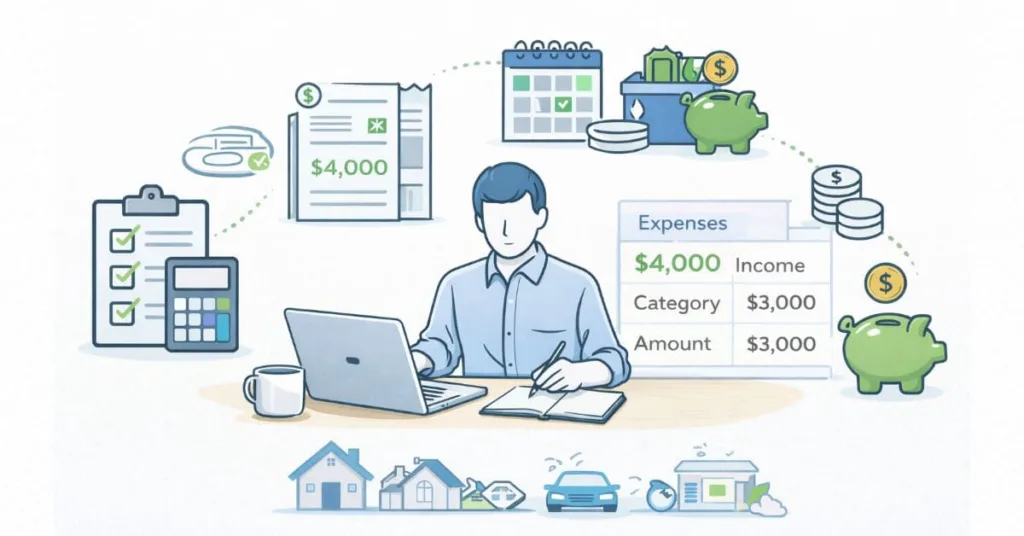
Many people work hard to earn money, but knowing how to spend it wisely is just as important as earning it. Every day, we make financial decisions—paying rent, buying groceries, filling up the gas tank, ordering takeout, or shopping online. While some of these purchases are essential for everyday life, others are optional. Understanding the difference between needs and wants is one of the most valuable skills you can develop when learning personal finance.
Many beginners unintentionally treat wants like needs. Over time, this habit can make budgeting more difficult, reduce the amount of money available for savings, and make it harder to reach important financial goals. Learning to prioritize essential expenses before discretionary spending helps you build healthier money habits without feeling like you have to give up everything you enjoy.
Whether you’re creating your first budget or simply trying to make smarter spending decisions, understanding needs vs wants provides a strong foundation for better financial choices. If you’re new to managing money, it’s also helpful to understand the basics of personal finance before building a budget.
In this guide, you’ll learn what needs and wants are, how they differ, and how to use this knowledge to build a better budget.
Needs vs Wants
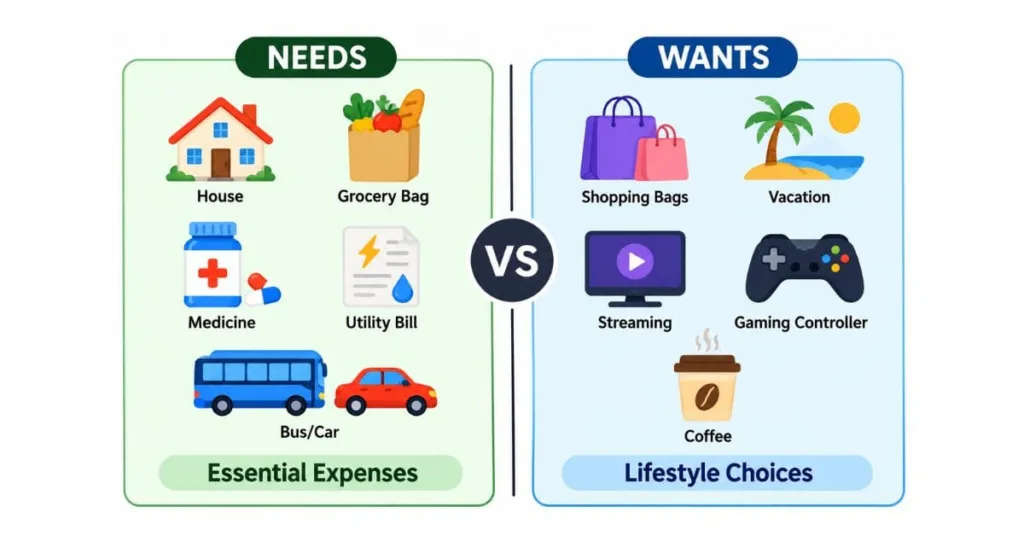
Needs vs wants refers to the difference between essential expenses and optional purchases. Needs are the things you must have to live safely, stay healthy, and meet your basic responsibilities, such as housing, groceries, healthcare, utilities, and basic transportation. Wants are things that make life more enjoyable or convenient but are not necessary for everyday living, such as dining out, streaming subscriptions, luxury clothing, or the latest electronics.
Understanding the difference between needs and wants helps you prioritize essential expenses first, make smarter budgeting decisions, and save money for future financial goals.
| Needs | Wants |
|---|---|
| Essential for daily living | Nice to have but not essential |
| Should be paid for first | Can be delayed or reduced |
| Support health, safety, or work | Improve comfort, entertainment, or lifestyle |
| Examples: Rent, groceries, utilities, healthcare | Examples: Vacations, dining out, designer clothing, streaming services |
What Are Needs?
In personal finance, needs are the essential goods and services you must pay for to maintain your basic quality of life, health, safety, and ability to work or meet everyday responsibilities. These are the expenses that should be covered before spending money on anything optional. If your budget is limited, needs take priority because they support your daily well-being and financial stability.
Common examples of needs include housing costs such as rent or a mortgage, groceries for preparing meals at home, utility bills, basic transportation to work or school, healthcare, insurance, and other necessary monthly obligations. While the exact expenses may vary from one household to another, the purpose remains the same—meeting your essential living requirements.
Putting needs first is one of the foundations of smart money management. When your essential expenses are paid before discretionary purchases, it’s easier to avoid financial stress, stay current on bills, and build healthier spending habits over time. This approach also makes it much easier to create a realistic monthly budget and work toward long-term financial goals.
Common Examples of Needs
- Housing (rent or mortgage payments)
- Groceries and basic food
- Utilities (electricity, water, gas, and basic internet when needed for work or school)
- Basic transportation (fuel, public transit, or a reliable vehicle)
- Health insurance and medical care
- Essential clothing for work, school, and daily life
- Minimum debt payments
- Childcare or other necessary family expenses
Learn the fundamentals of personal finance.
What Are Wants?
In personal finance, wants are purchases that improve your comfort, enjoyment, or lifestyle but are not essential for meeting your basic needs. Unlike necessities, wants are optional expenses that you can postpone, reduce, or avoid without affecting your health, safety, or ability to handle everyday responsibilities.
It’s important to remember that wants aren’t “bad.” In fact, spending money on things you enjoy is a healthy part of a balanced budget. Going on vacation, eating at your favorite restaurant, subscribing to a streaming service, or buying a new gaming console can all add value to your life. The key is making sure these purchases fit within your budget after your essential expenses and savings goals have been taken care of.
Many people run into financial problems not because they have wants, but because they treat every want as an immediate need. Learning to recognize the difference helps you make smarter spending decisions, avoid unnecessary debt, and create a more sustainable monthly budget that includes both responsibilities and enjoyable experiences.
Common Examples of Wants
- Dining out and food delivery
- Streaming subscriptions
- Vacations and weekend trips
- Designer clothing and luxury accessories
- The latest smartphone or gadgets
- Entertainment and concert tickets
- Gym memberships you rarely use
- Home décor upgrades
Learn how to plan for both essential and discretionary spending in a monthly budget.
Needs vs Wants: Key Differences
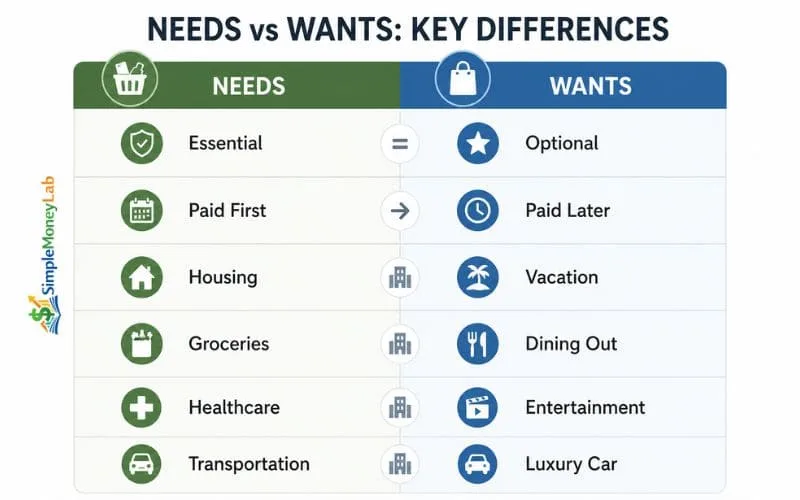
Although the terms needs and wants sound simple, the difference isn’t always obvious in everyday life. Both require you to spend money, but they serve very different purposes in your financial life. Understanding this distinction helps you make smarter spending decisions, especially when you’re working with a limited income or trying to achieve long-term financial goals.
A simple way to remember the difference is this: needs are essential for living and meeting your responsibilities, while wants improve your comfort, convenience, or lifestyle. For example, paying your rent keeps a roof over your head, while upgrading to a larger or luxury apartment is usually a personal preference. Similarly, buying groceries to prepare meals at home is a need, whereas dining out regularly is generally a want.
Knowing how to separate needs from wants also makes budgeting much easier. If you’re following the 50/30/20 budget rule, your essential expenses belong in the “needs” category, while discretionary spending falls under the “wants” category. This simple framework helps you prioritize your money without giving up the things you enjoy.
It’s also helpful to understand that needs and wants don’t always align with whether an expense is recurring or occasional. Some essential costs are fixed every month, while others change over time. Learning the difference between fixed and variable expenses will give you a clearer picture of how these costs fit into your overall budget.
Needs vs Wants Comparison Table
| Category | Needs | Wants |
|---|---|---|
| Purpose | Support your basic living requirements | Improve comfort, enjoyment, or lifestyle |
| Importance | Essential for health, safety, and daily responsibilities | Optional and based on personal preferences |
| Budget Priority | Paid before discretionary spending | Paid after needs, savings, and financial obligations |
| Can It Be Delayed? | Usually no | Often yes |
| Impact if Ignored | May affect your well-being or financial stability | Usually results in inconvenience rather than serious consequences |
| Examples | Rent, groceries, utilities, healthcare | Vacations, streaming services, designer clothing, entertainment |
| Decision Making | Based on necessity | Based on preference and affordability |
| Role in Budgeting | Forms the foundation of your budget | Fits into discretionary spending |
While these differences provide a useful guideline, not every expense fits neatly into one category. Depending on your job, family situation, health, or where you live, some purchases can be both a need and a want. In the next section, we’ll look at real-life examples where the line between the two isn’t always clear.
Real-Life Examples of Needs vs Wants
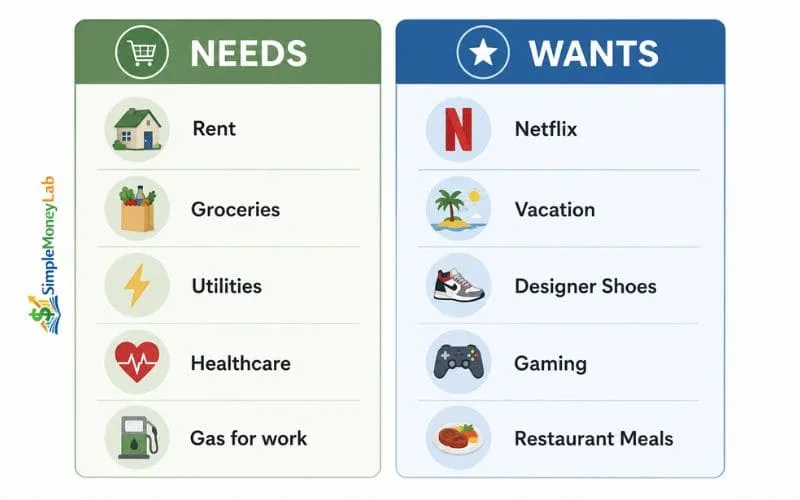
Understanding the difference between needs and wants becomes much easier when you apply it to everyday situations. While the definitions are simple, real-life spending decisions can sometimes blur the line. The examples below show how similar purchases can fall into different categories depending on whether they’re essential or simply a personal preference.
| Category | Need | Want |
|---|---|---|
| Food | Buying groceries to prepare meals at home | Ordering takeout several times a week or dining at expensive restaurants |
| Housing | Paying rent or a mortgage for a safe place to live | Renting a luxury apartment with premium amenities |
| Transportation | Using public transit or owning a reliable car to get to work | Buying a luxury SUV or sports car when a basic vehicle meets your needs |
| Internet | A basic internet plan for work, school, or essential communication | Upgrading to the fastest premium plan for entertainment alone |
| Phone | A dependable smartphone for calls, work, and emergencies | Purchasing the newest flagship model every year |
| Clothing | Everyday clothes and work attire | Designer brands or buying clothes you don’t need |
| Healthcare | Doctor visits, prescription medications, and health insurance | Cosmetic procedures that aren’t medically necessary |
| Entertainment | Free or low-cost recreation to relax occasionally | Multiple streaming subscriptions, frequent concerts, or expensive hobbies |
These examples show that the same category can include both needs and wants. For instance, having a phone is a necessity for most people today, but paying extra for the newest premium model is usually a personal choice. Likewise, transportation is often essential, but the type of vehicle you choose can turn a basic need into a luxury purchase.
Recognizing these differences helps you make better financial decisions without feeling guilty about spending money on things you enjoy. Once your essential expenses are covered, any remaining disposable income can be allocated to wants, savings, or other financial goals, depending on your priorities.
When Something Can Be Both a Need and a Want
Although separating needs from wants is a useful budgeting habit, not every expense fits neatly into one category. In many cases, whether something is a need or a want depends on your lifestyle, job, family responsibilities, health, and financial situation. The same purchase may be essential for one person but optional for someone else.
For example, owning a car may be a need if you live in an area with limited public transportation or rely on it to commute to work every day. However, upgrading to a luxury vehicle with premium features is generally a want because a more affordable car could meet the same transportation needs.
The same idea applies to internet service. A basic internet connection may be essential if you work remotely, attend online classes, or manage important daily tasks online. On the other hand, paying extra for the fastest premium plan primarily for streaming or gaming is usually considered a want.
A smartphone is another good example. Having a reliable phone for communication, banking, navigation, and emergencies is often a necessity today. However, replacing a perfectly functional phone every year with the newest flagship model is typically a discretionary purchase.
Housing choices also demonstrate this difference. Everyone needs a safe place to live, but choosing a larger home with luxury amenities or a high-end neighborhood often reflects personal preferences rather than basic necessity.
The same principle applies to food and clothing. Buying nutritious groceries and essential clothing is a need, while premium organic specialty foods, designer brands, or expanding your wardrobe beyond what you actually need are usually wants.
The key is to ask yourself whether the expense is truly necessary to support your daily life or whether you’re paying extra for added comfort or convenience. Understanding this distinction also becomes easier when you know which expenses stay relatively consistent and which change over time. Learning about fixed and variable expenses can help you organize these costs more effectively and build a budget that reflects your real financial priorities.
Why People Confuse Needs and Wants
If the difference between needs and wants seems so simple, why do so many people struggle to tell them apart? The answer isn’t a lack of intelligence—it’s human psychology. Every day, we’re influenced by advertising, emotions, social trends, and convenience, all of which can make optional purchases feel like essential ones.
One of the biggest influences is advertising. Companies spend billions of dollars each year convincing consumers that buying a product will make their lives easier, happier, or more successful. While there’s nothing wrong with marketing, it can blur the line between what we truly need and what we want.
Another common reason is lifestyle inflation. As income increases, spending often increases too. Instead of saving the extra money, people may upgrade their car, move to a more expensive home, or buy premium products because they feel they’ve “earned it.” Over time, these lifestyle upgrades can start to feel like necessities, even when they’re not. Avoiding this mindset is one of the most common challenges discussed in common money mistakes beginners make.
Emotional spending also plays a major role. Many people shop when they’re stressed, bored, celebrating an achievement, or trying to improve their mood. Although these purchases may provide temporary satisfaction, they rarely solve the underlying problem and can make it harder to stay on budget.
Social influences are equally powerful. Peer pressure and social media constantly expose us to other people’s lifestyles, vacations, new gadgets, and luxury purchases. Comparing ourselves to others can create the feeling that we also need those things to be successful or happy, even when they’re outside our budget.
Finally, convenience often affects spending decisions. Ordering food delivery, paying for faster shipping, or subscribing to services that save time can be worthwhile in some situations, but it’s easy for convenience to become an expensive habit when used without intention.
Understanding these psychological influences doesn’t mean you should never spend money on things you enjoy. Instead, it helps you pause before making a purchase and ask whether it’s meeting a genuine need or simply satisfying a temporary desire. If you’ve ever wondered why creating and sticking to a budget feels more difficult than it should, these behavioral factors explain much of the answer. You’ll learn more about overcoming these challenges in Why Budgeting Feels Hard.
How to Decide if Something Is a Need or a Want
Sometimes the difference between a need and a want isn’t immediately obvious. A purchase may seem important in the moment, but after taking a step back, you may realize it’s something you can postpone or avoid altogether. Before spending your money, ask yourself a few simple questions. This decision-making framework can help you make more intentional choices and reduce impulse spending.
Ask Yourself These 5 Questions
1. Can I live without it for now?
If the answer is yes, it’s likely a want rather than a need. Essential expenses usually can’t be delayed without affecting your daily life, while many wants can wait until your budget allows.
2. Does it help me earn income or meet an essential responsibility?
Some purchases directly support your ability to work, study, or care for your family. For example, replacing a broken laptop that’s required for your job may be a need, while upgrading to a premium model with extra features is often a want.
3. Can I delay buying it?
Ask yourself if the purchase can wait a few weeks or even a month. If delaying it doesn’t create a serious problem, it’s probably not an immediate necessity. Giving yourself time also helps reduce emotional or impulse purchases.
4. Would I still buy it during a financial emergency?
Imagine you’ve suddenly lost your job or need to cover an unexpected medical bill. Would this purchase still be a priority? If the answer is no, it’s most likely a want.
5. Is there a lower-cost alternative?
Sometimes you genuinely need something, but you don’t need the most expensive version. A reliable used car, a basic smartphone, or a standard internet plan may meet your needs just as well as a premium option while saving you money.
Use the “Pause Before You Purchase” Rule
If you’re still unsure, give yourself 24 to 48 hours before making the purchase. This simple habit creates space between emotion and action, making it easier to decide whether you’re buying something because you truly need it or simply want it in the moment.
You can make this process even more effective by regularly tracking your spending. Reviewing where your money goes each month helps you identify patterns, spot unnecessary expenses, and make better financial decisions over time.
How Understanding Needs and Wants Can Improve Your Budget
Learning the difference between needs and wants isn’t just a financial concept—it’s a practical skill that can completely change the way you manage your money. When you know which expenses are essential and which are optional, it becomes much easier to make confident financial decisions without feeling restricted.
One of the biggest benefits is better budgeting. Instead of wondering where your paycheck went at the end of the month, you can organize your money with a clear plan. By paying for essential expenses first and setting limits on discretionary spending, your budget becomes more realistic and easier to stick to. If you’re creating your first budget, learning how to build a monthly budget provides a strong foundation for putting this strategy into practice.
Understanding needs and wants also helps you prioritize your spending. Rather than making every purchase feel equally important, you begin focusing on what truly matters first. This approach aligns perfectly with the 50/30/20 budget rule, which recommends allocating part of your income to needs, part to wants, and the rest to savings or debt repayment.
Another major advantage is that you’ll often save more money without feeling deprived. Once your essential expenses are covered, you can decide how to use your remaining disposable income based on your goals instead of spending it impulsively. Whether you’re saving for a vacation, paying off debt, or investing in your future, having a clear plan for discretionary income gives every dollar a purpose.
Knowing the difference between needs and wants also helps reduce impulse purchases. Before buying something, you’re more likely to pause and ask yourself whether it’s essential or simply a temporary desire. Over time, this small habit can lead to fewer regrets, less unnecessary spending, and greater control over your finances.
Perhaps the biggest long-term benefit is greater financial confidence. When you consistently prioritize your needs, control discretionary spending, and save for future goals, you’re better prepared for unexpected expenses. Building an emergency fund becomes much easier because you’ve already created room in your budget for saving.
Ultimately, understanding needs and wants isn’t about saying “no” to everything you enjoy. It’s about making intentional spending decisions that support both your current lifestyle and your future financial well-being.
Common Mistakes Beginners Make
Understanding the difference between needs and wants is one thing, but applying it consistently can be challenging. Many beginners don’t struggle because they lack financial knowledge—they struggle because of everyday spending habits. Recognizing these common mistakes can help you avoid unnecessary financial stress and make better decisions with your money.
Treating Wants as Needs
One of the most common mistakes is convincing yourself that every purchase is essential. For example, buying the newest smartphone, upgrading to a luxury apartment, or eating out several times a week may feel necessary, but in most cases, they’re personal preferences rather than basic needs. Learning to question your purchases before spending can prevent this habit from affecting your budget.
Ignoring Savings
Another mistake is spending your entire paycheck before setting money aside for the future. Many people tell themselves they’ll save whatever is left at the end of the month, but often nothing remains. Even saving a small amount consistently can make a big difference over time. Prioritizing savings alongside your essential expenses creates healthier financial habits.
Overspending After Payday
Receiving a paycheck can create a false sense of financial security. It’s easy to celebrate with shopping, dining out, or impulse purchases, only to realize later that important bills are still due. Creating a spending plan before your paycheck arrives helps ensure your needs are covered first.
Paying for Too Many Subscriptions
Streaming platforms, fitness apps, cloud storage, music services, and software subscriptions may seem inexpensive individually, but together they can quietly consume a significant portion of your monthly budget. Reviewing your subscriptions regularly helps eliminate services you no longer use and frees up money for more important priorities. Regularly tracking your spending makes these recurring expenses much easier to identify before they become a problem.
Letting Lifestyle Inflation Take Over
As your income grows, it’s natural to want a better lifestyle. However, automatically increasing your spending every time you earn more can prevent you from building savings and long-term wealth. Instead of upgrading every aspect of your lifestyle, consider directing part of your higher income toward savings, investing, or paying down debt.
These mistakes are common, especially when you’re just starting your personal finance journey. The good news is that they’re also easy to correct once you’re aware of them. Many of these habits are explored in more detail in Common Money Mistakes Beginners Make, where you’ll learn practical strategies for avoiding costly financial decisions before they become long-term problems.
Simple Tips for Balancing Needs and Wants
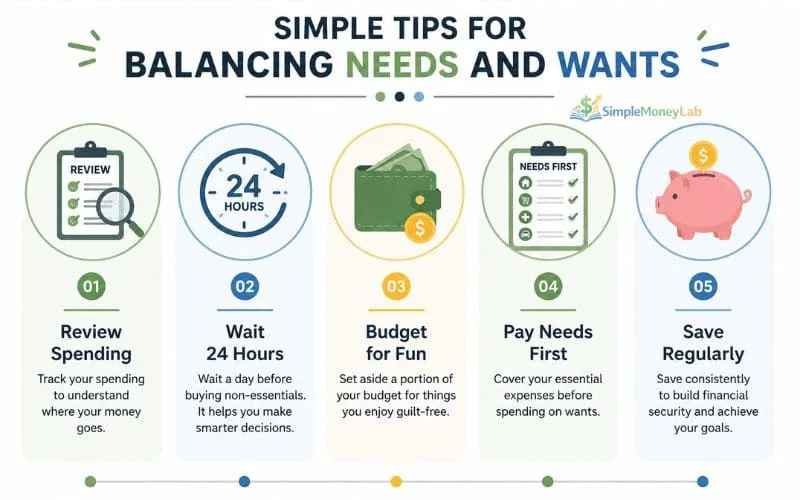
Finding the right balance between needs and wants doesn’t mean eliminating everything you enjoy. Instead, it’s about making intentional spending decisions that allow you to cover your essential expenses while still leaving room for the things that make life enjoyable. The following strategies can help you build healthier financial habits without making your budget feel restrictive.
Review Your Spending Every Month
Your spending habits can change over time, so it’s important to review your expenses regularly. Looking at where your money went each month helps you identify unnecessary purchases, recognize patterns, and make adjustments before small expenses become bigger financial problems.
Delay Impulse Purchases
Before buying something that’s not essential, give yourself at least 24 to 48 hours to think about it. This simple pause often helps separate emotional spending from genuine needs. If you still believe the purchase is worthwhile after waiting, you can make a more confident decision.
Include Fun in Your Budget
A successful budget does not remove all enjoyment from your life. Setting aside money for hobbies, entertainment, dining out, or other personal interests makes your budget easier to maintain over the long term. This is one of the reasons many people find the 50/30/20 budget rule so effective—it encourages balancing essential expenses with discretionary spending instead of avoiding it altogether.
Prioritize Your Essential Expenses
Whenever you receive your paycheck, focus on paying for your needs before spending money on optional purchases. Covering housing, groceries, utilities, transportation, and other necessities first creates a stronger financial foundation. If you’re still learning how to organize your expenses, creating a realistic monthly budget is one of the best places to start.
Revisit Your Financial Goals Regularly
Your financial priorities won’t stay the same forever. As your income, responsibilities, and life circumstances change, your goals should evolve as well. Reviewing them every few months helps ensure your spending continues to support what matters most to you.
As your financial habits improve, try to direct any extra money toward building an emergency fund. Having savings set aside for unexpected expenses gives you greater peace of mind and reduces the likelihood of relying on credit cards or loans when life doesn’t go as planned.
Balancing needs and wants isn’t about being perfect. It’s about making consistent, thoughtful decisions that allow you to enjoy today while also preparing for tomorrow.
Frequently Asked Questions
What is the difference between needs and wants?
Needs are essential expenses required for your health, safety, and everyday responsibilities, such as housing, groceries, utilities, and healthcare. Wants are non-essential purchases that improve your comfort or lifestyle, such as vacations, entertainment, or luxury products. Paying for your needs first helps you build a stronger financial foundation.
Can a want become a need?
Yes. Whether something is a need or a want often depends on your personal circumstances. For example, a basic internet connection may be a want for someone who rarely uses it, but it can become a need for a person who works remotely or attends online classes. Likewise, a car may be essential in areas without reliable public transportation but optional in cities with excellent transit systems.
Is the internet a need or a want?
It depends on how you use it. If you need internet access for work, education, banking, or other essential daily activities, it’s generally considered a need. However, paying extra for a premium internet package primarily for gaming or entertainment is usually considered a want.
Is a car always a need?
No. A car is a need for many people who rely on it to commute to work, transport family members, or live in areas with limited public transportation. However, if reliable public transit is available and meets your daily needs, owning a car may be a personal choice rather than a necessity.
Why is it important to know the difference between needs and wants?
Understanding the difference helps you prioritize essential expenses, avoid unnecessary spending, save more money, and make better financial decisions. It also makes budgeting easier because you know which expenses should always come first when your income is limited.
How do needs and wants fit into a budget?
Your budget should cover needs first, followed by savings and other financial priorities. After those obligations are met, you can use the remaining money for wants. Many beginners find this easier by following the 50/30/20 budget rule, which divides income into categories for needs, wants, and savings, helping create a balanced and sustainable spending plan.
Final Thoughts
Understanding the difference between needs and wants is one of the simplest yet most valuable skills you can develop in personal finance. Every spending decision you make has an impact on your financial future, and learning to prioritize essential expenses before discretionary purchases gives you greater control over your money. The goal isn’t to stop spending on things you enjoy—it’s to spend with intention.
Remember, building healthy financial habits is about progress, not perfection. There will be times when you spend money on wants, and that’s completely normal. What matters is consistently making thoughtful decisions that align with your income, responsibilities, and long-term goals. Small improvements, such as delaying an impulse purchase or choosing a more affordable option, may seem insignificant today, but they can add up to meaningful financial progress over time.
If you’re ready to put what you’ve learned into practice, start by creating a realistic monthly budget that separates your needs from your wants. From there, you can use the 50/30/20 budget rule as a simple framework for balancing spending and saving while building stronger money habits. As your budget becomes more consistent, make it a priority to build an emergency fund so you’re better prepared for unexpected expenses instead of relying on debt.
At the end of the day, financial success isn’t determined by one perfect decision—it’s built through hundreds of small, intentional choices. The sooner you learn to recognize the difference between needs and wants, the easier it becomes to make confident financial decisions that support both your present lifestyle and your future goals.

I’m Daniel Moore, the founder of SimpleMoneyLab, where I help beginners learn Personal Finance in a simple and realistic way. I focus on breaking down Budgeting, Credit Basics, and Side Hustles into plain English so everyday Americans can feel more confident with Money.