Whether you’re starting your first job, changing careers, or simply trying to manage your money better, understanding your income is one of the most important steps toward building a strong financial foundation. Every paycheck you receive tells part of the story—but if you don’t understand the numbers on it, making smart financial decisions becomes much harder.
One of the biggest sources of confusion for beginners is the difference between gross income and net income. Although these terms often appear on paychecks, tax documents, and job offers, they don’t mean the same thing. Gross income is the total amount you earn before any taxes or deductions are taken out, while net income is the amount you actually receive in your bank account. Knowing which number to use can make a significant difference when planning your monthly finances.
If you’ve already learned how to separate needs vs. wants before making spending decisions, understanding how much money you actually take home is the next essential step. Once you know the difference between gross income and net income, you’ll be better prepared to create a realistic budget, control your spending, and make more confident financial decisions.
Gross Income vs Net Income
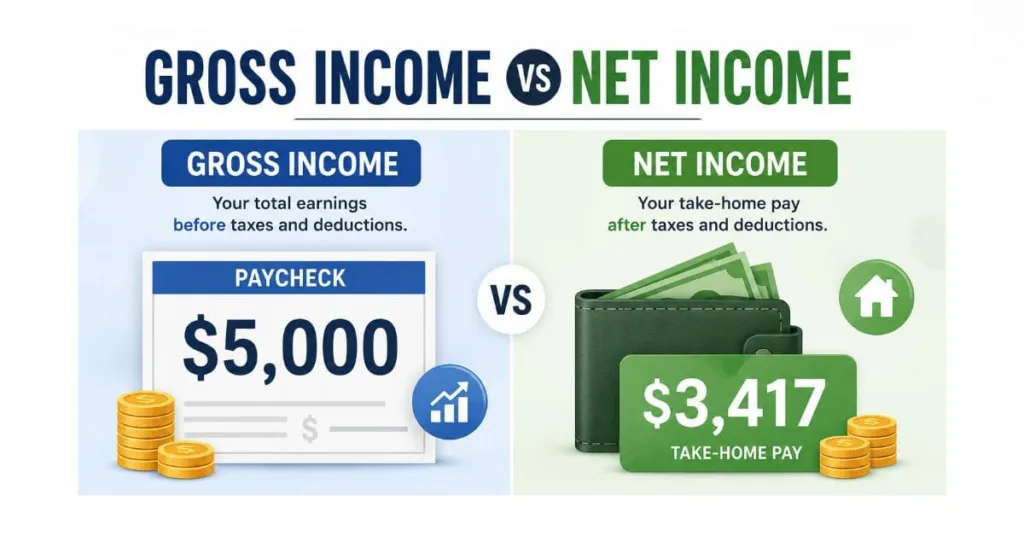
The difference between gross income and net income is simple. Gross income is the total amount of money you earn before taxes and other deductions are taken out of your paycheck. Net income, often called take-home pay, is the amount of money you actually receive after those deductions have been subtracted. While gross income shows your total earnings, net income reflects the money you have available to pay bills, save, invest, and cover everyday expenses. For most personal budgeting decisions, net income is the more useful figure because it represents the money you can actually spend.
| Gross Income | Net Income |
|---|---|
| Earnings before taxes and deductions | Earnings after taxes and deductions |
| Higher amount | Lower amount |
| Used for salary offers and loan applications | Used for budgeting and daily spending |
| Includes your total pay | Shows your actual take-home pay |
What Is Gross Income?
Gross income is the total amount of money you earn before any taxes, insurance premiums, retirement contributions, or other deductions are taken out of your paycheck. It’s often referred to as your pre-tax income because it represents your full earnings before anything is withheld.
For employees, gross income typically includes your regular salary or hourly wages, along with any overtime pay, bonuses, commissions, and other forms of compensation you receive from your employer. If you’re self-employed or have multiple income sources, your gross income may also include earnings from freelance work, business income, rental income, or other taxable sources before expenses and deductions are applied.
For example, if your employer offers you an annual salary of $60,000, that amount is your gross income. However, you won’t receive the entire $60,000 in your bank account because taxes and other payroll deductions will be subtracted before you’re paid.
Understanding your gross income is an important part of personal finance because it’s the number commonly used on job offers, loan applications, mortgage approvals, and rental applications. However, while gross income shows how much you earn overall, it doesn’t reflect the amount of money you actually have available to spend each month.
What Is Net Income?
Net income is the amount of money you actually receive after all required taxes and other deductions have been taken out of your gross income. It’s commonly known as take-home pay because it’s the amount that is deposited into your bank account or appears on your paycheck after payroll processing is complete.
Common payroll deductions that reduce your gross income include federal income tax, state income tax (where applicable), Social Security, Medicare, health insurance premiums, retirement contributions such as a 401(k), and other voluntary deductions offered through your employer. These deductions vary depending on your income, location, and the benefits you choose.
For example, if your monthly gross income is $5,000 and a total of $1,200 is deducted for taxes and employee benefits, your net income would be $3,800. This $3,800 is the money you actually have available to pay your bills, buy groceries, save for future goals, and cover everyday expenses.
Because net income reflects the money you can truly spend, it’s the number you should use when creating a monthly budget. Basing your budget on your take-home pay helps you avoid overspending and gives you a more accurate picture of your financial situation.
Gross Income vs Net Income: Key Differences
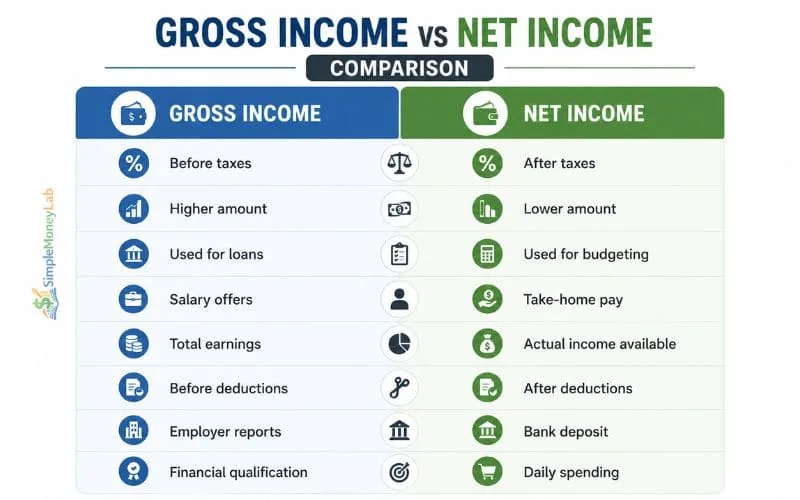
Although gross income and net income are both measures of your earnings, they serve different purposes in your financial life. Gross income represents the total amount you earn before taxes and deductions, while net income is the amount you actually receive after those deductions have been taken out. Understanding this distinction is essential because using the wrong income figure can lead to unrealistic budgets and poor financial planning.
For example, employers typically advertise salaries using gross income, and lenders often review your gross income when evaluating mortgage, rental, or loan applications. However, once taxes, Social Security, Medicare, health insurance, and other deductions are withheld, your net income is usually much lower. Since this is the money that actually reaches your bank account, it’s the amount you should rely on for everyday spending and financial planning.
If you’re using the 50/30/20 budget rule, your spending categories should always be based on your net income, not your gross income. This helps ensure your budget reflects the money you truly have available each month and reduces the risk of overspending.
| Gross Income | Net Income |
|---|---|
| Total earnings before taxes and deductions | Earnings after taxes and deductions |
| Also called pre-tax income | Also called take-home pay |
| Higher amount | Lower amount |
| Includes your full salary or wages | Reflects the money deposited into your bank account |
| Used on job offers and salary negotiations | Used for budgeting and daily spending |
| Often reviewed by lenders and landlords | Used to pay bills, save, and invest |
| Does not account for payroll deductions | Accounts for taxes, insurance, retirement contributions, and other deductions |
| Helps measure total earning potential | Shows your actual spending power |
| Not ideal for creating a personal budget | Best income figure for managing monthly finances |
Gross Income vs Net Income Example
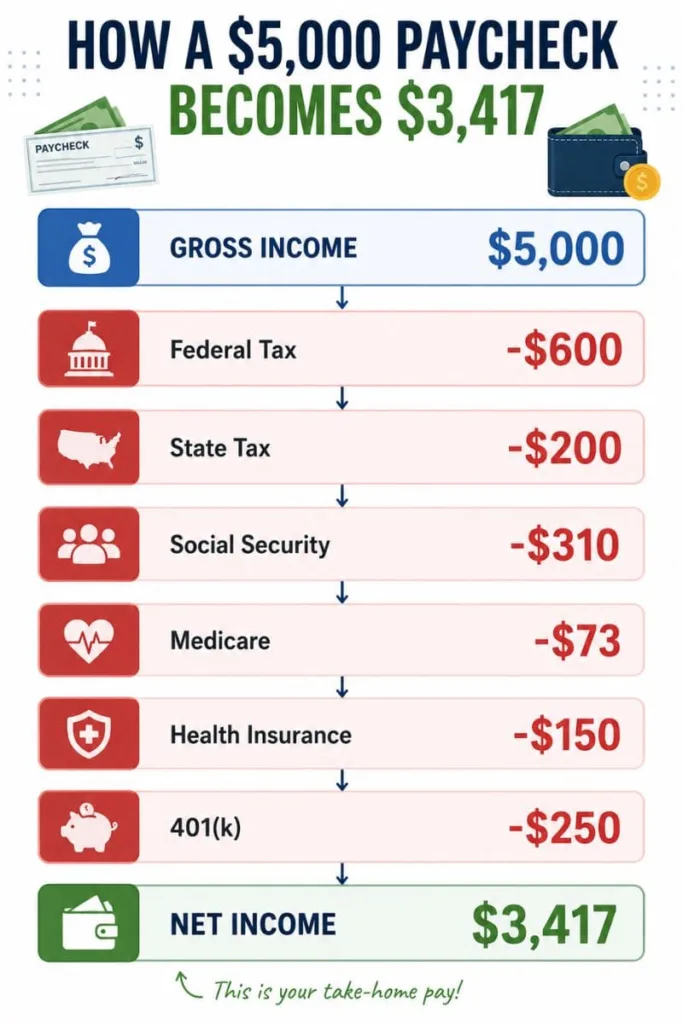
Sometimes, the easiest way to understand the difference between gross income and net income is by looking at a real paycheck example. Imagine you earn a gross monthly income of $5,000. This is the amount your employer pays you before any taxes or other deductions are withheld. However, several mandatory and optional payroll deductions are taken out before you receive your paycheck, reducing the amount that actually reaches your bank account.
Here’s a simplified example:
| Paycheck Breakdown | Amount |
|---|---|
| Gross Monthly Income | $5,000 |
| Federal Income Tax | -$600 |
| State Income Tax | -$200 |
| Social Security | -$310 |
| Medicare | -$73 |
| Health Insurance | -$150 |
| 401(k) Contribution | -$250 |
| Net Monthly Income (Take-Home Pay) | $3,417 |
In this example, although you earn $5,000 per month, your net income is $3,417 after taxes and payroll deductions. This is the amount you’ll actually have available to pay rent, utilities, groceries, transportation, savings, and other everyday expenses.
Keep in mind that every paycheck is different. The exact deductions you see will depend on factors such as your salary, state of residence, tax withholding, employee benefits, and retirement contributions. Even so, this example shows why your gross income is usually much higher than the amount you actually take home each month.
Common Payroll Deductions That Reduce Your Net Income
If you’ve ever wondered why your paycheck is smaller than your salary, the answer lies in payroll deductions. These are amounts that are automatically withheld from your gross income before you receive your paycheck. Some deductions are required by law, while others are optional benefits you choose through your employer. Together, they determine your net income, or take-home pay.
Here are the most common payroll deductions you’ll see on a U.S. paycheck:
Federal Income Tax
Federal income tax is withheld from your paycheck based on your income level, tax filing status, and the information you provide on your tax forms. This money helps fund federal government programs and services.
State Income Tax
Many states also collect state income tax, which is deducted from your paycheck. However, some states don’t charge a state income tax, so this deduction may not appear on every paycheck.
Social Security
Social Security taxes help fund retirement, disability, and survivor benefits for eligible workers and their families. Most employees contribute a percentage of their earnings through payroll withholding.
Medicare
Medicare taxes help finance health insurance for people aged 65 and older, as well as certain younger individuals with qualifying disabilities. Like Social Security, Medicare is deducted automatically from most paychecks.
Health Insurance Premiums
If you receive health insurance through your employer, your share of the monthly premium is often deducted directly from your paycheck. The amount varies depending on the plan you choose and whether it covers dependents.
Retirement Contributions
Many employers offer retirement savings plans, such as a 401(k). If you choose to contribute, a portion of your paycheck is automatically deposited into your retirement account, helping you save for the future while reducing your current take-home pay.
Other Voluntary Deductions
Depending on your employer, your paycheck may also include optional deductions for benefits such as dental, vision, and life insurance; flexible spending accounts (FSAs) and health savings accounts (HSAs); union dues; charitable donations; or commuter benefits.
Although these deductions reduce the amount of money you receive each payday, many of them provide valuable financial protection, healthcare coverage, retirement savings, and other long-term benefits. Understanding each deduction can help you read your paycheck more easily and know exactly where your earnings are going.
When Should You Use Gross Income?
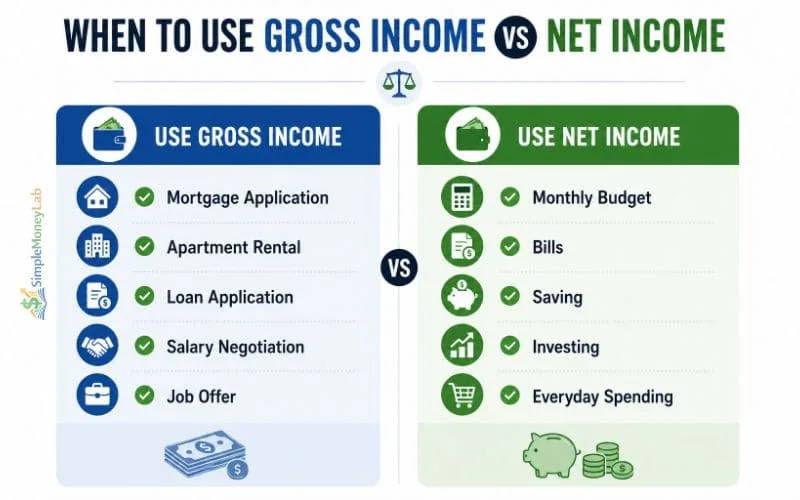
Although net income is the better choice for managing your everyday finances, there are several situations where gross income is the number that matters most. Because gross income represents your total earnings before taxes and deductions, employers, lenders, and landlords often use it to evaluate your earning potential and ability to meet financial obligations.
Here are the most common situations where you should use your gross income:
Mortgage Applications
Mortgage lenders typically use your gross income when deciding how much money they are willing to lend. They compare your income with your existing debts to calculate your debt-to-income (DTI) ratio and determine whether you can reasonably afford monthly mortgage payments.
Apartment Rentals
Many landlords require applicants to earn a certain multiple of the monthly rent, such as three times the rent in gross monthly income. This helps them assess whether you have enough income to pay rent consistently.
Loan Applications
Whether you’re applying for a personal loan, auto loan, or student loan, lenders often ask for your gross annual or monthly income. They use this figure to evaluate your financial stability and ability to repay borrowed money.
Salary Negotiations
When discussing compensation with a potential or current employer, salaries are almost always quoted as gross income. Job offers typically refer to your annual salary or hourly wage before taxes and other deductions are withheld.
Employer Job Offers
When you receive a new job offer, the salary listed is your gross income, not the amount you’ll actually receive in your paycheck. Understanding this difference helps you set realistic expectations about your future take-home pay after taxes and payroll deductions.
While gross income is important for employment and financial applications, remember that it doesn’t represent the amount of money you can actually spend. For day-to-day financial planning, your net income provides a much more accurate picture of your available cash.
When Should You Use Net Income?
For most day-to-day financial decisions, net income is the number you should focus on. Since net income is the amount that actually reaches your bank account after taxes and payroll deductions, it reflects the money you truly have available to spend, save, or invest. Using your net income instead of your gross income helps you make realistic financial decisions and reduces the risk of overspending.
Here are the most serious situations where you should use your net income:
Creating a Budget
When building a monthly budget, always start with your net income. Your budget should be based on the money you actually receive—not the amount you earn before deductions. This gives you a clear picture of how much you can safely allocate toward housing, food, transportation, savings, and other expenses.
Paying Bills
Your rent, utilities, insurance premiums, loan payments, and other monthly bills must be paid using your take-home pay. Basing these expenses on your net income helps ensure you can cover your financial obligations without relying on credit cards or loans.
Saving for Financial Goals
Whether you’re saving for a vacation, a new car, or a home down payment, your savings plan should come from your net income. Setting aside a portion of your take-home pay each month makes your savings goals more realistic and easier to maintain over time.
Investing for the Future
If you’re investing outside of employer-sponsored retirement plans, those contributions usually come from your net income. Using your take-home pay to invest consistently can help you build long-term wealth while staying within your budget.
Managing Everyday Spending
Groceries, transportation, entertainment, subscriptions, dining out, and other daily expenses should all fit within your available take-home pay. Regularly tracking your spending can help you identify where your money goes and make adjustments when necessary.
Using your net income for these financial decisions also makes it easier to build an emergency fund, since you’ll be saving from the money you actually have—not the income you expected to receive before deductions. In short, while gross income shows your earning potential, net income is the foundation of smart money management.
Why Net Income Matters More for Budgeting
When it comes to creating a realistic budget, net income is far more important than gross income. While gross income tells you how much you earn before taxes and deductions, net income shows the amount of money you actually have available to manage each month. Since you can’t spend money that never reaches your bank account, building your budget around your take-home pay gives you a more accurate picture of your financial situation.
Using your net income as the starting point for budgeting also helps you avoid overspending. For example, if you create a budget based on a $5,000 gross monthly income but only receive $3,800 after deductions, you may end up planning expenses that exceed the money you actually have. This can lead to missed payments, increased credit card balances, and unnecessary financial stress.
Your net income also reflects your real cash flow—the money that’s available to pay rent, utilities, groceries, transportation, insurance, savings, and other everyday expenses. By budgeting with your actual take-home pay, you can make informed spending decisions, prioritize essential expenses, and prepare for unexpected costs without relying on debt.
A simple way to manage your money is to apply the 50/30/20 budget rule using your net income, not your gross income. This approach ensures that your spending and savings percentages are based on the money you actually receive each payday. As you become more comfortable with budgeting, you’ll also have a clearer understanding of your disposable income —the amount remaining after paying essential expenses—which can then be used for savings, investing, or discretionary spending.
Budgeting with your net income isn’t just a smart habit—it’s the foundation of effective financial planning. It helps you live within your means, reduce financial stress, and build long-term financial stability with confidence.
Common Mistakes Beginners Make
Understanding the difference between gross income and net income is only the first step. Many beginners still make budgeting mistakes because they use the wrong income figure or overlook important details on their paychecks. Recognizing these common mistakes can help you build a more accurate budget and avoid unnecessary financial stress.
Budgeting With Gross Income
One of the biggest mistakes is creating a budget based on gross income instead of net income. Since gross income doesn’t account for taxes and payroll deductions, it can make you believe you have more money available than you actually do. This often leads to unrealistic spending plans and budget shortfalls.
Ignoring Payroll Deductions
Some people focus only on their salary and forget that taxes, health insurance, retirement contributions, and other deductions reduce the amount they actually receive. Understanding these deductions helps you plan your finances more accurately.
Overspending Based on Expected Income
When you estimate your spending using your pre-tax salary, it’s easy to spend more than your take-home pay allows. This can result in relying on credit cards, missing bill payments, or struggling to save money. Regularly tracking your spending can help you stay within your actual income and quickly identify areas where you’re overspending.
Not Checking Your Pay Stub
Many employees glance at the amount deposited into their bank account but never review their pay stub. Your pay stub contains valuable information about your earnings, taxes, retirement contributions, insurance premiums, and other deductions. Reviewing it regularly helps you understand exactly where your money is going and allows you to spot potential payroll errors.
Forgetting Employee Benefit Deductions
Benefits such as health insurance, dental insurance, vision coverage, life insurance, and retirement contributions may significantly reduce your take-home pay. If you don’t account for these deductions when planning your budget, you may overestimate how much money you have available each month.
Avoiding these common mistakes can make budgeting much easier and help you develop healthier money habits. As you continue improving your financial knowledge, learning about common money mistakes beginners make can help you avoid other pitfalls and build a stronger financial foundation.
Tips for Managing Your Income Wisely
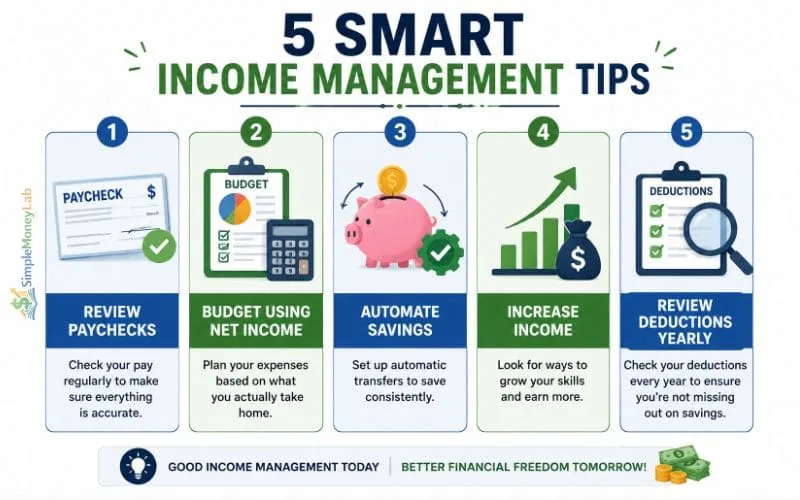
Understanding the difference between gross income and net income is only the beginning. The next step is using that knowledge to make smarter financial decisions. By developing a few simple habits, you can take better control of your money, reduce financial stress, and work toward your long-term financial goals.
Review Your Paychecks Regularly
Take a few minutes to review each paycheck instead of only checking the amount deposited into your bank account. Verify your gross income, taxes, retirement contributions, insurance premiums, and other deductions. This helps you understand where your money is going and allows you to spot any payroll errors early.
Build Your Budget Using Net Income
Always create your monthly budget using your take-home pay rather than your gross income. Since your net income reflects the money you actually receive, your budget will be more realistic and easier to follow. This approach also reduces the risk of overspending.
Automate Your Savings
One of the easiest ways to save consistently is to automate the process. Set up automatic transfers from your checking account to a savings account after each payday. Paying yourself first makes it easier to stay consistent without relying on willpower alone.
Look for Ways to Increase Your Income
While managing expenses is important, increasing your income can have an even greater impact on your financial future. You might negotiate a raise, work overtime, start a side hustle, or develop new skills that lead to higher-paying opportunities. A higher income can help you reach your financial goals faster.
Review Your Deductions Every Year
Your payroll deductions may change over time due to new tax laws, salary increases, or changes to your employee benefits. Review your health insurance, retirement contributions, and tax withholding annually to make sure they still match your financial needs and goals.
Finally, remember that managing your income isn’t just about paying today’s bills—it’s also about preparing for tomorrow. As your finances become more stable, make it a priority to build an emergency fund so you’re better equipped to handle unexpected expenses without disrupting your budget.
Frequently Asked Questions
What is the difference between gross income and net income?
Gross income is the total amount you earn before taxes and other deductions are taken out of your paycheck. Net income is the amount you actually receive after those deductions have been withheld. In simple terms, gross income shows your total earnings, while net income shows your take-home pay.
Is gross income before taxes?
Yes. Gross income is your earnings before federal income tax, state income tax (where applicable), Social Security, Medicare, health insurance premiums, retirement contributions, and other payroll deductions are subtracted.
Is net income the same as take-home pay?
Yes. Net income and take-home pay generally mean the same thing. Both refer to the money deposited into your bank account after all required taxes and payroll deductions have been withheld from your gross income.
Which income should I use for budgeting?
For personal budgeting, you should always use your net income because it reflects the amount of money you actually have available to spend, save, and invest. Using your gross income can make your budget unrealistic and increase the risk of overspending.
Why is my net income lower than my gross income?
Your net income is lower because several deductions are taken out of your gross income before you’re paid. These may include federal and state income taxes, Social Security, Medicare, health insurance premiums, retirement contributions, and other voluntary payroll deductions.
Do employers pay based on gross or net income?
Employers typically quote and calculate compensation using gross income. Your salary or hourly wage represents your earnings before taxes and deductions. After payroll processing, the remaining amount becomes your net income, which is the money you actually receive in each paycheck.
Final Thoughts
Understanding the difference between gross income and net income is a fundamental step toward making smarter financial decisions. While gross income shows how much you earn before taxes and deductions, net income reflects the money you actually have available to spend, save, and invest. Knowing which figure to use can help you avoid common budgeting mistakes and give you a more accurate picture of your financial situation.
When it comes to managing your money, always build your financial plan around your net income. Since it’s your actual take-home pay, it provides a realistic foundation for paying bills, covering everyday expenses, saving for future goals, and planning for unexpected costs. Even small changes—such as reviewing your paycheck regularly or budgeting with your net income instead of your gross income—can make a meaningful difference over time.
If you’re ready to put what you’ve learned into practice, start by creating a monthly budget that reflects your take-home pay. You can also use the 50/30/20 budget rule as a simple framework for balancing your spending, savings, and financial goals. Finally, don’t forget to build an emergency fund so you’re better prepared for unexpected expenses and can stay on track even when life throws you a financial curveball.
The path to better financial health isn’t about making one perfect decision—it’s about consistently making informed choices. By understanding your income and managing it wisely, you’ll be better equipped to build lasting financial stability and confidence.

I’m Daniel Moore, the founder of SimpleMoneyLab, where I help beginners learn Personal Finance in a simple and realistic way. I focus on breaking down Budgeting, Credit Basics, and Side Hustles into plain English so everyday Americans can feel more confident with Money.